

Posted on February 14 2026
10 Million Jobs in Europe over the Next Decade – Freshers, Experienced & Professionals Can Apply

By , Editor & Director
Updated February 14 2026
Europe is expected to create over 10 million new and replacement jobs over the next decade, driven by labour shortages, an ageing workforce, and major economic investments. More than 30% of the workforce is expected to retire, increasing jobs in Europe and creating strong job opportunities for freshers and skilled professionals. The European Union has announced €1.8 trillion in investment across infrastructure, clean energy, housing, and digital transformation. Job opportunities in Europe are growing rapidly across healthcare, IT, engineering, construction, logistics, manufacturing, and renewable energy.
Top countries such as Germany, Ireland, the Netherlands, France and Sweden are actively hiring foreign workers to support expanding industries and ongoing labour shortages. Many employers are offering Europe visa sponsorship jobs and fast-track hiring options such as the EU Blue Card, allowing professionals to live and work in Europe with long-term employment and career growth opportunities.
*Want to work in Europe? Avail Y-Axis Resume Marketing Services to find the right job faster.
Why Europe is a Top Destination for Jobs Abroad?
- Europe has a stable job market with high-paying salaries and strong career growth.
- Skill shortages are increasing demand for foreign workers.
- High demand sectors include healthcare, IT, engineering, and construction.
- Europe is expected to create over 10 million jobs in the next decade.
- Many employers offer visa sponsorship jobs and EU Blue Card pathways.
- Fast-track visas and immigrant-friendly policies make it easier to work in Europe.
- Access to the Schengen Area allows easy travel and work across member countries.
Job Outlook in Europe for the Next Decade
Europe’s job outlook remains strong, with over 10 million new and replacement jobs expected in the next decade. Labour shortages and an ageing workforce are driving demand across healthcare, IT, engineering, construction, logistics, and renewable energy.
Major investments in infrastructure and clean energy are further boosting job opportunities. Many employers are offering Europe visa sponsorship jobs and EU Blue Card pathways, with countries like Germany, Ireland, and France actively hiring skilled professionals.
Europe job market trends and opportunities over the next decade:
- Rising demand for healthcare workers, nurses, and caregivers due to an ageing population
- Strong growth in IT jobs in Europe, including software development, cybersecurity, and data roles
- Increasing need for engineers and construction workers due to infrastructure and housing projects
- Expansion of renewable energy jobs in wind, solar, and sustainable energy sectors
- Growing demand for logistics, transport, and manufacturing professionals
- More employers offering Europe visa sponsorship jobs and EU Blue Card options to fill skill shortages
Also Read…
Fast-Track Hiring Options in Europe for Skilled Professionals
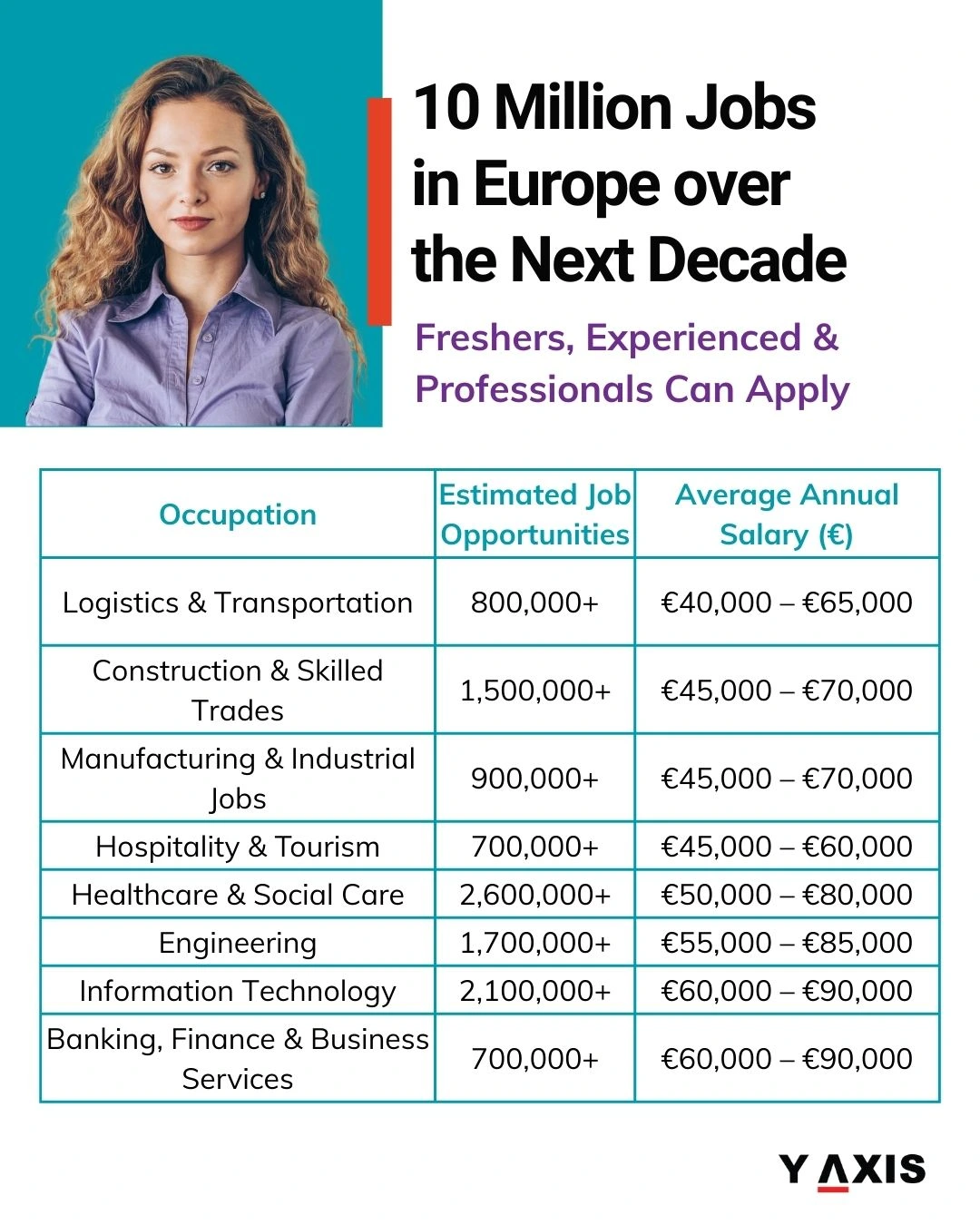
Most In-Demand Job Opportunities in Europe over the Next Decade
Europe is experiencing strong demand for skilled professionals across multiple industries due to labour shortages and economic growth. Many employers are actively hiring to fill critical roles in healthcare, technology, engineering, construction, logistics, and renewable energy. These high demand jobs in Europe offer competitive salaries, long-term career growth, and visa sponsorship opportunities.
Most in-demand jobs in Europe over the next decade include:
|
Occupation |
Estimated Job Opportunities |
Average Annual Salary (€) |
|
Healthcare & Social Care |
2,600,000+ |
€50,000 – €80,000 |
|
Information Technology |
2,100,000+ |
€60,000 – €90,000 |
|
Engineering |
1,700,000+ |
€55,000 – €85,000 |
|
Construction & Skilled Trades |
1,500,000+ |
€45,000 – €70,000 |
|
Manufacturing & Industrial Jobs |
900,000+ |
€45,000 – €70,000 |
|
Logistics & Transportation |
800,000+ |
€40,000 – €65,000 |
|
Banking, Finance & Business Services |
700,000+ |
€60,000 – €90,000 |
|
Hospitality & Tourism |
700,000+ |
€45,000 – €60,000 |
Top 10 Countries in Europe Hiring Skilled Professionals
Many European countries are actively hiring skilled professionals to address labour shortages and support economic growth. With an ageing workforce and expanding industries, employers across Europe are offering strong job opportunities in sectors such as healthcare, IT, engineering, construction, manufacturing, and renewable energy.
Several countries also provide visa sponsorship jobs and fast-track work visa options, including the EU Blue Card, making it easier for foreign workers to live and work in Europe. These countries offer competitive salaries, stable employment, and long-term career growth for freshers and experienced professionals.
Top countries in Europe hiring skilled professionals include:
|
Country |
In-Demand Sectors |
Average Annual Salary (€) |
|
Germany |
IT, Engineering, Healthcare, Manufacturing, Skilled Trades |
€55,000 – €85,000 |
|
United Kingdom (UK) |
IT, Healthcare, Engineering, Finance, Construction |
€52,000 – €87,000 |
|
Ireland |
IT, Finance, Healthcare, Pharmaceuticals, Technology |
€60,000 – €95,000 |
|
Netherlands |
IT, Data & AI, Engineering, Logistics, Finance |
€55,000 – €90,000 |
|
Switzerland |
Banking, IT, Engineering, Pharmaceuticals, Finance |
€80,000 – €120,000 |
|
France |
Engineering, IT, Healthcare, Aerospace, Construction |
€45,000 – €75,000 |
|
Sweden |
IT, Engineering, Renewable Energy, Manufacturing |
€50,000 – €80,000 |
|
Spain |
IT, Healthcare, Construction, Hospitality, Tourism |
€40,000 – €60,000 |
|
Austria |
Engineering, Manufacturing, IT, Construction, Healthcare |
€50,000 – €75,000 |
|
Portugal |
IT, Technology, Startups, Tourism, Business Services |
€40,000 – €55,000 |
Highest Paying Jobs with the Most Opportunities in Europe
Europe offers many high-paying job opportunities across industries facing skill shortages and strong economic growth. Professionals in technology, healthcare, engineering, finance, and energy sectors are among the highest paid and most in demand.
These roles offer competitive salaries, career stability, and opportunities for visa sponsorship in many European countries. Skilled professionals with relevant qualifications and experience can access long-term employment and career growth across Europe.
Highest paying and in-demand job opportunities in Europe include:
|
Sector |
High-Paying Job Roles |
Job Outlook |
|
IT and Software |
Software Engineers, AI Specialists, Cybersecurity Experts, Cloud Engineers |
Very High |
|
Engineering |
Civil Engineers, Mechanical Engineers, Electrical Engineers, Engineering Managers |
Very High |
|
Accounting and Finance |
Financial Managers, Accountants, Investment Analysts, Auditors |
High |
|
Human Resource Management |
HR Managers, Talent Acquisition Specialists, HR Business Partners |
Moderate to High |
|
Hospitality |
Hotel Managers, Chefs, Hospitality Managers, Tourism Specialists |
Moderate to High |
|
Sales and Marketing |
Sales Managers, Digital Marketing Specialists, Business Development Managers |
High |
|
Healthcare |
Doctors, Medical Specialists, Pharmacists, Healthcare Managers |
Very High |
|
STEM |
Data Scientists, Researchers, AI Engineers, Technology Specialists |
Very High |
|
Teaching |
Secondary School Teachers, International School Teachers, Language Teachers |
Moderate to High |
|
Nursing |
Registered Nurses, Specialist Nurses, Elderly Care Nurses |
Very High |
Who Can Apply for Jobs in Europe?
Europe offers strong job opportunities for graduates, skilled professionals, and experienced workers across high demand sectors such as healthcare, IT, engineering, finance, construction, logistics, manufacturing, and education.
Many employers are actively hiring qualified candidates to address labour shortages. Professionals with a valid job offer can apply for Europe visa sponsorship jobs or fast-track work permits like the EU Blue Card, allowing them to live and work in Europe and access long-term career opportunities.
Graduates and Entry-Level Candidates
Graduates can apply for entry-level jobs in Europe in roles such as IT support, customer service, administration, healthcare assistance, hospitality, and logistics. Many companies offer training programs, graduate schemes, and entry-level positions that help candidates gain international work experience and build their careers.
Mid-Level Professionals
Professionals with 2–8 years of experience are in high demand across IT, healthcare, engineering, finance, and construction. Employers are actively offering Europe visa sponsorship jobs for qualified candidates, especially in sectors facing labour shortages.
Skilled and Senior Professionals
Experienced professionals are needed in technology, healthcare, engineering, finance, manufacturing, and education sectors. These roles offer competitive salaries, leadership opportunities, and long-term career growth through EU Blue Card and skilled worker visa programs.
Read more…
Visa Sponsorship Jobs in Europe for Skilled Professionals
How to Apply for Jobs in Europe from Abroad?
Foreign professionals can apply for jobs in Europe and work legally through visa sponsorship and work permit programs such as the EU Blue Card and country-specific skilled worker visas. Many European employers actively hire international candidates in high demand sectors including healthcare, IT, engineering, construction, logistics, and finance, offering strong career opportunities and long-term employment.
Steps to apply for jobs in Europe from abroad:
Step 1: Create a European-style CV highlighting your qualifications, skills, and work experience.
Step 2: Apply through official job portals, company career pages, and recruitment agencies.
Step 3: Submit applications for jobs that match your skills, qualifications, and experience in high demand sectors.
Step 4: Attend online interviews with employers
Step 5: Receive a job offer and apply for a work visa
*Want to apply for Jobs in Europe? Sign up with Y-Axis Resume Marketing Services to find the right job faster.
Work Visa Options in Europe for Foreign Professionals
Europe offers several work visa options for foreign professionals seeking employment across high demand sectors such as healthcare, IT, engineering, finance, and construction. These work visas allow skilled workers to live and work in Europe legally while accessing long-term career growth opportunities. Many European countries are actively issuing work permits to address labour shortages and attract global talent.
Apply Now
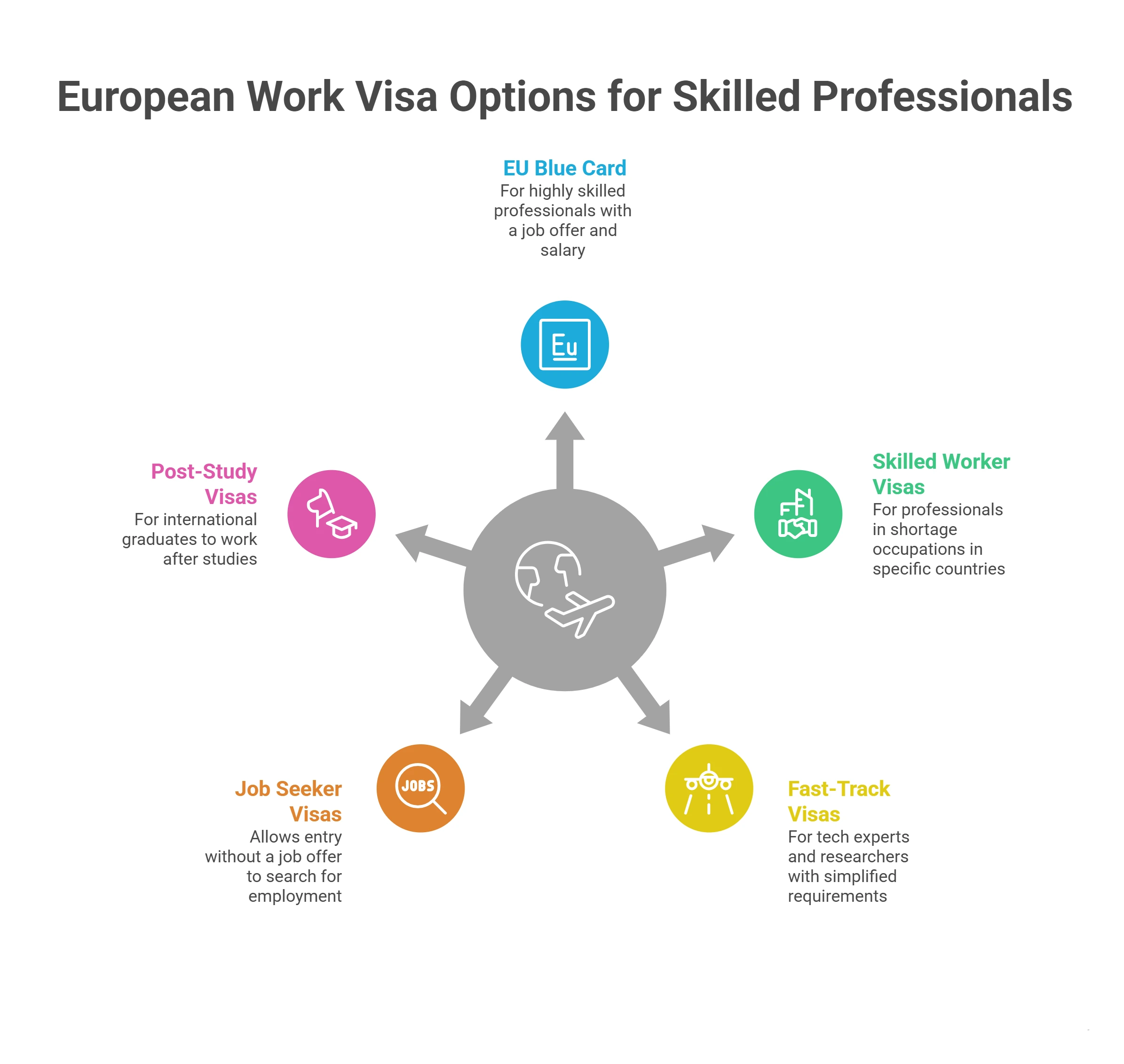
The most popular work visa options in Europe include
EU Blue Card
The EU Blue Card is the most popular visa for highly skilled professionals with a valid job offer and required salary level. It allows foreign workers to live and work in most EU countries and provides a pathway to permanent residency.
Country-Specific Skilled Worker Visas
Many European countries offer skilled worker visas to hire foreign professionals in shortage occupations. Examples include Germany’s Skilled Worker Visa, Ireland’s Critical Skills Employment Permit, UK Skilled Worker Visa and the Netherlands Highly Skilled Migrant Visa.
Fast-Track and Talent Visas
Fast-track and talent visas are designed for highly skilled professionals, tech experts, and researchers. These visas offer faster processing and simplified requirements, helping professionals work and settle in Europe more easily.
Job Seeker Visas
Some countries, such as Germany and Austria, offer job seeker visas that allow professionals to enter the country without a job offer and search for employment. Once a job is secured, the visa can be converted into a work permit or EU Blue Card.
Post-Study Work Visas for International Students
A Post-Study Work Visa allows international graduates to stay and work in Europe after completing their studies. It usually permits graduates to remain for 12 to 36 months to find skilled employment. Once they secure a job, they can convert the visa into a skilled worker visa or EU Blue Card for long-term work and residency.
Step-by-Step Application Process for Europe Work Visa from Abroad
Step 1: Receive a Job Offer from a European Employer
Step 2: Check Visa Eligibility Requirements
Step 3: Gather Required Documents
Step 4: Apply for the Work Visa
Step 5: Attend Biometrics or Visa Appointment
Step 6: Once approved, you can travel to Europe and begin working legally under your work visa.
*Want to apply for Europe Work Visa? Get expert guidance from Y-Axis.
Cost of Living in Europe for Skilled Professionals
The cost of living in Europe depends on lifestyle and city, but skilled professionals can expect moderate living expenses compared to their salaries. Major expenses include accommodation, food, transportation, utilities, and health insurance. Proper budgeting helps professionals manage their monthly expenses and maintain a comfortable standard of living while working in Europe.
|
Expense Category |
Average Monthly Cost (€) |
|
Accommodation (1-bedroom apartment) |
€600 – €1,200 |
|
Food and Groceries |
€250 – €450 |
|
Transportation (Public Transport Pass) |
€50 – €120 |
|
Utilities (Electricity, Heating, Water, Internet) |
€120 – €250 |
|
Health Insurance |
€80 – €200 |
|
Mobile and Internet |
€30 – €60 |
|
Dining and Entertainment |
€100 – €250 |
|
Miscellaneous Expenses |
€100 – €200 |
|
Total Average Monthly Cost |
€1,300 – €2,200 |
Best Time to Apply for Jobs in Europe for Skilled Professionals
The best time to apply for jobs in Europe is during the main hiring periods when employers actively recruit new talent. Most companies increase hiring at the beginning of the year and after the summer season, when new budgets and projects start. However, visa sponsorship jobs in Europe are available throughout the year, especially in high demand sectors such as healthcare, IT, engineering, and construction.
Key hiring periods in Europe for skilled professionals:
- January to March: Peak hiring season as companies start new projects and recruitment cycles.
- April to June: Strong hiring demand across technology, engineering, healthcare, and finance sectors.
- September to November: Another major hiring period after summer, with many job openings and visa sponsorship opportunities.
- Year-round hiring: Healthcare, IT, logistics, construction, and skilled trades hire continuously due to ongoing labour shortages.
Tips to Increase Your Chances of Getting a Job in Europe
- Create a professional European-style CV (Europass format preferred).
- Apply for jobs in high demand sectors like healthcare, IT, engineering, and construction.
- Improve your skills and certifications based on job requirements.
- Apply consistently to increase your chances of receiving a job offer.
Apply Now
FAQ's
What is the job outlook in Europe for the next decade?
Europe is expected to create over 10 million new and replacement jobs over the next decade due to labour shortages and an ageing workforce. This strong Europe job outlook is increasing jobs in Europe across healthcare, IT, engineering, construction, and logistics. Many employers are offering Europe visa sponsorship jobs and EU Blue Card pathways, creating excellent Europe job opportunities for freshers, skilled professionals, and foreign workers seeking long-term employment.
Which sectors have the most job opportunities in Europe?
The sectors with the most jobs in Europe include healthcare, IT and software, engineering, construction, logistics, manufacturing, and renewable energy. These industries face skill shortages and are actively hiring foreign workers. Many companies offer Europe visa sponsorship jobs in these sectors. Skilled professionals, graduates, and experienced workers can find strong Europe job opportunities with competitive salaries, stable employment, and long-term career growth through Europe work visa programs.
Which countries offer the most job opportunities in Europe?
Germany, Ireland, Netherlands, France, Sweden, Spain, and Portugal offer the most jobs in Europe for foreign workers. These countries have strong economies and skill shortages across healthcare, IT, engineering, and construction. Many employers offer Europe visa sponsorship jobs and EU Blue Card options. These countries provide excellent Europe employment opportunities, competitive salaries, and stable career prospects for freshers, skilled professionals, and international candidates looking to work in Europe.
Can freshers apply for jobs in Europe?
Yes, freshers can apply for jobs in Europe, especially in entry-level roles across IT support, customer service, logistics, hospitality, and administration. Many Europe job opportunities are open to graduates and entry-level candidates. Some employers also offer Europe visa sponsorship jobs for skilled entry roles. Graduates with in-demand skills and relevant qualifications have strong chances of finding jobs in Europe and building long-term career opportunities through Europe work visa programs.
How can foreign workers get visa sponsorship jobs in Europe?
Foreign workers can get Europe visa sponsorship jobs by applying through job portals, company career pages, and recruitment agencies. Many European employers sponsor foreign workers in healthcare, IT, engineering, and construction. Once you receive a job offer, you can apply for a Europe work visa or EU Blue Card. Visa sponsorship allows foreign professionals to live and work legally in Europe and access long-term Europe employment opportunities.
What is the EU Blue Card?
The EU Blue Card is a work visa for highly skilled foreign professionals who want to work in Europe. It requires a valid job offer, relevant qualifications, and minimum salary requirements. The EU Blue Card allows professionals to live and work in Europe, access visa sponsorship jobs, and apply for permanent residency later. It is one of the most popular Europe work visa options for skilled professionals seeking long-term Europe job opportunities.
What qualifications are required to work in Europe?
To work in Europe, candidates need relevant education, skills, and work experience based on the job role. Most skilled jobs require a degree, diploma, or technical certification. Healthcare, IT, and engineering jobs require professional qualifications. Once selected, candidates can apply for Europe visa sponsorship jobs and work visas such as the EU Blue Card. Meeting job requirements increases your chances of securing Europe job opportunities and long-term employment.
What is the average salary for jobs in Europe?
The average salary for jobs in Europe ranges from €40,000 to €90,000 per year depending on the country, sector, and experience. IT professionals, engineers, and finance specialists earn higher salaries. Healthcare workers and skilled trades professionals earn competitive wages. Many Europe visa sponsorship jobs offer stable salaries and benefits. Europe job opportunities provide strong income, career growth, and long-term employment options for skilled professionals and foreign workers.
Are there job opportunities in Europe without experience?
Yes, there are jobs in Europe without experience, especially in entry-level roles such as customer service, hospitality, logistics, retail, and IT support. Many Europe job opportunities are available for freshers and graduates. While most visa sponsorship jobs require skills, entry-level skilled roles are available. Gaining certifications and applying to in-demand sectors improves your chances of getting Europe visa sponsorship jobs and building a career in Europe.
How can I apply for jobs in Europe from abroad?
You can apply for jobs in Europe from abroad through job portals, company websites, and recruitment agencies. Create a professional European-style CV and apply for jobs matching your skills. Many employers offer Europe visa sponsorship jobs. Once selected, you can apply for a Europe work visa or EU Blue Card. Applying consistently improves your chances of finding Europe job opportunities and working legally in European countries.
What is the Europe work visa process?
The Europe work visa process starts after receiving a job offer from a European employer. You must submit documents such as your passport, job offer letter, and qualifications. Popular visas include the EU Blue Card and skilled worker visa. Once approved, you can live and work legally in Europe. Many Europe visa sponsorship jobs simplify the process and provide access to long-term Europe employment opportunities.
Are healthcare jobs in demand in Europe?
Yes, healthcare jobs in Europe are in high demand due to ageing populations and staff shortages. Doctors, nurses, caregivers, and healthcare assistants are especially needed. Many employers offer Europe visa sponsorship jobs to foreign healthcare workers. Healthcare provides excellent Europe job opportunities, stable employment, and long-term career growth. This sector is one of the fastest growing and most secure employment sectors in Europe.
Are IT jobs in demand in Europe?
Yes, IT jobs in Europe are growing rapidly due to digital transformation and technology growth. Software developers, cybersecurity specialists, and data analysts are in high demand. Many companies offer Europe visa sponsorship jobs for IT professionals. Countries like Germany, Ireland, and Netherlands have strong demand. IT professionals can find excellent Europe job opportunities with high salaries, career growth, and long-term employment options.
Can international students work in Europe after graduation?
Yes, international students can work in Europe after graduation through post-study work visas. These visas allow graduates to stay and find skilled jobs. Once employed, they can apply for Europe work visa options such as the EU Blue Card. Many graduates secure Europe visa sponsorship jobs and continue working long term. Europe offers excellent job opportunities and career growth for international graduates.
Is Europe a good place to work for foreign professionals?
Yes, Europe is one of the best regions for foreign professionals due to strong job markets, competitive salaries, and high quality of life. Many countries offer Europe visa sponsorship jobs and EU Blue Card pathways. Skilled professionals can find excellent Europe job opportunities in healthcare, IT, engineering, and construction. Europe offers stable employment, career growth, and long-term work visa options.
What are the best jobs in Europe for foreign workers?
The best jobs in Europe include IT professionals, engineers, healthcare workers, construction workers, and finance specialists. These roles are in high demand due to labour shortages. Many employers offer Europe visa sponsorship jobs in these sectors. Skilled professionals can find excellent Europe job opportunities with strong salaries
Tags:
Jobs in Europe
Job opportunities in Europe
Europe employment opportunities
Europe work visa
Europe visa sponsorship jobs
Work in Europe
EU Blue Card jobs
Jobs in Europe for foreigners
Jobs in Europe with visa sponsorship
High demand jobs in Europ
Share
Y-Axis Services

Get it on your mobile

Get News alerts

Contact Y-Axis
Latest Article
Popular Post
Trending Article

Posted On October 21 2026
What is the Average Salary in the UAE?