

Study in New Zealand

Don't know what to do?
Get Free Counseling
Why Study in New Zealand?
For UK students looking for top-notch education, breath taking natural beauty, and a welcoming, safe community, New Zealand is quickly rising to the top of the list. In 2024, more than 73,000 international students will have chosen New Zealand as it provides a unique mix of career opportunities, academic excellence, and lifestyle benefits.
Studying in New Zealand can change your life, regardless of whether you're drawn to the calm surroundings of Dunedin or the energetic city life of Auckland.
One of the ten safest nations in the world, New Zealand is renowned for its multicultural atmosphere, cutting-edge teaching strategies, and excellent educational system3.
- In 2023, 42,695 international students were enrolled.
- According to QS 2025, all eight universities were among the top 500 worldwide.
- Ranked #1 for sustainability stewardship (THE Impact Rankings 2024)
- Students ranked 5th globally for creative thinking (OECD PISA 2022)
- 4th most peaceful country in the world (Global Peace Index 2024
Top Reasons to Study in New Zealand
- Internationally Recognized Degrees: Credentials are valued globally.
- More than 700 programs are offered in English.
- Work While You Study: During term, up to 20 hours per week; during breaks, full-time
- Stay for up to three years following graduation with a post-study work visa.
- Affordable Education: Less expensive than in the US, UK, and Australia
- Strong support for cultural diversity and international students characterizes an inclusive society.
Eligibility for New Zealand Student Visa
UK students must apply for a fee-paying student visa if their course lasts longer than 3 months.
You are eligible if:
- A reputable NZ institution has extended an offer of placement to you.
- You can demonstrate living expenses of NZD 20,000 (about £9,500) per year.
- Tuition has been paid or arranged by you.
- You are fully insured for both health and travel.
- You meet the requirements for character and health and have a valid passport.
- After completing your studies, you plan to depart from New Zealand.
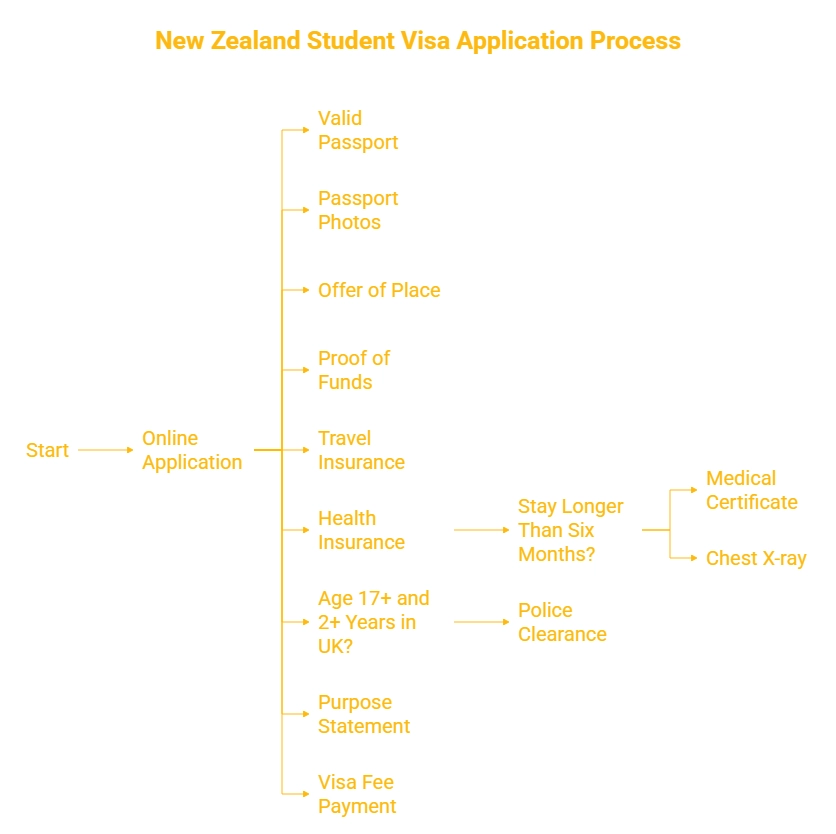
New Zealand Student Visa Requirements
Students in the UK must apply as follows:
- Completed online application via Immigration NZ
- A valid passport (at least three months after the stay)
- Passport-sized photos
- Offer of Place from an Institution in New Zealand
- Proof of funds: NZD 2,000 or NZD 20,000 per year plus return airfare
- Travel and health insurance
- A medical certificate and a chest X-ray (if staying longer than six months)
- Police clearance certificate (if you are at least 17 and have been there for more than two years)
- Purpose Statement (SOP)
- Payment of Visa fee
New Zealand Visa Processing Time
|
Visa Type |
Processing Time |
|
Student Visa (Online) |
20–45 working days |
|
Student Visa (Paper) |
25–50 working days |
|
Peak Season Delay |
Up to 8 weeks (Jan & July intakes) |
Apply at least 3 months before your course starts to avoid delays.
Top Universities in New Zealand
|
University |
QS Ranking 2025 |
Location |
|
University of Auckland |
#65 |
Auckland |
|
University of Otago |
#197 |
Dunedin |
|
Massey University |
#230 |
Palmerston North |
|
Victoria University of Wellington |
#240 |
Wellington |
|
University of Canterbury |
#261 |
Christchurch |
|
University of Waikato |
#281 |
Hamilton |
|
Lincoln University |
#407 |
Lincoln |
|
Auckland University of Technology |
#410 |
Auckland |
Top Courses to Study in New Zealand
Numerous programs in various disciplines are available in New Zealand. Popular domains consist of:
Management and Business
- Marketing, Accounting, and MBA
- Top universities: Victoria University and the University of Auckland
IT and Computer Science
- Software engineering, cyber security, and artificial intelligence
- Top schools: Waikato, Massey, and AUT
Sustainability & Environmental Sciences
- Resource Management, Ecology, and Climate Change
- Top schools: Otago and Lincoln
Life Sciences & Biotechnology
- Genetics and Biomedical Science
- Top schools: Auckland and Canterbury
Management of Hospitality and Tourism
- Culinary Arts and Hotel Management
- Top schools: AUT and Otago
Agriculture Science
- Dairy Technology and Agribusiness
- Top schools: Massey and Lincoln

Cost of Studying in New Zealand
|
Degree Level |
Annual Cost (NZD) |
Notes |
|
Diploma/Certificate |
NZD 12,000–18,000 |
Vocational programs |
|
Bachelor’s |
NZD 20,000–30,000 |
3-year degrees |
|
Master’s |
NZD 25,000–35,000 |
Taught or research |
|
MBA |
NZD 30,000–60,000 |
Top-tier programs |
|
PhD |
NZD 6,500–7,500 |
Same fee as domestic students |
Living Costs in New Zealand
Monthly expenses vary by city. Here’s an average breakdown:
|
Expense Category |
Monthly Cost (NZD) |
|
Accommodation |
800–1,500 |
|
Food & Groceries |
400–600 |
|
Transportation |
100–200 |
|
Utilities & Internet |
150–250 |
|
Personal & Leisure |
200–400 |
- Auckland/Wellington: NZD 2,000–2,500/month
- Dunedin/Hamilton: NZD 1,500–2,000/month
Scholarships in New Zealand for International Students
For students from the UK and other countries, New Zealand provides a number of scholarships:
Government Scholarships
- Scholarships from Manaaki New Zealand: Tuition, living expenses, travel, and insurance are all fully covered.
- The New Zealand Aid Program: For students from underdeveloped nations

|
Scholarship Name |
University |
Benefit |
|
International Student Excellence Scholarship |
University of Auckland |
Up to NZD 10,000 tuition |
|
Tongarewa Scholarship |
Victoria University |
NZD 5,000–10,000 tuition |
|
Lincoln Taught Master Merit Scholarship |
Lincoln University |
Full tuition + stipend |
|
Waikato International Excellence Scholarship |
University of Waikato |
Tuition + accommodation |
Steps to apply for New Zealand Student Visa
Step 1: Research and submit an application to a reputable university in New Zealand. Get an official Offer of Place after being accepted; this is necessary for your visa application.
Step 2: Gather all required documentation, such as:
- A valid passport
- Proof of funds (at least NZD 20,000 annually)
- Travel and health insurance
- Purpose Statement (SOP)
- Certificate of police clearance (if applicable)
- A chest X-ray and medical certificate (if staying longer than six months)
Step 3: Create a RealMe Account To access the online visa application portal, register on the Immigration New Zealand website and create a RealMe login.
Step 4: Fill out the online application for a fee-paying student visa. Upload all necessary files, then check them again for accuracy.
Step 5: Use a credit or debit card to pay the NZD 375 visa application fee. Medical examinations and courier services may incur additional fees.
Step 6: If necessary, submit a police clearance certificate and go through a medical examination. These examinations guarantee that you fulfill the character and health requirements of New Zealand.
Step 7: Decisions regarding visas normally take 20 to 45 working days, though they may take longer during busy times. You can check the status of your application online.
Step 8: You will be emailed an electronic visa (eVisa) upon approval. For travel and immigration purposes, print a copy or store it digitally.
Post-Study Work Visa in New Zealand
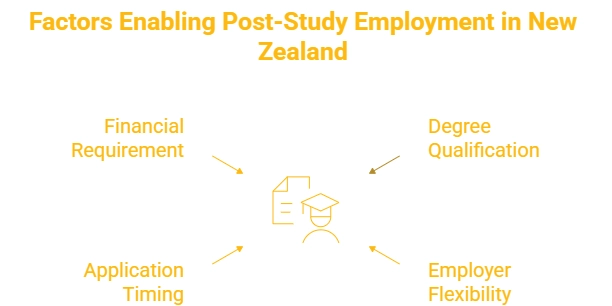
For overseas graduates, New Zealand provides ample post-study employment opportunities:
Key Features
- Depending on the degree of qualification, valid for one to three years.
- Work for any employer (Level 7+ degrees)
- Apply within 3 to 12 months before the student visa expires.
- NZD 5,000 in funds must be presented.
Why Choose Y-Axis?
- Professional Advice for UK Applicants: Tailored assistance for UK students submitting applications to universities in Europe.
- End-to-End Application Support: Everything under one roof, from choosing a university to applying for a visa.
- Scholarship Help: We assist you in locating and submitting applications for the top scholarships for which you qualify.
- Preparation and Review of Documents: Proper documentation is necessary to prevent application delays or rejections.
- Trusted by Thousands: More than 1 million customers have used Y-Axis to successfully complete their international education.
Frequently Asked Questions