

Posted on October 16 2026
What Are the Different Types of Germany Visas to Immigrate?

By , Editor & Director
Updated November 19 2026
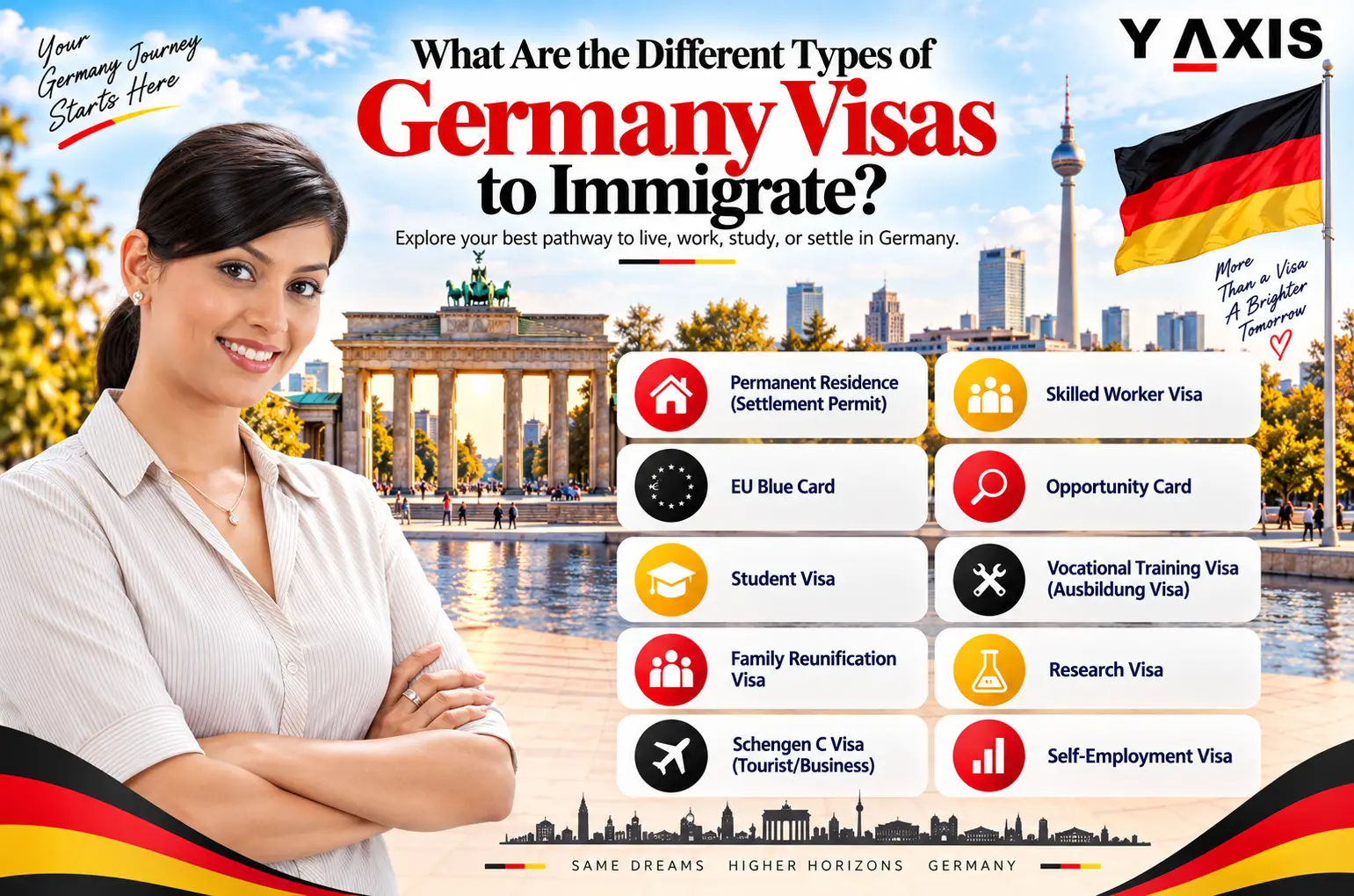
Germany offers different visa types for skilled professionals, job seekers, students and families looking to live, work or study in the country. Skilled professionals with a qualifying job offer can apply for a Skilled Worker Visa or EU Blue Card, while the Opportunity Card allows job seekers to look for jobs in Germany without a job offer.
International students can also apply for a Student Visa, while vocational training and family reunification visas support training and joining family in Germany. Those who meet the requirements can apply for permanent residence through a settlement permit. British citizens can generally enter Germany visa-free for short stays, while UK residents of other nationalities may need a national (Type D) visa, depending on their citizenship.
*Want to migrate to Germany? Book a free consultation with Y-Axis today.
Types of Germany Visas for Immigration
Germany offers several visa types for work, job seeking, study, vocational training and family reunification, each with specific eligibility requirements and application procedures.
|
Germany Visa Type |
Who Is Eligible? |
Main Purpose |
|
Permanent Residence (Settlement Permit) |
Foreign nationals who meet Germany’s residence period and other eligibility requirements |
To live and work permanently in Germany |
|
Qualified professionals with recognised qualifications and a qualifying job offer from a German employer |
To work in Germany |
|
|
Qualified professionals with a qualifying job offer that meets Germany’s salary requirements |
To work in a qualified role and access a route to permanent residence |
|
|
Skilled workers who meet the qualification or points-based requirements |
To enter Germany and look for a job without an existing job offer |
|
|
International students admitted to a recognised German university |
To pursue higher education in Germany |
|
|
Vocational Training Visa |
Applicants with a confirmed vocational training place who meet the visa requirements |
To complete vocational training and gain a professional qualification |
|
Family Reunification Visa |
Eligible spouses and dependent children joining qualifying family members in Germany |
To join family members living in Germany |
|
Research Visa |
Researchers with a hosting agreement or research contract from an eligible German institution |
To conduct research in Germany |
|
Self-Employment Visa |
Entrepreneurs and self-employed professionals who meet Germany’s business and financial requirements |
To establish a business or work independently in Germany |
Germany Visa Requirements
Germany visa requirements vary by visa type and nationality. Applicants generally need a valid passport, proof of financial means, health insurance and supporting documents, such as a German job offer, university admission letter or vocational training agreement. Additional requirements may include recognised qualifications and German language proficiency.
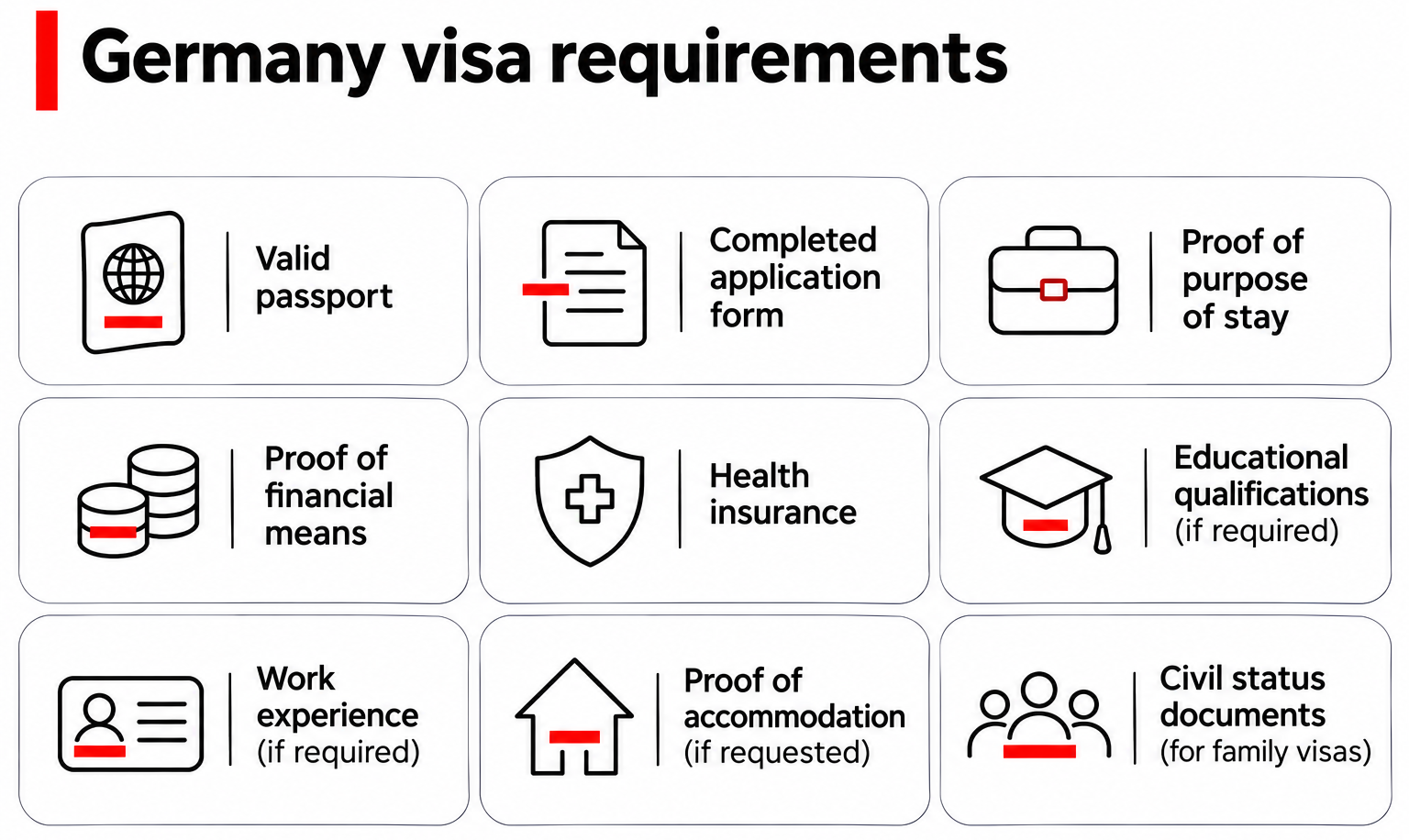
- Valid passport: A passport that meets the visa requirements.
- Visa application form: A completed form for the visa category.
- Proof of purpose of stay: A job offer, university admission letter or vocational training agreement.
- Proof of financial means: Bank statements, a blocked account or sponsorship, where required.
- Health insurance: Coverage for your stay in Germany.
- Educational qualifications: Recognised degrees or vocational certificates, where required.
- Work experience: Proof of relevant work experience, if required.
- German language proficiency: Proof of German language skills, where required.
- Proof of accommodation: Accommodation details, if requested.
- Civil status documents: Marriage or birth certificates for family reunification, where applicable.
- Visa fee: Payment of the applicable application fee.
*Not sure which Germany visa suits you? Get free eligibility assessment from Y-Axis today.
How to Apply for a Germany Visa from the UK?
To apply for a Germany visa from the UK, choose the right visa type, check the eligibility requirements, prepare your documents and submit your application through the designated German visa application process. The steps vary depending on your nationality and purpose of stay.
Step 1: Choose your Germany visa type
Select the visa that matches your plans, such as work, job seeking, study, vocational training or family reunification.
Step 2: Check your eligibility
Review the requirements for your visa, including qualifications, job offers, language skills and financial resources.
Step 3: Prepare your documents
Gather your passport, completed application form, proof of purpose of stay, financial evidence, health insurance and other required documents.
Step 4: Book your visa appointment
Follow the German mission’s instructions to book an appointment in the UK, if required.
Step 5: Submit your application
Attend your appointment, submit your documents, provide biometrics if required and pay the visa fee.
Step 6: Track your application
Check your application status while you wait for a decision. Processing times vary by visa type and individual circumstances.
Step 7: Travel to Germany
Once your visa is approved, arrange your travel and complete any required residence registration or permit formalities after arrival.
*Want to apply for German Visa? Book a free consultation with Y-Axis today.
Germany Visa Fees and Processing Time
The Germany national (Type D) visa fee is generally €75, payable when submitting your application. Processing times vary by visa type and individual circumstances, so apply well before your planned travel date. A separate fee may apply for your residence permit after arrival. Preparing all required documents in advance helps you submit a complete application.
*Planning to migrate to Germany? Get expert guidance from Y-Axis professionals.
FAQs
What are the different types of Germany visas for immigration?
Germany offers visas for skilled workers, job seekers, students, vocational trainees, researchers, entrepreneurs and family members. Eligible foreign nationals can also obtain permanent residence through a settlement permit.
Can British citizens move to Germany without a visa?
Yes. British citizens can enter Germany visa-free for up to 90 days within any 180-day period. For longer stays, they must apply for a residence permit at the local immigration office within their first 90 days. They cannot start work until authorised. UK residents with other nationalities may need a visa before travelling.
Can I move to Germany from the UK for work?
Yes. You can apply for a Skilled Worker Visa with a recognised qualification and a qualifying job offer. The EU Blue Card is another option for eligible professionals. The standard minimum salary for the EU Blue Card is €50,700 gross per year, or €45,934.20 for eligible categories.
Can I move to Germany without a job offer?
Yes. You can apply for an Opportunity Card to stay in Germany for up to 12 months while looking for work. You need a recognised qualification or at least six points under the points system and sufficient funds, generally €1,091 per month.
What is the difference between a Skilled Worker Visa and an EU Blue Card?
The Skilled Worker Visa covers qualified professionals with recognised vocational qualifications or university degrees and a qualifying job offer. The EU Blue Card generally requires a qualifying academic degree, a job offer and the applicable salary threshold. Eligible IT specialists may qualify without a degree. Blue Card holders may qualify for a settlement permit after 21 months with B1 German or 27 months with A1 German, subject to other requirements.
Do I need a visa to study in Germany from the UK?
No, British citizens generally do not need a visa before travelling to Germany to study. For stays longer than 90 days, they can apply for a study residence permit after arrival. UK residents with other nationalities may need a Student Visa before travelling. Applicants need university admission, health insurance and proof of sufficient funds in a blocked account.
Can I move to Germany for vocational training (Ausbildung)?
Yes. You can apply for a vocational training visa if you have a confirmed training place in Germany. B1 German is generally required, subject to exceptions. Eligible applicants under 35 without a training place can apply for a separate visa to search for one for up to nine months.
Can I bring my family to Germany?
Yes. Eligible spouses and minor children can join qualifying family members through family reunification. Requirements may include sufficient income, suitable accommodation and basic German skills for spouses. Language exemptions apply in certain cases, including eligible EU Blue Card holders’ families.
How much does a Germany national visa cost?
A German national (Type D) visa generally costs €75, while a short-stay Schengen visa costs €90. Fee exemptions or reductions may apply. A separate fee may apply for a residence permit after arrival.
How can I get permanent residence in Germany?
To get a settlement permit, skilled workers generally need three years with a qualifying residence permit, 36 months of pension contributions and B1 German, along with other requirements. Those who completed vocational training or a degree in Germany may qualify after two years and 24 months of contributions. EU Blue Card holders may qualify after 21 months with B1 German or 27 months with A1 German.
Tags:
Germany Visa
Germany Immigration
Germany Visa from UK
Germany Work Visa
Germany EU Blue Card
Germany Opportunity Card
Germany Job Seeker Visa
Germany Student Visa
Germany Family Reunification Visa
Germany Visa Requirements
Share
Y-Axis Services

Get it on your mobile

Get News alerts

Contact Y-Axis
Latest Article
Popular Post
Trending Article

Posted On November 18 2026
How Can I Get Permanent Residency in Italy?