

Posted on April 08 2026
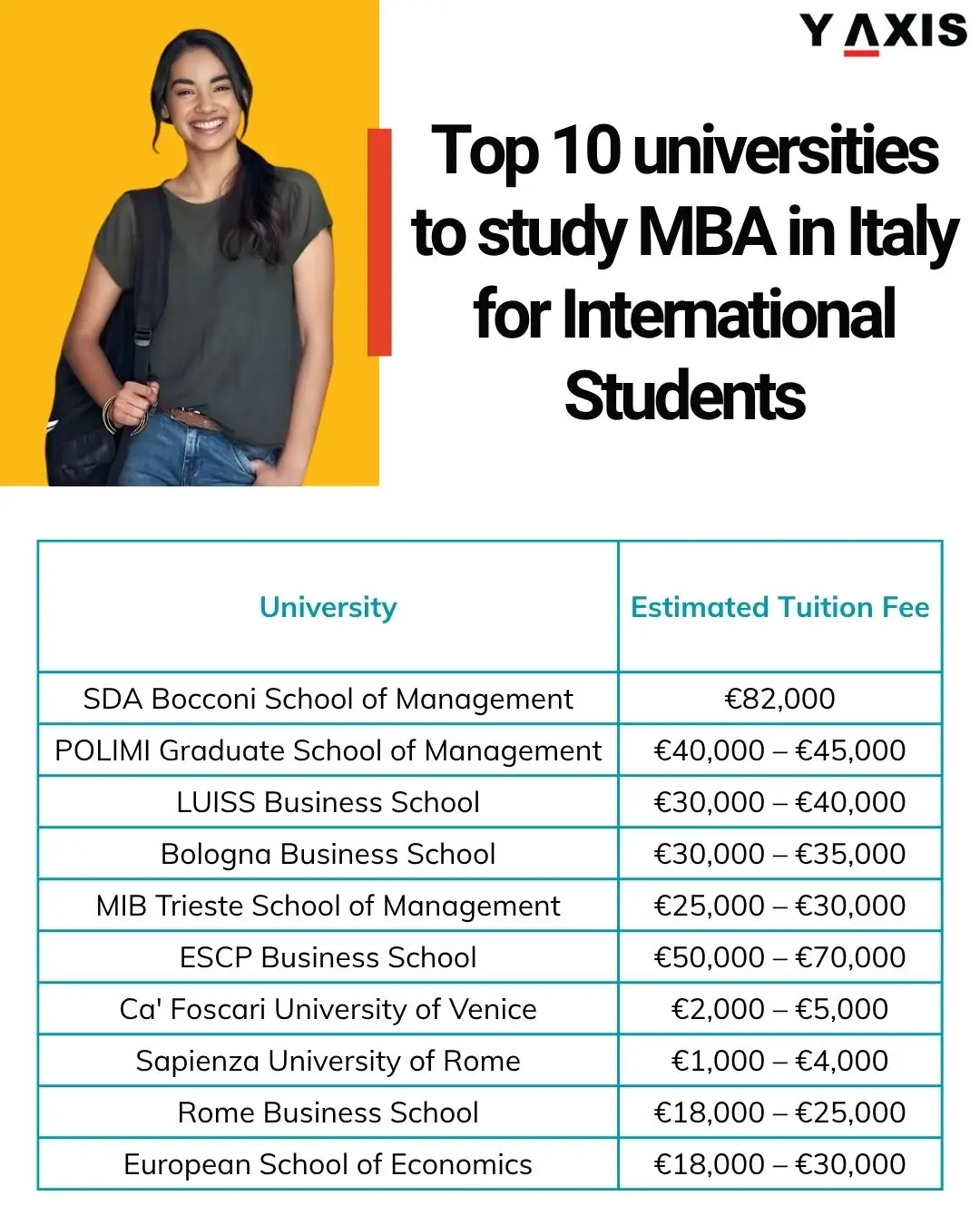
Top 10 universities to study MBA in Italy for International Students

By , Editor & Director
Updated April 23 2026
The top 10 MBA universities in Italy for international students include SDA Bocconi School of Management, POLIMI Graduate School of Management, and LUISS Business School. These universities offer globally ranked, English-taught MBA programs with strong career opportunities and high graduate employability. Other top business schools like Bologna Business School and MIB Trieste School of Management also provide specialised MBA programs in areas such as finance, luxury, innovation, and sustainability.
MBA programs in Italy are typically one-year (12 months) in duration and focus on practical learning through internships, industry projects, and global networking opportunities. Tuition fees generally range from €20,000 to €80,000, while public universities offer more affordable options. International students can also access scholarships and funding opportunities, along with strong career prospects across Europe after graduation.
*Want to study in Italy? Let Y-Axis help you through application process.
Why Italy is a Top Choice for MBA for International Students?
Italy has become a popular destination to study MBA due to its globally recognised business schools, affordable education, and strong career opportunities in Europe. MBA universities in Italy offer a mix of academic excellence and practical exposure, making them a strong choice for international students.
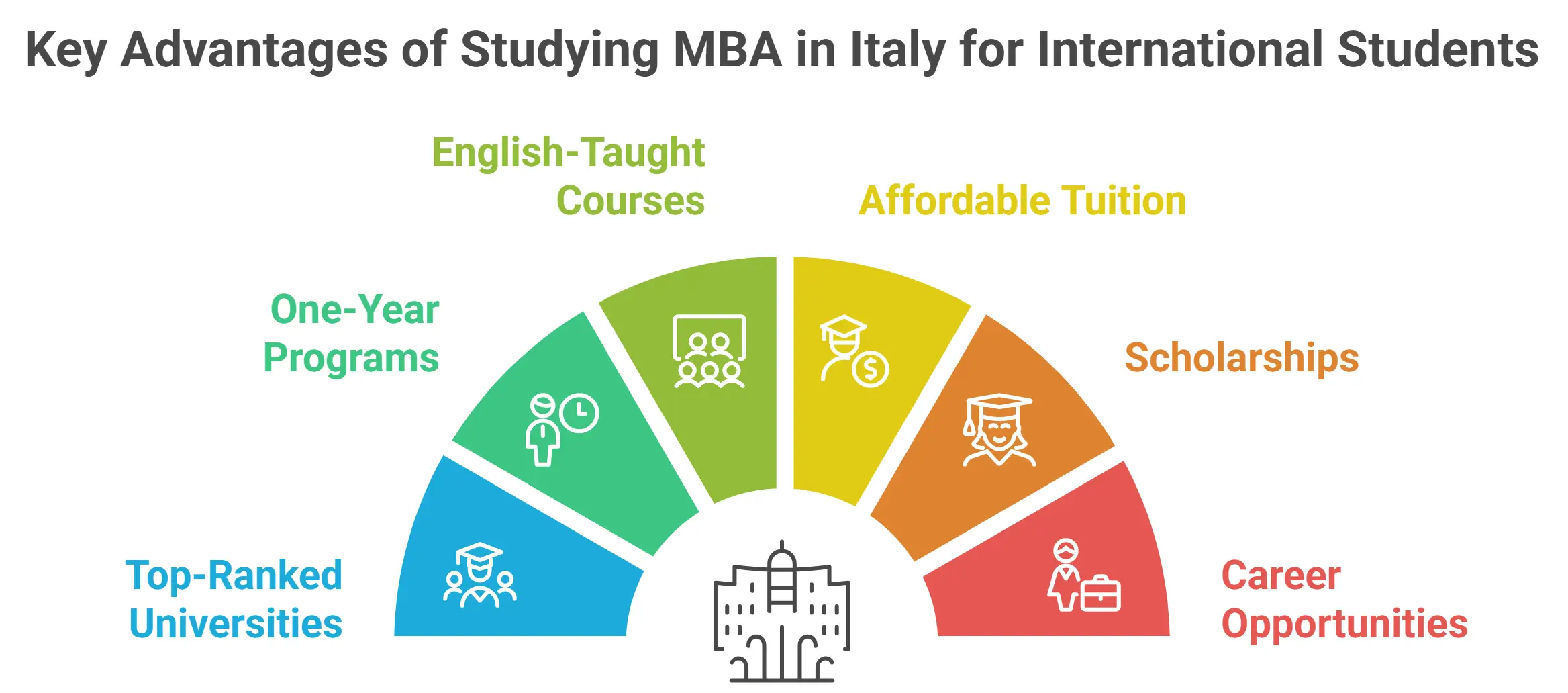
Key benefits for studying MBA in Italy for International students:
- Top-ranked MBA universities in Europe: Study at globally recognised institutions with strong academic reputation
- One-year MBA programs: Complete your degree in 12 months and enter the job market faster
- English-taught MBA courses: No need for Italian language proficiency
- Affordable tuition fees: Lower cost compared to the UK and US, with budget options available
- Scholarships for international students: Merit-based and university-funded financial support
- Strong career opportunities in Europe: Access roles in finance, consulting, technology, and luxury sectors
Top 10 MBA Universities in Italy for International Students
Italy offers some of the best MBA universities in Europe, with programs designed for international students seeking global careers. Most MBA programs are taught in English, typically last one year, and include internships, industry projects, and networking opportunities. Many universities also offer scholarships and funding options, making Italy a strong choice for studying MBA abroad.
|
University |
Estimated Tuition Fee |
|
SDA Bocconi School of Management |
€82,000 |
|
POLIMI Graduate School of Management |
€40,000 – €45,000 |
|
LUISS Business School |
€30,000 – €40,000 |
|
Bologna Business School |
€30,000 – €35,000 |
|
MIB Trieste School of Management |
€25,000 – €30,000 |
|
ESCP Business School |
€50,000 – €70,000 |
|
Ca' Foscari University of Venice |
€2,000 – €5,000 |
|
Sapienza University of Rome |
€1,000 – €4,000 |
|
Rome Business School |
€18,000 – €25,000 |
|
European School of Economics |
€18,000 – €30,000 |
Here are the top 10 MBA universities in Italy, based on rankings, program quality, and career prospects:
1. SDA Bocconi School of Management
SDA Bocconi is the top-ranked MBA University in Italy and consistently ranks among the best in Europe. Its one-year, English-taught MBA focuses on finance, consulting, and luxury management, with strong placement outcomes in global companies. The program typically requires work experience and GMAT scores. Bocconi offers merit-based scholarships and provides excellent career support through internships, networking, and global alumni connections.
2. POLIMI Graduate School of Management
POLIMI offers an innovation-driven MBA with a strong focus on technology, digital transformation, and sustainability. The program is taught in English and includes real-world business projects and international exposure. Scholarships are available for international students, and graduates benefit from strong career opportunities in consulting, tech, and modern business sectors.
3. LUISS Business School
LUISS Business School provides a globally focused MBA with strengths in leadership, entrepreneurship, and international business. The program is English-taught and includes internships, corporate projects, and networking opportunities. LUISS offers scholarships and strong career support, helping students secure roles in multinational companies.
4. Bologna Business School
Bologna Business School is known for its specialised MBA programs in areas such as food, wine, sustainability, and design. The program is taught in English and combines academic learning with industry projects and internships. Scholarships are available, and the school has strong connections with niche industries.
5. MIB Trieste School of Management
MIB Trieste offers an international and affordable MBA with a diverse student base. The program is taught in English and focuses on leadership, strategy, and global business. Scholarships are available, and the school provides strong career support and networking opportunities for international students.
6. ESCP Business School
ESCP Business School offers a multi-campus European MBA, allowing students to study across different countries. The program is taught in English and focuses on international management and global business strategy. Scholarships are available, and graduates benefit from strong international career prospects.
7. Ca' Foscari University of Venice
Ca’ Foscari University of Venice is well known for its business, economics, and international management programs. It offers English-taught MBA and business courses with a strong focus on global trade and finance. The university provides scholarships and opportunities for internships and international exposure, making it a good choice for students aiming for global business careers.
8. Sapienza University of Rome
Sapienza University of Rome is one of Europe’s most prestigious public universities, offering business and management programs with strong academic reputation. Some programs are available in English, and tuition fees are relatively affordable. International students can apply for scholarships and benefit from a large academic and research network.
9. Rome Business School
Rome Business School offers flexible and career-focused MBA programs designed for international students. The programs are taught in English and include specialisations in marketing, finance, and entrepreneurship. Scholarships are available, and the school provides strong career services, internships, and global exposure.
10. European School of Economics
The European School of Economics offers specialised MBA programs in finance, management, and entrepreneurship. The programs are taught in English and focus on personalised learning and global business exposure. Scholarships are available, and students benefit from internships and international career opportunities.
Eligibility Requirements to Study MBA in Italy for International Students
To study an MBA in Italy, international students must meet certain academic, professional, and language requirements set by universities. While specific criteria may vary depending on the institution and program, most MBA universities in Italy follow similar admission standards to ensure candidates are prepared for intensive, career-focused business education.
Key Eligibility Requirements for International Students to Study MBA in Italy:
- Bachelor’s degree: A recognised undergraduate degree in any discipline from an accredited university
- Work experience: Typically 2–5 years of professional experience preferred by most MBA programs
- English language proficiency: IELTS (6.5–7.0), TOEFL, or equivalent test scores required for English-taught programs
- GMAT / GRE scores: Required by top universities, while some institutions may offer waivers
- Statement of Purpose (SOP): A strong SOP explaining career goals and motivation to study MBA
- Updated CV / Resume: Highlighting work experience, skills, and achievements
- Valid passport: Required for application and student visa process
How to Apply for MBA in Italy for International Students?
To apply for an MBA in Italy, international students need to follow a step-by-step application process that includes selecting the right university, preparing required documents, and submitting applications on time. Most universities allow online applications through their official websites.
Step-by-Step Application Process for MBA in Italy for International Students:
Step 1: Choose the right university and program based on ranking, specialisation, fees, and career goals
Step 2: Check eligibility requirements to ensure you meet academic, work experience, and language criteria
Step 3: Prepare required documents including CV, SOP, LOR, academic transcripts, and test scores
Step 4: Submit your application online through the official university website before deadlines
Step 5: Attend interview (if required) as some universities may assess your profile and motivation
Step 6: Receive admission offer if selected by the university
Step 7: Apply for student visa after receiving your admission letter
*Want to study in Italy? Get expert guidance from Y-Axis professionals.
Best MBA Programs to Study in Italy for International Students
Italy offers a range of MBA programs aligned with different career goals and industry needs. Top schools such as SDA Bocconi School of Management, POLIMI Graduate School of Management, and LUISS Business School provide globally recognised, one-year programs focused on practical learning, internships, and career development for international students.
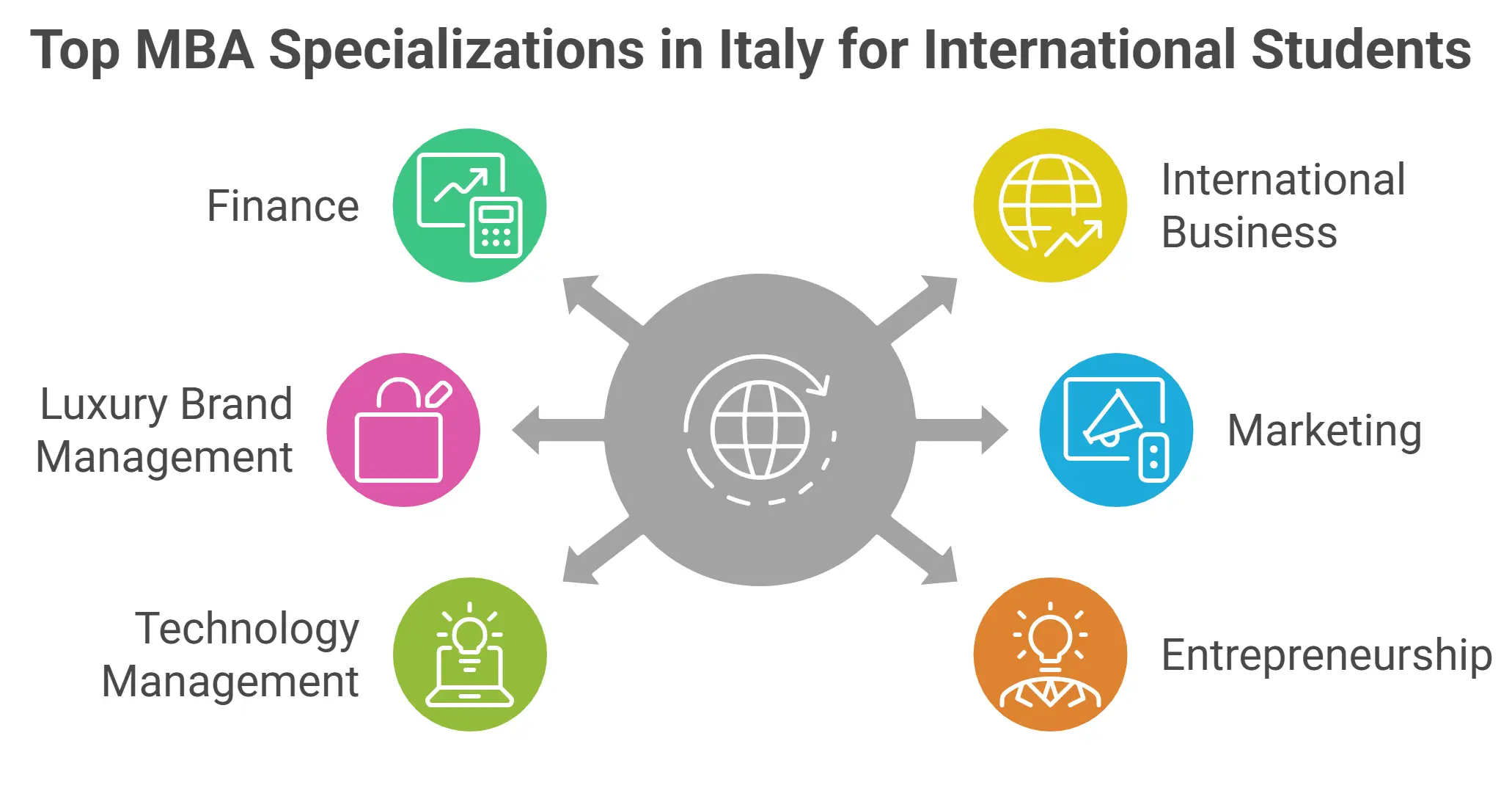
Popular MBA Specialisations in Italy for International Students:
- Finance: Focuses on investment banking, corporate finance, and financial analysis, preparing students for roles in global financial institutions
- International Business: Covers global trade, strategy, and cross-border management, ideal for careers in multinational companies
- Luxury Brand Management: Designed for roles in fashion, retail, and luxury industries, a strong sector in Italy
- Marketing: Includes digital marketing, brand management, and consumer insights for careers in diverse industries
- Technology Management: Focuses on innovation, data analytics, and digital transformation in modern businesses
- Entrepreneurship: Helps students develop business ideas, startups, and leadership skills
Top 10 Scholarships to Study MBA in Italy for International Students
The top MBA scholarships in Italy for international students include programs like Italian Government Scholarships, SDA Bocconi School of Management MBA Scholarships, and LUISS Business School Scholarships, which offer tuition fee waivers ranging from 10% to 100%, grants up to €27,000, and stipends of €900–€1,400 per month. These scholarships are awarded based on academic performance, work experience, and overall profile. Many universities offer generous funding options that can significantly reduce the cost of studying MBA in Italy for international students.
List of top 10 scholarships to study MBA in Italy for International Students:
|
Scholarship |
Amount Awarded |
|
Italian Government Scholarships (MAECI) |
100% funded + stipend of €900 |
|
SDA Bocconi School of Management MBA Scholarships |
10%–100% tuition fee waiver |
|
Bologna Business School Scholarships |
€10,000 – €35,000 tuition fee waiver |
|
LUISS Business School Scholarships |
10%–100% tuition fee waiver |
|
University of Bologna International Talents |
100% funded + €6,500 annual grant |
|
Erasmus Mundus Joint Master Degrees |
100% funded + €1,000–€1,400/month stipend |
|
MIB Trieste School of Management Scholarships |
20%–70% tuition fee waiver |
|
Rome Business School Scholarships |
20%–100% tuition fee waiver |
|
POLIMI Graduate School of Management Scholarships |
Up to 30% tuition fee contribution |
|
Ca' Foscari Honours Scholarships |
€10,000 per year |
Cost of Studying MBA in Italy for International Students
The cost of studying an MBA in Italy depends on the university, program type, and city. Compared to countries like the UK and the US, MBA programs in Italy are more affordable, while still offering globally recognised degrees and strong career opportunities. Tuition fees vary between private business schools and public universities, and students should also consider living expenses and other costs.
International students can reduce their overall expenses through scholarships, grants, and part-time work opportunities, making Italy a cost-effective destination for pursuing an MBA in Europe.
MBA in Italy Fees for International Students:
|
Category |
Estimated Cost |
|
Top Business Schools |
€30,000 – €80,000 |
|
Mid-Range Universities |
€15,000 – €30,000 |
|
Public Universities |
€1,000 – €5,000 |
|
Living Expenses (Monthly) |
€800 – €1,500 |
|
Total Annual Cost |
€15,000 – €90,000 |
Job Opportunities in Italy after MBA for International Students
After completing an MBA in Italy, international students can access a wide range of job opportunities across industries such as finance, consulting, technology, marketing, and luxury management. Graduates from top business schools like SDA Bocconi School of Management and POLIMI Graduate School of Management are highly valued by employers, especially for roles that require international business skills and practical experience.
Job Opportunities after MBA in Italy:
- Management Consultant: Work with consulting firms to solve business problems and improve company performance
- Business Analyst: Analyse data and support strategic decision-making in organisations
- Financial Analyst: Manage financial planning, investments, and risk analysis
- Marketing Manager: Lead branding, digital marketing, and market expansion strategies
- Project Manager: Handle business projects, operations, and team coordination
- Operations Manager: Oversee daily business operations and improve efficiency
Is MBA in Italy Worth It for International Students?
Yes, studying an MBA in Italy is worth it for international students due to its affordable tuition fees, globally recognised universities, and strong career opportunities in Europe. With one-year programs, scholarships, and access to industries like finance, consulting, and luxury management, Italy offers a strong return on investment compared to other countries.
Tips to Improve Your Chances of Getting MBA Admission in Italy
- Apply early: Submit your application in early rounds to increase admission and scholarship chances
- Build relevant work experience: Aim for at least 2–5 years of professional experience
- Write a strong SOP: Clearly explain your career goals, achievements, and why you chose Italy
- Prepare for GMAT (if required): A good score can strengthen your application for top schools
- Highlight leadership and achievements: Showcase your impact, skills, and career growth in your CV
- Choose the right universities: Apply to programs that match your profile and career goals
FAQs
What are the top universities to study MBA in Italy for international students?
The top universities to study MBA in Italy for international students include SDA Bocconi School of Management, POLIMI Graduate School of Management, LUISS Business School, Bologna Business School, and MIB Trieste School of Management. These institutions offer globally recognised MBA programs in Italy with strong career opportunities, international exposure, and industry-focused learning. Many of these universities provide English-taught MBA programs, scholarships, and placement support. Choosing the right MBA university in Italy depends on your career goals, budget, and preferred specialisation.
Is Italy a good country to study MBA for international students?
Yes, Italy is a great destination to study MBA for international students due to its globally ranked universities, affordable tuition fees, and strong job opportunities in Europe. MBA programs in Italy are typically one year long and focus on practical learning, internships, and networking. Cities like Milan and Rome offer access to global companies and industries such as finance, consulting, and luxury. Studying MBA in Italy also allows international students to explore career opportunities across Europe.
What is the cost of studying MBA in Italy for international students?
The cost of studying MBA in Italy for international students ranges from €20,000 to €80,000 at top business schools, while public universities offer programs from €1,000 to €5,000. In addition to tuition fees, students should consider living expenses of €800 to €1,500 per month. MBA scholarships in Italy can significantly reduce costs. Compared to countries like the UK and the US, MBA in Italy is more affordable while offering high-quality education and career opportunities.
Are MBA programs in Italy taught in English?
Yes, most MBA programs in Italy are taught in English, especially at top universities like SDA Bocconi, POLIMI, and LUISS Business School. This makes it easier for international students to study MBA in Italy without needing Italian language skills. English-taught MBA programs in Italy focus on global business, leadership, and industry-specific skills. However, learning basic Italian can be helpful for daily life and job opportunities after graduation.
What are the eligibility requirements for MBA in Italy?
To study MBA in Italy, international students typically need a bachelor’s degree, 2–5 years of work experience, and proof of English proficiency such as IELTS or TOEFL. Some top MBA universities in Italy may require GMAT or GRE scores. Applicants must also submit documents like a CV, Statement of Purpose (SOP), and letters of recommendation. Meeting these eligibility requirements is important to secure admission in top MBA programs in Italy.
Is GMAT required for MBA in Italy?
GMAT is required for many top MBA universities in Italy, such as SDA Bocconi School of Management. However, some universities offer GMAT waivers or do not require it, especially for candidates with strong work experience or academic backgrounds. Including a good GMAT score can improve your chances of admission and scholarships. It is recommended to check specific requirements for each MBA program in Italy before applying.
What are the best MBA specialisations in Italy?
Popular MBA specialisations in Italy include finance, international business, marketing, luxury brand management, technology management, and entrepreneurship. These MBA programs in Italy are designed to meet industry demand and provide strong career opportunities. Italy is especially known for luxury and fashion management programs. Choosing the right MBA specialisation depends on your career goals and industry preferences.
How long is an MBA in Italy?
Most MBA programs in Italy are one year (12 months) in duration, making them shorter compared to MBA programs in countries like the US. This allows international students to save time and money while gaining valuable business skills. Some programs may extend to 15–18 months depending on internships or specialisations. The one-year MBA format is one of the key advantages of studying MBA in Italy.
Are there scholarships for MBA in Italy for international students?
Yes, there are many MBA scholarships in Italy for international students offered by universities, government programs, and organisations. Scholarships can include tuition fee waivers, grants, and monthly stipends. Popular options include Italian Government Scholarships and university-specific funding. These scholarships help reduce the cost of studying MBA in Italy and make it more accessible for international students.
Can international students work while studying MBA in Italy?
Yes, international students can work part-time while studying MBA in Italy. Students are allowed to work up to 20 hours per week during the academic year. This helps cover living expenses and gain work experience. Many MBA programs in Italy also include internships and industry projects, which improve employability after graduation.
What are the job opportunities after MBA in Italy?
After completing an MBA in Italy, international students can explore job opportunities in industries such as finance, consulting, marketing, technology, and luxury management. Common roles include management consultant, business analyst, financial analyst, and marketing manager. Italy’s strong business ecosystem and connections to European markets provide excellent career prospects. Graduates from top MBA universities in Italy are highly valued by employers and often secure roles in multinational companies across Europe.
What is the average salary after MBA in Italy?
The average salary after MBA in Italy ranges from €35,000 to €60,000 per year for entry-level positions. With experience, salaries can increase to €60,000 to €100,000 or more, depending on the role, industry, and university. Graduates from top MBA universities in Italy often receive competitive salary packages and better career opportunities across Europe. Salary growth also depends on work experience and networking during the MBA program.
Which city is best to study MBA in Italy?
Milan is considered the best city to study MBA in Italy due to its strong financial sector, global companies, and business environment. Rome is also a good option for management, policy, and international business roles. Bologna is known for specialised programs and strong industry connections. Choosing the best city depends on your career goals, preferred industry, and networking opportunities.
Is MBA in Italy worth it for international students?
Yes, MBA in Italy is worth it for international students due to its affordable tuition fees, globally recognised universities, and strong career opportunities in Europe. One-year MBA programs help save time and cost while providing valuable business skills. Access to internships, networking, and international exposure makes Italy a strong choice for pursuing an MBA. It offers a good return on investment compared to other countries.
How to apply for MBA in Italy for international students?
To apply for MBA in Italy, international students must select a university, check eligibility requirements, and prepare documents such as CV, SOP, LOR, and academic transcripts. Applications are usually submitted online through university websites. Some universities may require interviews as part of the selection process. After receiving admission, students must apply for an Italian student visa to study MBA in Italy.
What documents are required for MBA in Italy?
Documents required for MBA in Italy include academic transcripts, a bachelor’s degree certificate, CV or resume, Statement of Purpose (SOP), letters of recommendation, and English language test scores. Some universities may also require GMAT or GRE scores. A valid passport is also necessary for the application and visa process. Preparing complete and accurate documents is essential for successful admission.
Can I stay in Italy after MBA?
Yes, international students can stay in Italy after completing their MBA by applying for a post-study work permit or job search visa. This allows graduates to remain in Italy and look for employment opportunities. Once a job is secured, students can convert their visa into a work permit. Italy also provides access to broader job opportunities across the European Union.
Are MBA degrees from Italy recognised globally?
Yes, MBA degrees from top universities in Italy are globally recognised and respected by employers. Institutions like SDA Bocconi and POLIMI Graduate School of Management are ranked among the best business schools in Europe. An MBA from Italy enhances global career opportunities, especially in Europe, and is valued across industries such as finance, consulting, and management.
What is the difference between MBA in Italy and UK?
MBA in Italy is generally more affordable and typically one year in duration, while MBA programs in the UK can be more expensive. Italy offers strong programs in luxury, fashion, and international business, while the UK is known for finance and consulting. Both countries offer high-quality education, but Italy provides better value for money and lower living costs for international students.
Can I study MBA in Italy without work experience?
Some universities in Italy allow MBA admission without work experience, but most top MBA programs prefer candidates with 2–5 years of professional experience. Work experience helps students gain practical insights and improves career opportunities after graduation. Applicants without experience can still apply to certain programs, but having work experience increases the chances of admission and success.
Tags:
MBA in Italy
Study in Italy
MBA Abroad
Business Schools in Italy
International Students
Study Abroad Europe
MBA Universities
Italy Education
Share
Y-Axis Services

Get it on your mobile

Get News alerts

Contact Y-Axis
Latest Article
Popular Post
Trending Article

Posted On October 23 2026
Australia vs. Germany for Engineering Professionals: Which Country Should You Choose?