

Posted on May 03 2026
Top 10 Countries Offering Nursing Jobs with Visa Sponsorship

By , Editor & Director
Updated May 05 2026
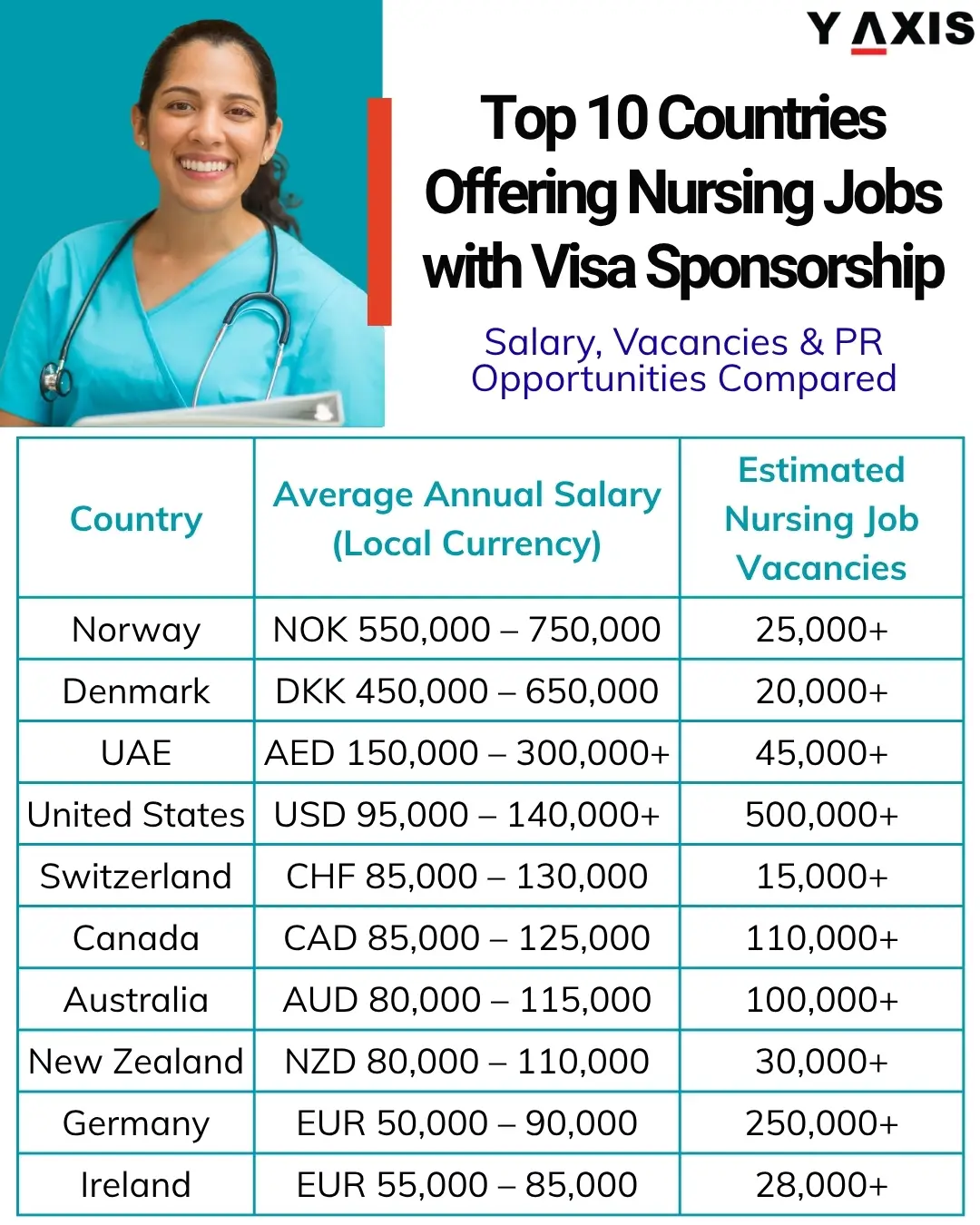
The best countries offering nursing jobs abroad with visa sponsorship include Australia, Canada, New Zealand, Ireland, United States, Germany, Norway, Denmark, Switzerland, and United Arab Emirates. These countries are actively hiring international nurses to fill shortages across hospitals, aged care, and public healthcare systems.
Demand remains high for registered nurses, ICU, and emergency care professionals as healthcare systems expand to support ageing populations. According to the World Health Organization, the global healthcare sector could face a shortage of around 4.5 million nurses by 2030. To address this, employers are offering visa sponsorship, competitive salaries, and relocation support for overseas nurses.
*Want to work abroad? Get expert assistance from Y-Axis to find the right job faster.
Why Demand for International Nurses Is Growing?
Healthcare systems across countries like Australia, Canada, and United States are facing ongoing staff shortages, increasing the need for international nurses. Hospitals, aged-care facilities, and community healthcare providers are actively recruiting overseas professionals to meet rising patient demand and support ageing populations.
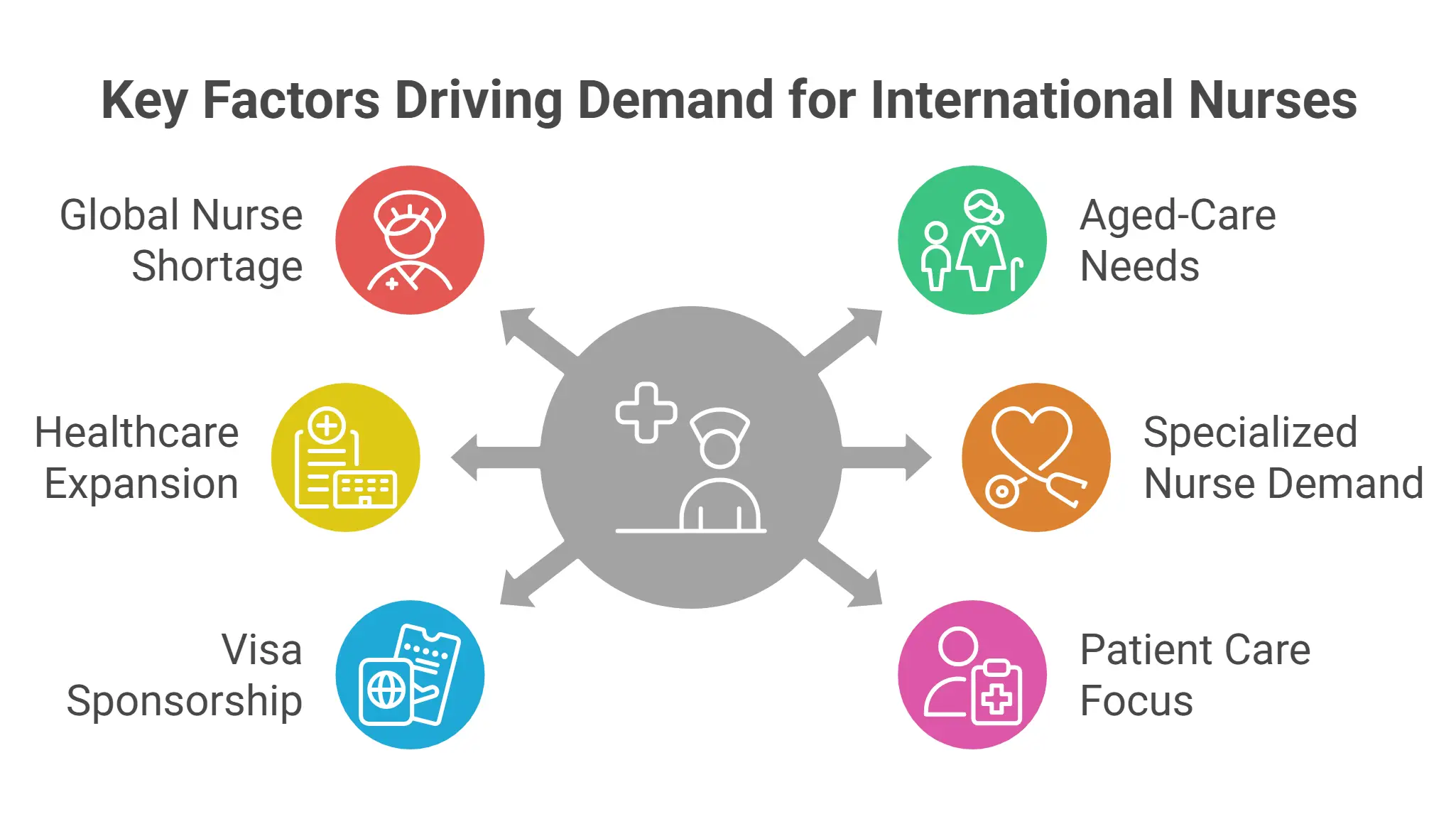
Key factors driving demand for nursing jobs abroad:
- Global shortage of qualified nurses
- Growing need for aged-care and long-term care services
- Expansion of hospitals and healthcare infrastructure
- High demand for ICU, emergency, and mental health nurses
- More employers offering visa sponsorship for overseas nurses
- Increased focus on patient care quality and staffing levels
Benefits of Working Abroad as a Nurse with Visa Sponsorship
Working abroad as a nurse with visa sponsorship offers better pay, global experience, and long-term career opportunities. Countries such as Australia, Canada, and New Zealand are actively hiring international nurses to address workforce shortages and expand healthcare services.
- Competitive salaries and improved earning potential
- Employer-sponsored visas with relocation support
- Pathways to permanent residency in selected countries
- International work experience and career growth
- Benefits such as accommodation, insurance, and paid leave
- High demand across ICU, emergency, and aged-care roles
Top 10 Countries Offering Nursing Jobs Abroad with Visa Sponsorship
Nursing jobs abroad with visa sponsorship are expanding as healthcare systems face ongoing staff shortages. Countries such as Australia, Canada, New Zealand, Ireland, and United States are actively hiring international nurses across hospitals, aged-care facilities, and public healthcare systems. Many employers offer competitive salaries, relocation support, and long-term residency pathways.
|
Country |
Average Annual Salary (Local Currency) |
Estimated Nursing Job Vacancies |
|
Australia |
AUD 80,000 – 115,000 |
100,000+ |
|
New Zealand |
NZD 80,000 – 110,000 |
30,000+ |
|
Canada |
CAD 85,000 – 125,000 |
110,000+ |
|
Ireland |
EUR 55,000 – 85,000 |
28,000+ |
|
United States |
USD 95,000 – 140,000+ |
500,000+ |
|
Germany |
EUR 50,000 – 90,000 |
250,000+ |
|
Norway |
NOK 550,000 – 750,000 |
25,000+ |
|
Denmark |
DKK 450,000 – 650,000 |
20,000+ |
|
Switzerland |
CHF 85,000 – 130,000 |
15,000+ |
|
UAE |
AED 150,000 – 300,000+ |
45,000+ |
*Want to work abroad? Get expert assistance from Y-Axis to find the right job faster.
Best Countries for Nursing Jobs Abroad with Visa Sponsorship
Many countries are actively hiring nurses from overseas as healthcare demand continues to rise and local workforce shortages persist. Opportunities are available across hospitals, aged-care facilities, and specialist care units, with employers offering visa sponsorship and relocation support. Countries leading international nurse recruitment include Australia, Canada, New Zealand, Ireland, and United States, where demand remains consistently high.
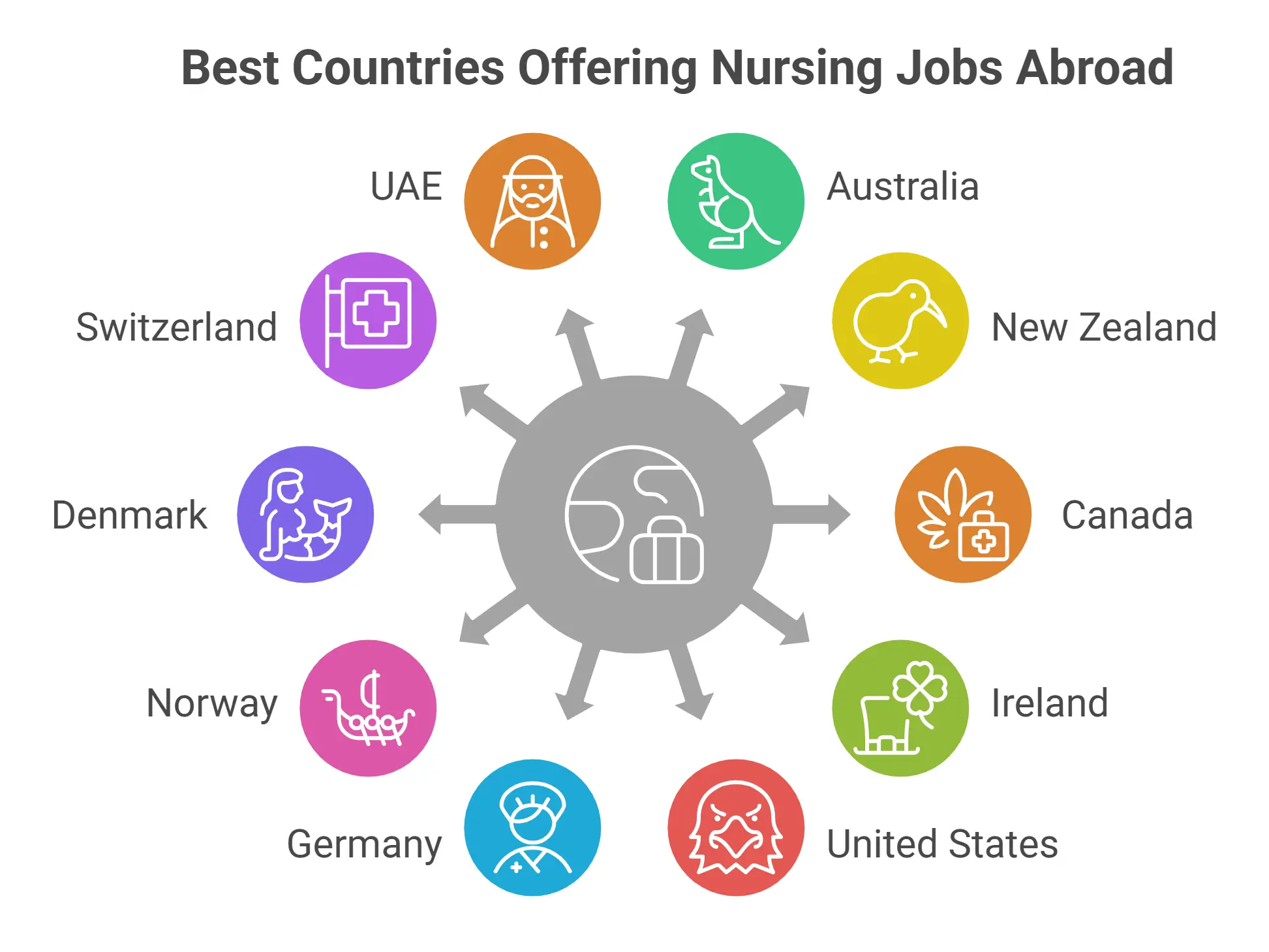
Some of the top countries offering nursing jobs abroad with visa sponsorship include:
Nursing Jobs in Australia with Visa Sponsorship
Australia offers strong job opportunities for international nurses, with consistent demand across hospitals, aged-care facilities, and community health services. Many employers provide nursing jobs with visa sponsorship to address workforce shortages and support growing healthcare needs.
Demand remains high across major cities such as Sydney, Melbourne, Brisbane, and Perth, particularly for specialised roles where salaries can exceed AUD 110,000 annually. With sponsored work visas, relocation support, and clear permanent residency pathways, Australia continues to be a leading destination for nurses planning to work abroad.
|
Factor |
Details |
|
Nursing Job Market & Job Vacancies for the Next Decade |
Australia is expected to face ongoing nursing shortages, with over 100,000 vacancies projected across hospitals, aged-care services, and regional healthcare sectors over the next decade. |
|
In-Demand Nursing Roles & Skills |
Strong demand for registered nurses, ICU nurses, emergency nurses, aged-care nurses, mental health nurses, and community health professionals, especially in regional and remote areas. |
|
Visa Sponsorship Programs for Nurses |
Employers commonly sponsor nurses through Skills in Demand Visa (Subclass 482), while skilled migration options include Subclass 189, 190, and Employer Nomination Scheme (186). |
|
Fast-Track Visa Options for Nurses |
Employer-sponsored roles and state-nominated programs can offer faster processing, particularly for nurses listed on skilled occupation lists. |
|
PR / Long-Term Residence Opportunities |
Clear pathways to permanent residency through skilled migration, employer sponsorship, and regional visa streams after meeting eligibility criteria. |
|
Licensing & Registration Requirements |
Nurses must register with the Australian Health Practitioner Regulation Agency (AHPRA) by meeting qualification and assessment requirements. |
|
Language Requirements |
IELTS (typically 7.0 overall) or OET (minimum B grade) is required to meet English language standards. |
|
Eligibility for Dependents |
Sponsored nurses can bring spouses and dependent children under most visa categories. |
|
Benefits for Family Members |
Dependents may receive work rights, access to public education, and healthcare benefits depending on visa type. |
*Planning to Work in Australia? Let Y-Axis guide you through every step of the process.
Nursing Jobs in New Zealand with Visa Sponsorship
New Zealand offers strong opportunities for international nurses, with consistent demand across hospitals, aged-care services, rehabilitation centres, and community healthcare settings. Workforce shortages and rising healthcare needs continue to drive recruitment across cities such as Auckland, Wellington, Christchurch, and Hamilton.
Demand is especially high for nurses in aged care, ICU, emergency care, and mental health services. Experienced professionals in specialised roles can earn salaries exceeding NZD 110,000 annually. With employer-sponsored work visas, relocation support, and clear pathways to permanent residency, New Zealand remains an attractive option for nurses seeking long-term career growth and a balanced lifestyle abroad.
|
Factor |
Details |
|
Nursing Job Market & Job Vacancies for the Next Decade |
New Zealand is expected to face ongoing nursing shortages, with over 30,000 vacancies projected across hospitals, aged-care services, and community healthcare sectors over the next decade. |
|
In-Demand Nursing Roles & Skills |
High demand for registered nurses, aged-care nurses, ICU nurses, emergency nurses, mental health nurses, and community healthcare professionals. |
|
Visa Sponsorship Programs for Nurses |
The Accredited Employer Work Visa (AEWV) is the primary pathway used by approved healthcare employers to sponsor overseas nurses. |
|
Fast-Track Visa Options for Nurses |
Green List pathways can provide faster residence processing for eligible nursing roles. |
|
PR / Long-Term Residence Opportunities |
Nurses may qualify for Straight to Residence or Work to Residence pathways under New Zealand immigration programs. |
|
Licensing & Registration Requirements |
Registration with the Nursing Council of New Zealand (NCNZ) is required before practicing. |
|
Language Requirements |
IELTS, OET, or equivalent English language tests are required to meet registration standards. |
|
Eligibility for Dependents |
Nurses can include spouses and dependent children under most visa categories. |
|
Benefits for Family Members |
Dependents may receive work rights, access to education, and healthcare benefits depending on visa type. |
*Want to work in New Zealand? Get expert assistance from Y-Axis to find the right job faster.
Nursing Jobs in Canada with Visa Sponsorship
Canada offers strong opportunities for international nurses, with growing demand across public hospitals, aged-care facilities, rehabilitation centres, and home healthcare services. Ongoing workforce shortages and an ageing population continue to drive recruitment across provinces such as Ontario, British Columbia, and Alberta.
Demand remains high for skilled nurses in major cities like Toronto, Vancouver, and Calgary, where experienced professionals in specialised roles can earn over CAD 125,000 annually. With employer-sponsored work permits, relocation support, and well-defined permanent residency pathways, Canada is a preferred destination for nurses planning long-term careers abroad.
|
Factor |
Details |
|
Nursing Job Market & Job Vacancies for the Next Decade |
Canada is expected to face continued nursing shortages, with over 110,000 vacancies projected across provinces due to retirements, healthcare expansion, and rising patient demand over the next decade. |
|
In-Demand Nursing Roles & Skills |
High demand for registered nurses, licensed practical nurses (LPNs), ICU nurses, emergency nurses, mental health nurses, and aged-care professionals. |
|
Visa Sponsorship Programs for Nurses |
Common pathways include employer-sponsored work permits, Provincial Nominee Programs (PNPs), and Temporary Foreign Worker Program (TFWP) routes. |
|
Fast-Track Visa Options for Nurses |
Healthcare-focused Express Entry draws and provincial priority streams can offer faster processing for eligible candidates. |
|
PR / Long-Term Residence Opportunities |
Strong pathways to permanent residency through Express Entry and provincial nomination programs across multiple provinces. |
|
Licensing & Registration Requirements |
Nurses must register with the relevant provincial regulatory body based on where they intend to work. |
|
Language Requirements |
English or French proficiency required through IELTS, CELPIP, or TEF depending on province and role. |
|
Eligibility for Dependents |
Nurses can include spouses and dependent children under most immigration pathways. |
|
Benefits for Family Members |
Spouses may receive open work permits, while children can access public education and healthcare benefits after eligibility. |
*Want to work in Canada? Get expert guidance from Y-Axis professionals.
Nursing Jobs in Ireland with Visa Sponsorship
Ireland continues to attract international nurses as healthcare providers expand recruitment to address staffing shortages across hospitals, private healthcare groups, and elderly care services. Demand remains strong in cities such as Dublin, Cork, Galway, and Limerick, where experienced nurses in specialised roles can earn over EUR 85,000 annually.
Healthcare employers in Ireland support overseas nurses through sponsored employment permits, along with relocation assistance and onboarding support. With stable job demand and clear long-term residence options, Ireland is a strong choice for nurses planning to build a career abroad.
|
Factor |
Details |
|
Nursing Job Market & Job Vacancies for the Next Decade |
Ireland is expected to face ongoing shortages, with over 28,000 nursing vacancies projected across hospitals, elderly care services, and community healthcare sectors over the next decade. |
|
In-Demand Nursing Roles & Skills |
High demand for registered nurses, mental health nurses, ICU nurses, community nurses, elderly care nurses, and specialist nursing professionals. |
|
Visa Sponsorship Programs for Nurses |
The Critical Skills Employment Permit and General Employment Permit are the main pathways used by healthcare employers to sponsor overseas nurses. |
|
Fast-Track Visa Options for Nurses |
The Critical Skills Employment Permit provides priority processing for eligible nursing occupations. |
|
PR / Long-Term Residence Opportunities |
Nurses can qualify for long-term residence and Stamp 4 permission after meeting employment and residency requirements. |
|
Licensing & Registration Requirements |
Registration with the Nursing and Midwifery Board of Ireland (NMBI) is required before practicing. |
|
Language Requirements |
IELTS, OET, or equivalent English qualifications are generally required for registration and employment. |
|
Eligibility for Dependents |
Nurses can include spouses and dependent children under most visa pathways. |
|
Benefits for Family Members |
Dependents may receive work rights, access to education, and healthcare services depending on residence eligibility. |
*Want to work in Ireland? Get expert assistance from Y-Axis to find right job faster.
Nursing Jobs in United States with Visa Sponsorship
The United States continues to offer strong opportunities for international nurses, with high demand across hospitals, aged-care facilities, rehabilitation centres, and community healthcare services. Ongoing workforce shortages, retirements, and expanding healthcare needs are expected to create over 500,000 nursing job openings over the next decade.
Demand is especially strong in major cities such as New York, Houston, Los Angeles, and Chicago, where experienced nurses in specialised roles can earn over USD 140,000 annually. Many healthcare employers support overseas nurses through sponsored visa programs, relocation assistance, and long-term residency pathways, making the US a leading destination for nursing careers abroad.
|
Factor |
Details |
|
Nursing Job Market & Job Vacancies for the Next Decade |
The United States is expected to face continued shortages, with over 500,000 nursing job openings projected across hospitals, aged-care facilities, and community healthcare services over the next decade. |
|
In-Demand Nursing Roles & Skills |
High demand for registered nurses, ICU nurses, emergency nurses, mental health nurses, aged-care nurses, and nurse practitioners with specialised clinical experience. |
|
Visa Sponsorship Programs for Nurses |
Common pathways include employer-sponsored EB-3 visas and limited H-1B visa options for specialised healthcare roles. |
|
Fast-Track Visa Options for Nurses |
EB-3 visa sponsorship remains a primary route for overseas nurses seeking long-term employment in the US. |
|
PR / Long-Term Residence Opportunities |
Nurses may qualify for permanent residency (Green Card) through employer-sponsored immigration pathways. |
|
Licensing & Registration Requirements |
Nurses must pass the NCLEX-RN exam and obtain licensure through the relevant State Board of Nursing. |
|
Language Requirements |
English proficiency may be required through IELTS, OET, or equivalent exams depending on licensing and employer requirements. |
|
Eligibility for Dependents |
Nurses can include spouses and dependent children under eligible visa categories. |
|
Benefits for Family Members |
Dependents may access education, healthcare, and work opportunities depending on visa type and employer support. |
*Want to work in the USA? Avail Y-Axis Resume Marketing Services to shortlist the job faster.
Nursing Jobs in Germany with Visa Sponsorship
Germany continues to attract international nurses as hospitals and elderly care facilities face ongoing workforce shortages. Demand is rising across cities such as Berlin, Munich, Frankfurt, and Hamburg, particularly in aged care, ICU, and hospital-based roles.
Healthcare employers actively recruit overseas nurses through sponsored work visas, often providing relocation support, German language training, accommodation assistance, and guidance with qualification recognition. With stable demand, structured pathways to long-term residence, and a strong healthcare system, Germany remains a solid option for nurses planning careers abroad.
|
Factor |
Details |
|
Nursing Job Market & Job Vacancies for the Next Decade |
Germany is expected to face significant shortages, with over 250,000 nursing vacancies projected across hospitals and elderly care services over the next decade. |
|
In-Demand Nursing Roles & Skills |
High demand for geriatric nurses, hospital nurses, ICU nurses, elderly care specialists, and trained nursing professionals across care facilities. |
|
Visa Sponsorship Programs for Nurses |
Common pathways include the Skilled Worker Visa and EU Blue Card for qualified healthcare professionals. |
|
Fast-Track Visa Options for Nurses |
Accelerated skilled worker procedures and employer-supported recognition processes can speed up hiring timelines. |
|
PR / Long-Term Residence Opportunities |
Nurses may qualify for permanent residence after meeting residency and employment requirements in Germany. |
|
Licensing & Registration Requirements |
Qualification recognition (Anerkennung) and registration with the relevant regional authority are required before practicing. |
|
Language Requirements |
German language proficiency at B1 or B2 level is typically required depending on role and region. |
|
Eligibility for Dependents |
Nurses can include spouses and dependent children under most visa pathways. |
|
Benefits for Family Members |
Dependents may receive work rights, access to public education, and healthcare coverage after registration. |
*Want to work in Germany? Get expert assistance from Y-Axis to find right job faster.
Nursing Jobs in the UAE with Visa Sponsorship
The UAE continues to attract international nurses with strong demand across hospitals, specialty clinics, and private healthcare groups in Dubai, Abu Dhabi, Sharjah, and Al Ain. Expanding healthcare services and medical tourism are driving consistent recruitment of overseas nurses across multiple specialties.
Experienced nurses working in ICU, emergency care, operating theatre, and specialised hospital roles can earn over AED 300,000 annually. Many employers offer sponsored work visas along with accommodation, medical insurance, annual airfare, and relocation support, making the UAE a popular choice for nurses seeking high-paying roles abroad.
|
Factor |
Details |
|
Nursing Job Market & Job Vacancies for the Next Decade |
The UAE is expected to see continued demand, with over 45,000 nursing vacancies projected across hospitals and healthcare facilities over the next decade due to expanding services and medical tourism growth. |
|
In-Demand Nursing Roles & Skills |
High demand for ICU nurses, emergency nurses, paediatric nurses, operating theatre nurses, mental health nurses, and registered nurses across private and public healthcare sectors. |
|
Visa Sponsorship Programs for Nurses |
Hospitals, clinics, and healthcare groups commonly provide employer-sponsored work visas for international nurses. |
|
Fast-Track Visa Options for Nurses |
Employer-led recruitment and direct hiring programs can support faster visa processing for qualified candidates. |
|
PR / Long-Term Residence Opportunities |
Long-term residence options, including the UAE Golden Visa, may be available for experienced healthcare professionals. |
|
Licensing & Registration Requirements |
Nurses must obtain licensing from DHA (Dubai), DOH (Abu Dhabi), or MOHAP depending on the emirate of employment. |
|
Language Requirements |
English proficiency is generally required; Arabic is beneficial but not mandatory for most roles. |
|
Eligibility for Dependents |
Nurses can sponsor spouses and dependent children under UAE residence visa programs. |
|
Benefits for Family Members |
Dependents may receive residence rights, access to healthcare services, and private education options depending on eligibility. |
*Want to work in the UAE? Avail Y-Axis Resume Marketing Services to find the right job faster.
Nursing Jobs in Norway with Visa Sponsorship
Norway offers attractive opportunities for international nurses, with steady demand across public hospitals, elderly care services, and community healthcare settings. An ageing population and ongoing workforce shortages continue to drive recruitment, particularly in cities such as Oslo, Bergen, Trondheim, and Stavanger.
Nurses with experience in elderly care, ICU, mental health, and community healthcare are in high demand. Salaries for experienced nurses can exceed NOK 700,000 annually, along with strong work-life balance and high living standards. Many employers support overseas nurses with visa sponsorship, relocation assistance, and language training, making Norway a desirable option for long-term careers abroad.
|
Factor |
Details |
|
Nursing Job Market & Job Vacancies for the Next Decade |
Norway is expected to face ongoing shortages, with over 25,000 nursing vacancies projected across hospitals, elderly care facilities, and municipal healthcare services over the next decade. |
|
In-Demand Nursing Roles & Skills |
High demand for registered nurses, geriatric nurses, ICU nurses, mental health nurses, and community healthcare professionals, especially in municipal and elderly care sectors. |
|
Visa Sponsorship Programs for Nurses |
Skilled Worker Residence Permit is the main pathway used by employers to sponsor qualified international nurses. |
|
Fast-Track Visa Options for Nurses |
Employer-supported applications and priority processing for healthcare roles can reduce visa processing times. |
|
PR / Long-Term Residence Opportunities |
Nurses may qualify for permanent residence after typically 3 years of continuous legal residence and employment. |
|
Licensing & Registration Requirements |
Registration with the Norwegian Directorate of Health (Helsedirektoratet) is required, including credential recognition and approval. |
|
Language Requirements |
Norwegian language proficiency at B2 level is generally required for licensing and employment. |
|
Eligibility for Dependents |
Nurses can bring spouses and dependent children under residence permit programs. |
|
Benefits for Family Members |
Dependents may receive work rights, access to public education, and full healthcare benefits under Norway’s welfare system. |
*Want to work in Norway? Avail Y-Axis Resume Marketing Services to find the right job faster.
Nursing Jobs in Denmark with Visa Sponsorship
Denmark offers stable opportunities for international nurses, with consistent demand across public hospitals, elderly care services, and municipal healthcare systems. Ongoing workforce shortages and an ageing population are driving recruitment across cities such as Copenhagen, Aarhus, Odense, and Aalborg.
Demand is particularly strong in elderly care, hospital nursing, mental health, and rehabilitation services. Experienced nurses can earn salaries exceeding DKK 650,000 annually, along with strong social benefits and a high quality of life. Employers in Denmark increasingly support overseas nurses through visa sponsorship, relocation assistance, and structured Danish language training programs.
|
Factor |
Details |
|
Nursing Job Market & Job Vacancies for the Next Decade |
Denmark is expected to face ongoing shortages, with over 20,000 nursing vacancies projected across hospitals, elderly care, and municipal healthcare services over the next decade. |
|
In-Demand Nursing Roles & Skills |
High demand for registered nurses, geriatric nurses, hospital nurses, mental health nurses, rehabilitation nurses, and community healthcare professionals. |
|
Visa Sponsorship Programs for Nurses |
Common pathways include the Positive List Scheme for healthcare professionals and employer-sponsored residence permits for nurses. |
|
Fast-Track Visa Options for Nurses |
The Positive List scheme can offer faster work permit processing for in-demand nursing roles. |
|
PR / Long-Term Residence Opportunities |
Nurses may qualify for permanent residence after typically 4 years of continuous legal residence and employment (can vary based on eligibility). |
|
Licensing & Registration Requirements |
Nurses must obtain authorization from the Danish Patient Safety Authority, including qualification recognition and adaptation training if required. |
|
Language Requirements |
Danish language proficiency is required (typically B2 or higher) for licensing and employment in most healthcare roles. |
|
Eligibility for Dependents |
Nurses can bring spouses and dependent children under Danish residence permit programs. |
|
Benefits for Family Members |
Dependents may receive work rights, access to public education, and healthcare benefits under Denmark’s welfare system. |
*Want to work in Denmark? Avail Y-Axis Resume Marketing Services to find the right job faster.
Nursing Jobs in Switzerland with Visa Sponsorship
Switzerland offers some of the highest-paying nursing opportunities in Europe, with steady demand across hospitals, rehabilitation centres, elderly care facilities, and specialised clinics. Workforce shortages and an ageing population continue to drive recruitment, particularly in cities such as Zurich, Geneva, Basel, and Bern.
Demand is strong for nurses in ICU, elderly care, rehabilitation, and specialised hospital roles. Experienced nurses can earn salaries exceeding CHF 130,000 annually, along with excellent working conditions and high living standards. While visa sponsorship is more structured compared to other countries, many healthcare employers support qualified international nurses with work permits, relocation assistance, and onboarding support.
|
Factor |
Details |
|
Nursing Job Market & Job Vacancies for the Next Decade |
Switzerland is expected to face ongoing shortages, with over 15,000 nursing vacancies projected across hospitals, elderly care, and healthcare institutions over the next decade. |
|
In-Demand Nursing Roles & Skills |
High demand for registered nurses, ICU nurses, geriatric nurses, rehabilitation nurses, and specialised clinical nursing professionals. |
|
Visa Sponsorship Programs for Nurses |
Work permits (L Permit and B Permit) are issued through employer sponsorship, subject to quota systems and cantonal approval. |
|
Fast-Track Visa Options for Nurses |
Faster processing may be possible for highly qualified nurses in shortage occupations, especially with employer support and recognized qualifications. |
|
PR / Long-Term Residence Opportunities |
Nurses may qualify for permanent residence after typically 10 years of continuous residence (shorter in some cases depending on integration and permit type). |
|
Licensing & Registration Requirements |
Qualification recognition through the Swiss Red Cross (SRC) is required before practicing as a nurse. |
|
Language Requirements |
Proficiency in German, French, or Italian (typically B2 level) is required depending on the region of employment. |
|
Eligibility for Dependents |
Nurses can bring spouses and dependent children under Swiss residence permit programs. |
|
Benefits for Family Members |
Dependents may receive residence rights, access to education, and healthcare services depending on permit type and canton regulations. |
*Want to work in Switzerland? Avail Y-Axis Resume Marketing Services to find the right job faster.
Eligibility for Nursing Jobs Abroad with Visa Sponsorship
To work as a nurse abroad with visa sponsorship, you must meet core requirements related to qualifications, licensing, experience, and immigration. While exact criteria vary by country, most employers look for the following:
- Recognised nursing degree or diploma accepted in the destination country
- Minimum 1–2 years of clinical experience (hospital or aged care preferred)
- Registration or eligibility with the destination authority (e.g., Australian Health Practitioner Regulation Agency, Nursing Council of New Zealand)
- Required exams or qualification recognition (e.g., NCLEX for USA, credential recognition in Europe)
- Language test scores (IELTS/OET for English countries or B1–B2 local language for Europe)
- Confirmed job offer from an employer willing to provide visa sponsorship
How to Apply for Nursing Jobs Abroad with Visa Sponsorship?
Getting a nursing job abroad with visa sponsorship involves a clear process—from choosing the right country to securing a job offer and completing visa formalities. Following the steps below can help you move through each stage efficiently and avoid common delays.
Step 1: Choose your destination country based on demand, salary, and licensing requirements
Step 2: Check eligibility criteria including qualifications, experience, and language requirements
Step 3: Complete licensing or registration with the relevant authority in the country
Step 4: Prepare required documents such as CV, certificates, license, and language test results
Step 5: Apply for nursing jobs through hospitals, healthcare groups, and recruitment agencies
Step 6: Attend interviews and secure a job offer from an employer offering visa sponsorship
Step 7: Apply for a work visa with employer support and complete immigration formalities
Step 8: Relocate and complete onboarding including final registration and training
*Want to work abroad? Get expert assistance from Y-Axis to find the right job faster.
Tips to Get Nursing Jobs Abroad with Visa Sponsorship
- Target high-demand specialties (ICU, emergency, aged care, mental health)
- Achieve strong language scores (IELTS/OET) to meet licensing standards
- Start licensing early with bodies like Australian Health Practitioner Regulation Agency or Nursing Council of New Zealand
- Tailor your CV to each country’s format and highlight clinical experience
Apply Now
FAQs
Which countries offer nursing jobs with visa sponsorship?
Countries like Australia, Canada, New Zealand, Ireland, United States, and Germany offer nursing jobs with visa sponsorship due to ongoing healthcare shortages. These countries actively recruit international nurses for hospitals, aged-care facilities, and community healthcare roles, with employers providing sponsored visas, relocation support, and long-term career pathways.
Can international nurses get visa sponsorship?
Yes, international nurses can get visa sponsorship from hospitals and healthcare employers in countries facing workforce shortages. Employers sponsor qualified candidates to fill roles in hospitals, aged care, and specialised units. To qualify, nurses must meet licensing, language, and experience requirements. Sponsorship typically includes a job offer, work visa processing, and sometimes relocation support for overseas candidates.
What qualifications are required to work abroad as a nurse?
To work abroad as a nurse, you need a recognised nursing degree or diploma, a valid license, and relevant clinical experience. Most countries also require registration with their nursing authority and proof of language proficiency such as IELTS or OET. Some destinations may require additional exams or credential recognition before allowing international nurses to practice professionally.
Is work experience mandatory for nursing jobs abroad?
Work experience is usually required for nursing jobs abroad, with most employers preferring candidates who have at least 1–2 years of clinical experience. Experience in hospital settings, ICU, emergency care, or aged care significantly improves hiring chances. While some countries may accept fresh graduates, experienced nurses are more likely to qualify for visa sponsorship and licensing approvals.
Which language tests are required for nurses abroad?
Language tests such as IELTS or OET are commonly required for nurses applying to English-speaking countries. These tests ensure nurses can communicate effectively in clinical settings. For European countries, local language proficiency at B1 or B2 level is often required. Meeting language requirements is essential for licensing, visa approval, and employment in international healthcare systems.
Do nurses need to pass exams like NCLEX?
Yes, nurses applying to countries like United States must pass the NCLEX-RN exam to obtain a nursing license. This exam assesses clinical knowledge and readiness to practice safely. Other countries may require different exams or qualification recognition processes depending on their healthcare regulations and licensing requirements for international nurses.
Which country pays nurses the highest salaries?
Countries such as United States, Switzerland, and Australia offer some of the highest salaries for nurses globally. Pay varies based on experience, specialization, and location, but these countries consistently provide competitive compensation along with additional benefits such as bonuses, insurance, and relocation support.
How long does it take to get a nursing job abroad?
Getting a nursing job abroad typically takes between 3 to 12 months, depending on the country’s licensing process, job search timeline, and visa approval. Completing language tests, registration, and document verification may take time. Early preparation and meeting eligibility requirements can help speed up the process and reduce delays.
Are there permanent residency options for nurses abroad?
Yes, many countries offer permanent residency options for nurses through skilled migration and employer-sponsored pathways. Countries like Canada, Australia, and New Zealand provide structured PR routes. These pathways allow nurses to settle long-term and access additional benefits while working abroad.
Can nurses take their family abroad?
Yes, most countries allow nurses to bring their spouses and dependent children under family or dependent visa programs. Family members may receive benefits such as work rights for spouses, access to education for children, and healthcare coverage. Eligibility depends on the visa type and country regulations but is commonly supported.
Do employers provide relocation support?
Many healthcare employers provide relocation support to international nurses, including airfare, temporary accommodation, onboarding assistance, and settlement support. Some employers also help with licensing and documentation. These benefits reduce the financial burden of moving abroad and make the transition smoother for overseas nurses.
What are the in-demand nursing roles abroad?
In-demand nursing roles abroad include ICU nurses, emergency nurses, aged-care nurses, mental health nurses, and community healthcare professionals. These roles are essential to address healthcare shortages and support patient care needs. Nurses with specialised skills are more likely to secure jobs with visa sponsorship and higher salaries.
Is it easy to get a nursing job abroad?
Getting a nursing job abroad is possible but requires meeting eligibility, licensing, and language requirements. Demand is high globally, which increases opportunities for qualified nurses. However, the process involves multiple steps such as exams, registration, and visa approval. Preparation improves your chances significantly.
Which country is easiest for nurses to migrate?
Countries like Canada and Australia are considered easier for nurses to migrate due to structured immigration systems and high demand. These countries offer clear visa pathways, PR options, and employer sponsorship programs, making them popular choices for international nurses.
Do nurses need local language skills in Europe?
Yes, most European countries require nurses to have local language proficiency, usually at B1 or B2 level. This ensures effective communication with patients and colleagues. Countries like Germany, Norway, and Denmark have strict language requirements, which are essential for licensing and employment.
Can freshers apply for nursing jobs abroad?
Freshers can apply for nursing jobs abroad, but opportunities are limited compared to experienced nurses. Most employers prefer candidates with at least 1–2 years of experience. However, some programs accept newly qualified nurses if they meet licensing and language requirements.
What documents are required for nursing jobs abroad?
Required documents include a CV, nursing degree certificates, professional license, work experience letters, and language test results. Additional documents such as passport and registration proof may also be required. Preparing documents in advance helps speed up the application process.
Are recruitment agencies helpful for nursing jobs abroad?
Yes, licensed healthcare recruitment agencies can help nurses find job opportunities abroad by connecting them with employers offering visa sponsorship. They assist with applications, interviews, and documentation. Using reliable agencies can make the process faster and easier.
What is the average salary for nurses abroad?
The average salary for nurses abroad varies by country, typically ranging from around GBP 35,000 to over USD 140,000 annually depending on experience, specialization, and location. Countries like United States and Switzerland offer higher salaries, while others provide competitive pay with additional benefits such as housing, insurance, and relocation support.
How to start applying for nursing jobs abroad?
Start by choosing a country based on demand and requirements, then check eligibility, complete licensing, and prepare required documents. Apply to hospitals and recruitment agencies offering visa sponsorship. Once you receive a job offer, proceed with the visa application process to begin your international nursing career.
Tags:
Nursing Jobs Abroad
Visa Sponsorship Jobs
Healthcare Careers
International Nurses
Nurse Jobs
Work Abroad
Nursing Careers
Overseas Jobs
Share
Y-Axis Services

Get it on your mobile

Get News alerts

Contact Y-Axis
Latest Article
Popular Post
Trending Article

Posted On October 21 2026
What is the Average Salary in the UAE?