

Posted on August 06 2026
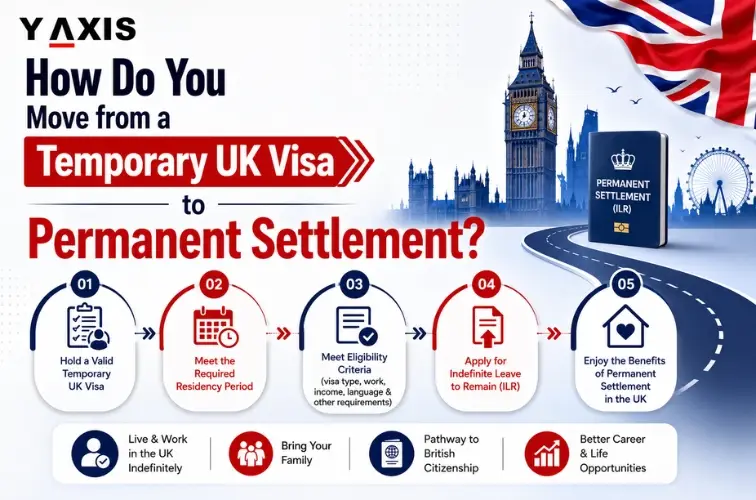
How Do You Move from a Temporary UK Visa to Permanent Settlement?

By , Editor & Director
Updated September 09 2026
To move from a temporary UK visa to permanent settlement, you must qualify for Indefinite Leave to Remain (ILR) by completing the required residence period and meeting the ILR requirements for your visa route. Temporary visas such as the Skilled Worker Visa, Health and Care Worker Visa, Family Visa, Global Talent Visa, Innovator Founder Visa, Scale-up Worker Visa, and UK Ancestry Visa can lead to permanent settlement. Most of these routes require 5 years of qualifying residence, while the Global Talent Visa and Innovator Founder Visa require 3 years.
Which temporary UK visas lead to permanent settlement (ILR)?
The UK offers several temporary visa routes that lead to permanent settlement through Indefinite Leave to Remain (ILR). Settlement routes are available across work, family, business, ancestry, and long residence categories. Eligibility for ILR depends on your visa route and meeting the relevant settlement requirements.
|
Temporary UK Visa |
Who Can Apply? |
Qualifying Period for ILR |
|
Skilled Worker Visa |
Sponsored skilled workers |
5 years |
|
Health and Care Worker Visa |
Healthcare and social care workers |
5 years |
|
Global Talent Visa |
Leaders and emerging leaders |
3 or 5 years |
|
Innovator Founder Visa |
Entrepreneurs |
3 years |
|
Scale-up Worker Visa |
Employees of scale-up businesses |
5 years |
|
Family Visa |
Partners, spouses, parents, and eligible family members |
5 years |
|
UK Ancestry Visa |
Commonwealth citizens with UK ancestry |
5 years |
|
International Sportsperson Visa |
Elite sportspersons and coaches |
5 years |
|
Minister of Religion Visa |
Ministers of religion and missionaries |
5 years |
|
Long Residence |
Applicants with continuous lawful residence in the UK |
10 years |
*Not sure which visa route leads to UK ILR? Y-Axis can assess your profile and guide you to the fastest settlement route.
What Are the Eligibility Requirements for UK Permanent Settlement (ILR)?
To qualify for UK permanent settlement (ILR), you must complete the qualifying period for your visa route without exceeding permitted absences, meet the English language requirement, and pass the Life in the UK Test.
- Qualifying residence period: Complete the minimum residence period for your visa route. Most routes require 5 years, some require 3.
- Continuous residence: Maintain continuous lawful residence and stay within permitted absence limits.
- English language requirement: Demonstrate the required level of English proficiency.
- Life in the UK Test: Pass this test on British history, culture, and society.
- Visa route requirements: Continue to meet the conditions of your visa route until you apply for ILR.
*Want to check your eligibility for UK Settlement? Get a free assessment from Y-Axis.
Documents Required for UK Permanent Settlement (ILR)
Most permanent settlement (ILR) applications require identity documents, proof of qualifying residence, English language evidence, Life in the UK Test proof, and supporting documents for your visa route. The exact documents required depend on your immigration route and personal circumstances.
-Document-Checklist.webp)
- Valid passport or travel document
- Current immigration status
- Continuous residence records
- Absence records during the qualifying period
- Life in the UK Test pass notification
- English language evidence
- Visa route-specific documents
- Additional documents requested by the Home Office
How to Apply for Permanent Settlement (ILR) from a Temporary UK Visa?
To apply for permanent settlement (ILR) from a temporary UK visa, complete the qualifying residence period for your visa route, meet the ILR eligibility requirements, and submit your application before your visa expires. The application is submitted online through the UK Government, followed by document submission and identity verification.
Step 1: Check Your Eligibility
Confirm that you have completed the qualifying residence period and meet all ILR eligibility requirements for your visa route.
Step 2: Gather the Required Documents
Prepare your identity documents and all supporting documents required for your ILR application, including evidence that you meet the requirements of your visa route.
Step 3: Complete the Online Application
Complete the appropriate ILR application form through the UK Government website and upload the required documents.
Step 4: Pay the Application Fee
Pay the applicable ILR application fee when submitting your application.
Step 5: Verify Your Identity
Complete the required identity verification process by following the instructions provided during your application.
Step 6: Receive a Decision
The Home Office will assess your application and notify you of the outcome.
*Want to apply for Permanent Settlement in the UK? Let Y-Axis guide you through the application process.
UK Permanent Settlement (ILR) Fees
The cost of applying for UK permanent settlement (ILR) is £3,226 per applicant. Optional Priority and Super Priority services are available at an additional cost for faster application processing.
|
Fee Type |
Fee |
|
ILR application fee |
£3,226 |
|
Priority service (optional) |
£500 |
|
Super Priority service (optional) |
£1,000 |
UK Permanent Settlement (ILR) Processing Time
UK permanent settlement (ILR) applications are usually processed within 6 months. Applicants who choose Priority or Super Priority services may receive a faster decision, where these services are available.
|
Processing Service |
Processing Time |
|
Standard service |
Up to 6 months |
|
Priority service |
Within 5 working days |
|
Super Priority service |
By the end of the next working day |
Benefits of Permanent Settlement (ILR) in the UK
Permanent settlement (ILR) removes the time limits and sponsorship ties attached to temporary visas, giving you long-term stability in the UK.
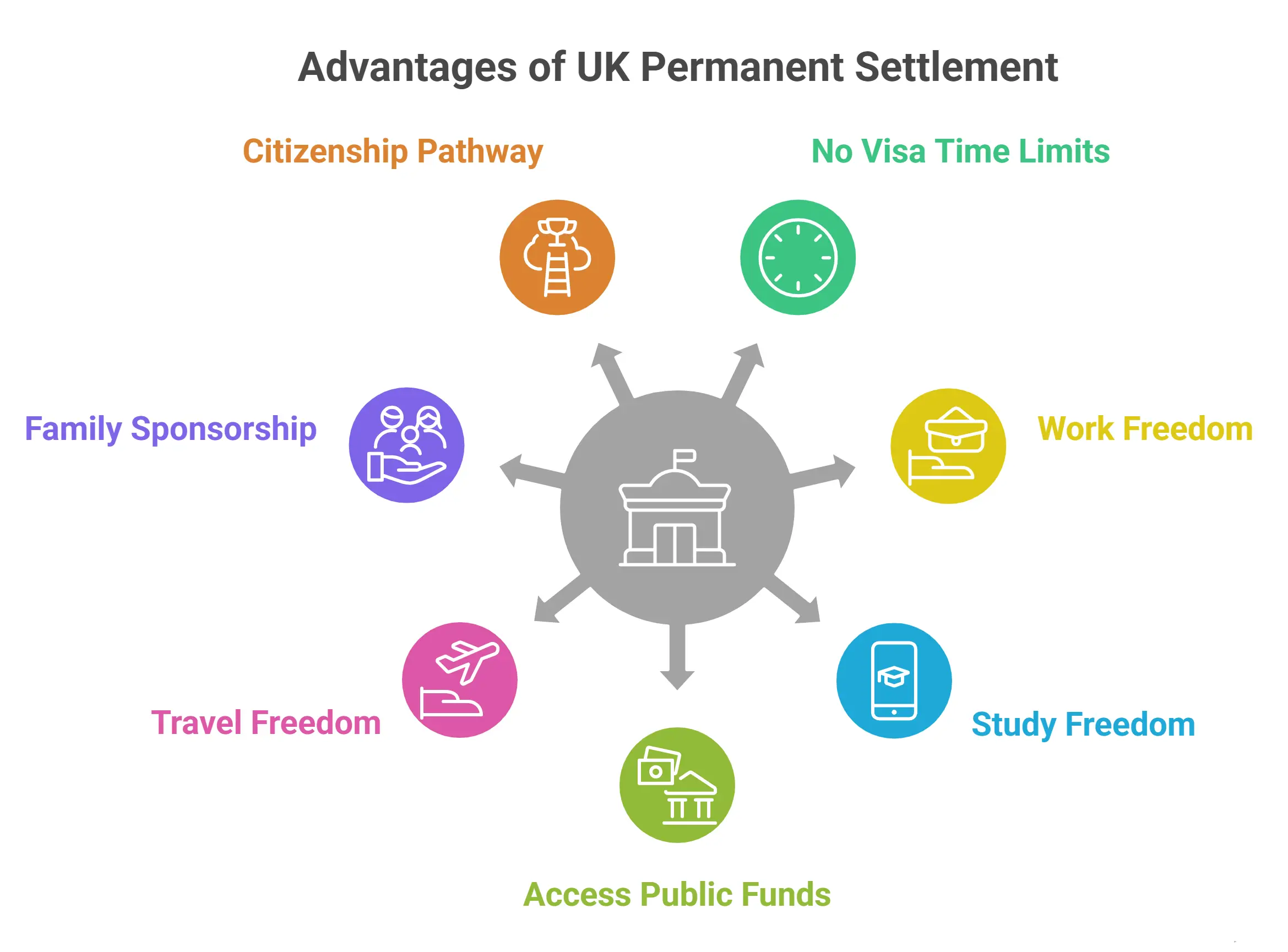
- Live in the UK without visa time restrictions
- Work for any employer or become self-employed without sponsorship
- Study without visa restrictions
- Access public funds and benefits
- Travel in and out of the UK without applying for a new visa
- Sponsor your family members to join you in the UK
- Build a pathway to British Naturalisation
Does Switching UK Visa Routes Affect Permanent Settlement?
Yes. You can switch UK visa routes and still qualify for permanent settlement (ILR), provided your new visa is on an eligible settlement route. Whether your previous residence counts towards the qualifying period depends on the visa routes you switch between. For example, switching from a Student Visa to a Skilled Worker Visa starts a new qualifying period, while switching between eligible settlement routes may allow your qualifying residence to continue under the relevant ILR rules.
Common Mistakes to Avoid When Applying for UK Permanent Settlement (ILR)
- Applying before completing the qualifying residence period
- Exceeding the permitted absence limits
- Submitting incomplete or incorrect documents
- Not meeting the English language or Life in the UK Test requirements
- Not meeting your visa route requirements
- Providing incorrect or inconsistent information
How Can Y-Axis Help You?
Y-Axis has guided thousands of applicants through the move from a temporary UK visa to permanent settlement, with over 25 years of experience across UK visa routes and Indefinite Leave to Remain (ILR) applications.
- Eligibility assessment: Confirm whether your current visa route qualifies you for ILR and when.
- Document support: Prepare the residence, language, and route-specific evidence your application needs.
- Application guidance: Get step-by-step support through the online ILR application.
- Biometric appointment guidance: Understand the identity verification steps after you submit.
- Settlement guidance: Plan your next steps, including the path to British citizenship, after receiving ILR.
Start your journey from a temporary UK visa to permanent settlement with Y-Axis today.
FAQs
How long do I need to live in the UK before applying for ILR?
You need 5 years of continuous residence in the UK before applying for ILR on most temporary visa routes. The Global Talent Visa and Innovator Founder Visa reduce this to 3 years, while the Long Residence route offers ILR after 10 years. You can submit your application up to 28 days before your qualifying period ends.
Does a Student Visa count towards ILR?
Yes, a Student Visa counts towards ILR through the 10-year Long Residence route. To reach ILR within 5 years, switch to a route such as the Skilled Worker Visa, which starts your qualifying period fresh from the date you switch. The Graduate Visa works the same way, serving as a stepping stone into a settlement route.
Can I switch visas and keep my ILR qualifying period?
Yes, you keep your ILR qualifying period when switching between most work and family visa routes, as long as you apply before your current visa expires. Switching from a Student Visa or Graduate Visa to a settlement route starts your qualifying period fresh on the new route. Applying early keeps your residence continuous through the switch.
How many days can I spend outside the UK during my ILR qualifying period?
You can spend up to 180 days outside the UK in any 12-month period during your ILR qualifying period. Staying within this limit keeps your continuous residence intact and your application on track. Keeping dated travel records throughout this period supports your eligibility when you apply.
What happens if I use more than 180 days of absence for ILR?
Using more than 180 days of absence in a 12-month period restarts your ILR qualifying period from your return date. Exceptions support applicants who exceed this limit for serious illness, pregnancy, or assisting during a national or international crisis, provided you have supporting evidence.
How much does an ILR application cost?
An ILR application costs £3,226 per applicant, effective from 8 April 2026. Priority service adds £500, and Super Priority service adds £1,000 for faster processing. The Immigration Health Surcharge does not apply to ILR applications, keeping your total settlement cost lower than most visa renewals.
How long does an ILR application take to process?
An ILR application takes up to 6 months through the standard service. Priority service delivers a decision within 5 working days, and Super Priority service delivers a decision by the end of the next working day after your appointment. These faster options are available depending on your visa category.
Do I need to pass the Life in the UK Test for ILR?
Yes, you need to pass the Life in the UK Test for ILR, with exemptions available if you are under 18, over 65, or have a long-term physical or mental condition. Your unique test reference number serves as proof when you apply. The test covers 24 multiple-choice questions, and a score of 75% or higher passes.
What English language level do I need for ILR?
You need English proficiency at level B1 on the CEFR scale for ILR, rising to B2 from 26 March 2027. An approved SELT certificate, a degree taught in English, or nationality from a majority English-speaking country all count as valid proof. Meeting this requirement on an earlier visa in the same category can carry forward to your ILR application.
Can time on different visas combine to reach ILR?
Yes, time combines to reach ILR within the same settlement family, such as moving between Skilled Worker sponsors or from a Partner Visa to ILR as a partner. The Student Visa, Visitor Visa, and Graduate Visa run independently of settlement-route time. Reviewing your visa history before applying helps you calculate your qualifying period accurately.
What is the difference between ILR and British citizenship?
ILR removes time limits on your UK stay, while British citizenship adds full nationality, a British passport, and voting rights in general elections. Citizenship follows a separate application under the British Nationality Act, usually after holding ILR for 12 months. Citizenship also lets you pass British nationality to children born abroad.
Can I apply for British citizenship immediately after getting ILR?
No, you typically need to hold ILR for 12 months before applying for British citizenship. Being married to or in a civil partnership with a British citizen lets you apply as soon as you receive ILR. The citizenship application also confirms your residence history, good character, and Life in the UK Test result.
What happens to my ILR status if I stay outside the UK for an extended period?
Your ILR status stays active as long as you return to the UK within 2 continuous years. Applying for a Returning Resident visa before your absence reaches 2 years protects your settled status during a longer stay abroad. This differs from EU Settlement Scheme status, which allows up to 5 years of continuous absence.
Can my family join me in the UK after I get ILR?
Yes, your spouse, civil partner, unmarried partner, or children under 18 can join you in the UK once you have ILR. Each family member applies separately, meeting the financial and relationship requirements for their own visa category. Family members follow their own 5-year route to ILR, running independently of your settlement date.
What documents do I need to apply for ILR?
You need a valid passport, evidence of continuous residence such as payslips, tenancy agreements, or council tax bills, your absence record for the qualifying period, your Life in the UK Test pass certificate, and your SELT English test certificate or exemption evidence. Route-specific documents, such as sponsorship letters or business accounts, support certain visa categories.
What helps an ILR application succeed?
Staying within the 180-day absence limit, maintaining continuous lawful residence, and keeping consistent employment evidence all strengthen your ILR application. Meeting the good character requirement and satisfying the minimum income threshold for your route add further support. Requesting an administrative review gives you a faster path forward if your application needs a second look.
Can I work for any employer once I get ILR?
Yes, you can work for any UK employer once you get ILR, change jobs whenever you choose, or become self-employed. Starting new employment happens without needing a Certificate of Sponsorship or employer approval. Taking on multiple jobs or contract work also becomes straightforward, giving you far more flexibility than most sponsored work visas allow.
Do I need to renew my ILR status?
No, ILR stays valid indefinitely with no renewal needed, as long as you return to the UK within 2 continuous years of any absence. Registering for an eVisa account keeps your proof of status current as the UK moves towards digital status checks. Existing BRPs continue serving as valid identity documents during this transition.
Can I access public funds with ILR?
Yes, you can access public funds with ILR, including Universal Credit, Child Benefit, and housing assistance, by meeting the standard eligibility criteria set by the Department for Work and Pensions. This access opens up automatically once ILR is granted, giving you the same support available to other UK residents.
Is the 5-year ILR qualifying period changing?
Not yet. The 5-year ILR qualifying period stays in place for current applicants as of mid-2026. The May 2025 Immigration White Paper proposes extending this to 10 years, with further consultation shaping the final details. EU Settlement Scheme holders keep their existing settlement rules regardless of how this consultation concludes.
Tags:
UK Permanent Settlement
Indefinite Leave to Remain (ILR)
Temporary UK Visa
Temporary Visa to Permanent Settlement
UK Settlement Routes
ILR Eligibility
UK Settlement Requirements
ILR Application Process
UK Immigration
Permanent Residency UK
Share
Y-Axis Services

Get it on your mobile

Get News alerts

Contact Y-Axis
Latest Article
Popular Post
Trending Article
Posted On September 18 2026
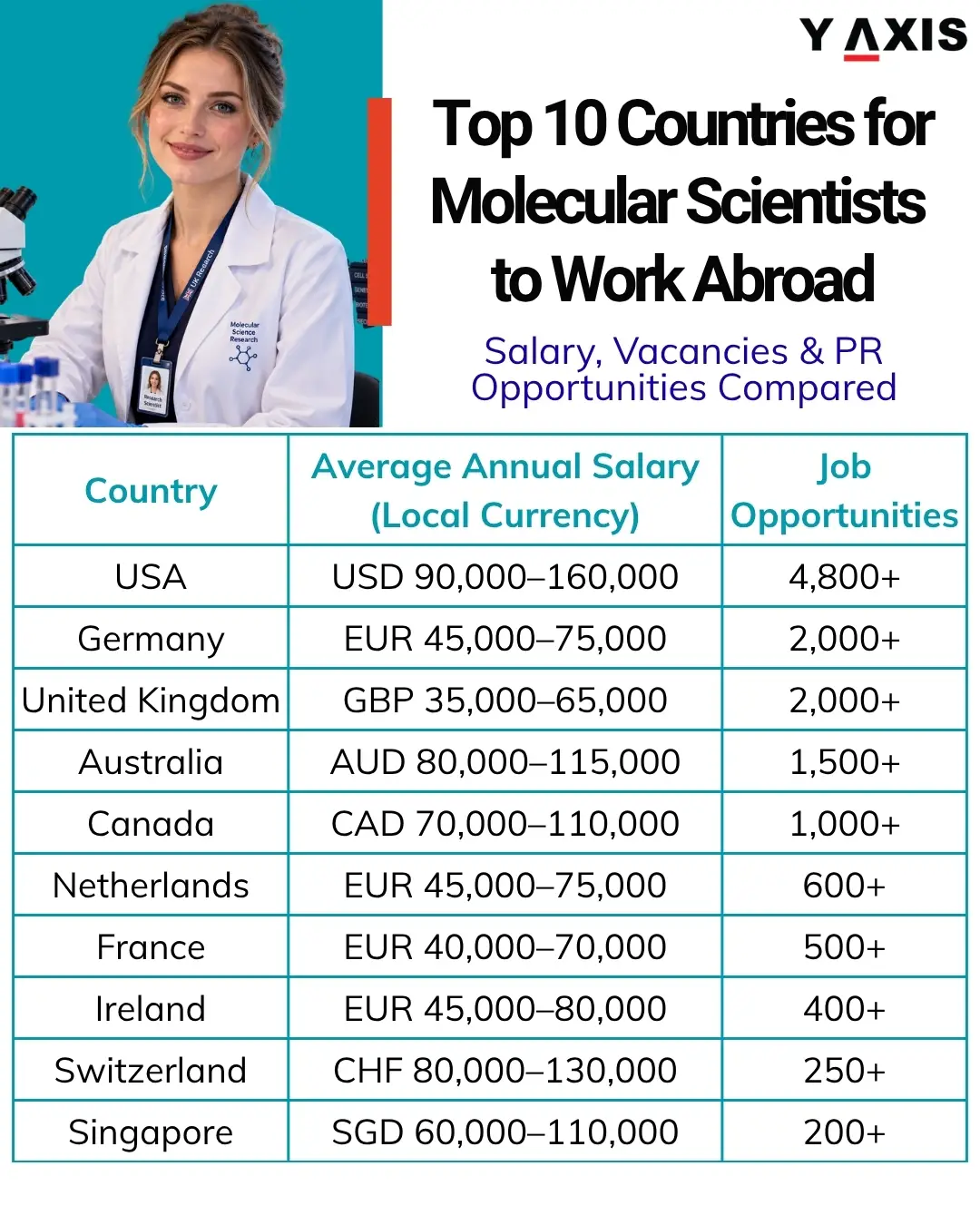
Top 10 Countries for Molecular Scientists to Work Abroad: Salary, Demand & PR Opportunities Compared