

Posted on July 31 2026
What Are the New UK ILR Rules? Everything Immigrants Need to Know

By , Editor & Director
Updated September 09 2026
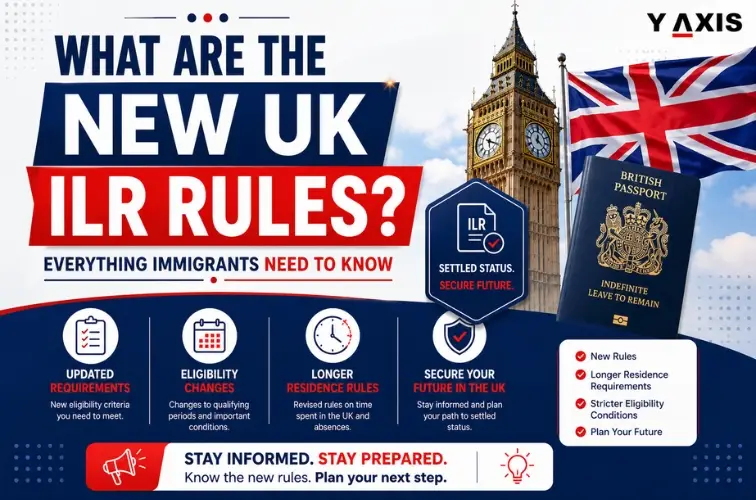
The latest UK ILR rule changes include proposals to extend the standard qualifying period from 5 years to 10 years for many migrants, introduce an Earned Settlement model, and increase the English language requirement from B1 to B2 for several settlement routes from 26 March 2027. The proposals also include transitional arrangements for some existing visa holders. While the B2 English language requirement has been confirmed, the proposed 10-year qualifying period and Earned Settlement model remain under consultation.
*Planning to apply for UK ILR? Book a free consultation with Y-Axis for expert guidance.
Key Changes to the UK ILR Rules
The UK Government has proposed several changes to the current ILR system. The key reforms include a proposed 10-year qualifying period for most migrants, an Earned Settlement model, new settlement routes for eligible migrants, a higher English language requirement, and transitional arrangements for existing visa holders.
- 10-year standard qualifying period proposed for most migrants.
- Earned Settlement model introducing contribution-based settlement criteria.
- 5-year settlement route proposed for migrants earning at least £50,270 in taxable income for three years and specified public service workers.
- 3-year settlement route proposed for migrants earning at least £125,140 in taxable income for three years.
- Higher English language requirement, increasing from CEFR B1 to B2 for several settlement routes from 26 March 2027.
- Transitional arrangements proposed for existing visa holders.
Who Will Be Affected by the New UK ILR Rules?
The proposed UK ILR rule changes could affect Skilled Worker visa holders, family visa holders, higher earners, specified public service workers, existing visa holders already on a settlement route, and future migrants applying for UK visas.
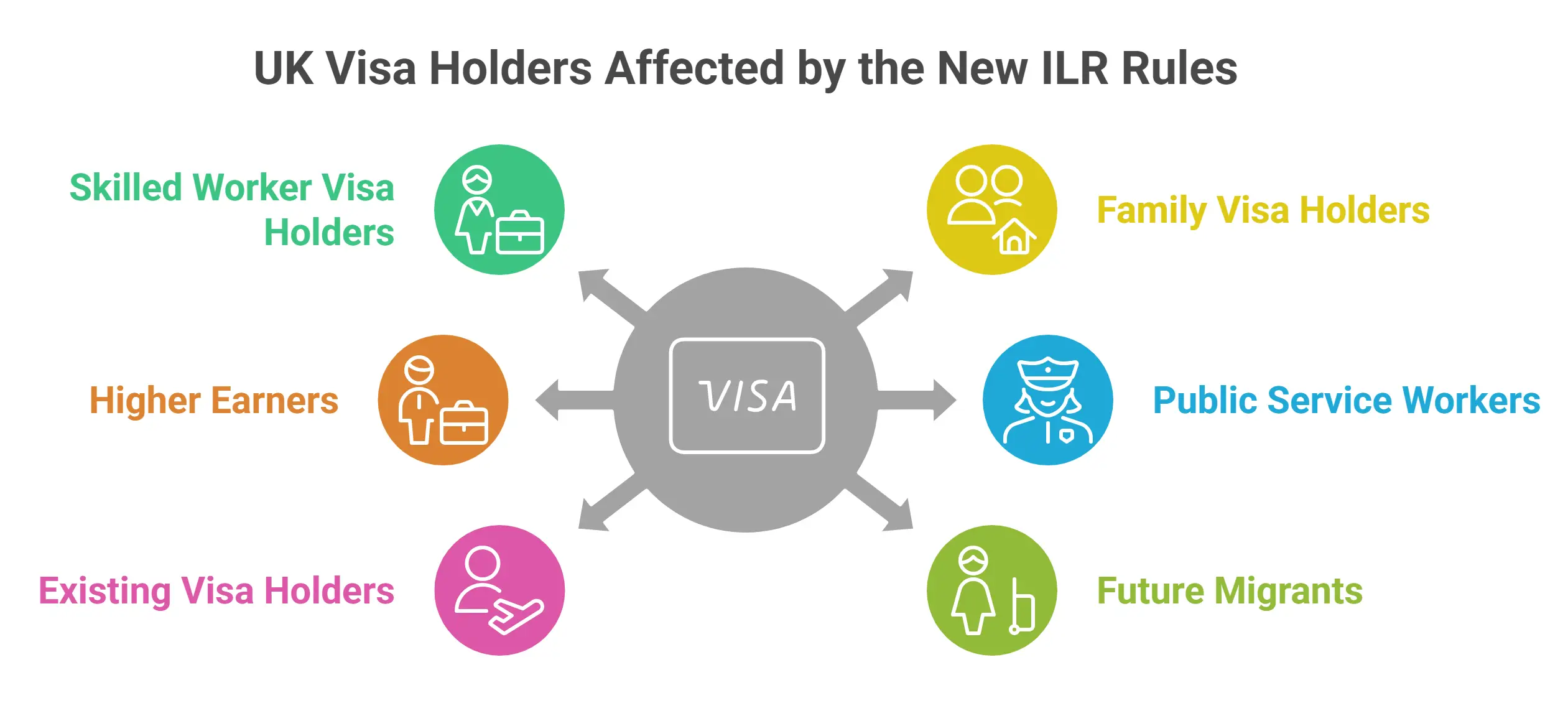
The proposed UK ILR rule changes could affect the following groups of migrants:
- Skilled Worker visa holders applying for Indefinite Leave to Remain (ILR).
- Family visa holders planning to settle permanently in the UK.
- Higher earners who may qualify for the proposed 5-year or 3-year settlement routes if they meet the income requirements.
- Specified public service workers who could remain eligible for a proposed 5-year settlement route.
- Existing visa holders already on a route to settlement, subject to the Government's final transitional arrangements.
- Future migrants who apply for UK visas after the new ILR rules are introduced.
Can I Still Apply Under the Current UK ILR Rules?
Yes. Eligible migrants can continue applying for UK Indefinite Leave to Remain (ILR) under the current immigration rules. The proposed 10-year qualifying period and Earned Settlement model have not been introduced, so the existing ILR eligibility requirements continue to apply until the UK Government confirms the new settlement rules.
When Will the New UK ILR Rules Take Effect?
The confirmed UK ILR rule change will take effect on 26 March 2027, when the English language requirement for several settlement routes increases from CEFR B1 to B2. The proposed 10-year qualifying period, Earned Settlement model, new settlement routes, and transitional arrangements have not yet been implemented. The UK Government will announce the implementation dates after completing the consultation process.
Current UK ILR Eligibility Criteria
To qualify for UK Indefinite Leave to Remain (ILR) under the current immigration rules, applicants must meet the eligibility requirements for their visa route. For most work and family visas, the general eligibility criteria include:
- Completing the required qualifying period
- Meeting the required English language level for the visa route
- Passing the Life in the UK Test, where applicable
- Maintaining continuous lawful residence in the UK
- Meeting the conditions of the current visa route until the ILR application is submitted
How to Apply for ILR in the UK?
To apply for UK Indefinite Leave to Remain (ILR), you must meet the eligibility requirements for your visa route and submit an online application through the UK Government. Follow the steps below to complete your ILR application.
Step 1: Check that you meet the eligibility requirements for your visa route.
Step 2: Complete the online ILR application form on the UK Government website.
Step 3: Upload the required supporting documents for your application.
Step 4: Pay the applicable UK ILR application fee online.
Step 5: Book and attend a biometric appointment, if required.
Step 6: Wait for UK Visas and Immigration (UKVI) to process your application and issue a decision.
*Want to apply for UK ILR? Book a free consultation with Y-Axis for expert guidance.
Documents Required for UK ILR
The documents required for UK Indefinite Leave to Remain (ILR) depend on your visa route and individual circumstances. Applicants are generally required to provide the following documents:
- A valid passport or travel document
- Your eVisa details
- Life in the UK Test pass confirmation
- Proof of English language proficiency
- Visa route-specific supporting documents, such as employment or family evidence
- Any additional documents requested by UK Visas and Immigration (UKVI)
UK ILR Fees
The UK Indefinite Leave to Remain (ILR) application fee is £3,226 per applicant. The fee must be paid when you submit your ILR application. If you choose Priority or Super Priority processing, you will need to pay an additional service fee.
UK ILR Processing Time
The UK Indefinite Leave to Remain (ILR) processing time depends on the service you choose. Standard ILR applications are usually processed within 6 months. Applicants, who select Priority or Super Priority services, where available, may receive a faster decision for an additional fee.
How Can Y-Axis Help You?
Y-Axis is a leading immigration consultancy with over 25 years of experience in visa and immigration services. We provide end-to-end guidance to help you apply for UK Indefinite Leave to Remain (ILR).
- Eligibility assessment: Check your eligibility for UK ILR.
- Document support: Prepare the required application documents.
- Application assistance: Get guidance throughout the ILR application process.
- Biometric guidance: Receive support with the biometric process.
- Citizenship guidance: Get guidance on applying for British naturalization after ILR.
FAQs
What is the current ILR qualifying period?
Most Skilled Worker, Health and Care Worker, and other qualifying work or family visa holders can apply for Indefinite Leave to Remain after five years of continuous lawful residence, provided they meet salary, English language, and Life in the UK Test requirements. This five-year route remains fully in force. The proposed 10-year qualifying period has not been introduced into the Immigration Rules.
What is the Earned Settlement model?
Earned Settlement is the UK Government's proposed overhaul of how Indefinite Leave to Remain is granted. Instead of qualifying mainly through time spent in the UK, applicants would need to earn settlement through factors like sustained earnings, compliance history, English language ability, and financial responsibility. The model was set out in the May 2025 Immigration White Paper and developed through a consultation that closed in February 2026.
Can the proposed UK ILR rules still change?
Yes. The 10-year qualifying period and Earned Settlement model are proposals from a closed public consultation, not confirmed law. The Home Office is reviewing around 130,000 consultation responses, and details such as exemptions, transitional arrangements, and reduction thresholds could change before the rules are formally laid before Parliament. Only the B2 English language requirement, effective 26 March 2027, has been confirmed.
What happens after the UK ILR consultation ends?
The Home Office reviews consultation responses and prepares a formal response before drafting new Immigration Rules. These rules must then be laid before Parliament and typically go through a set notice period before taking effect. Implementation of Earned Settlement is currently targeted for autumn 2026, though the Government has not confirmed a binding date.
Will existing visa holders move to the 10-year route?
Under the proposed model, the Government intends the new rules to apply to people already in the UK who have not yet secured settlement, not only future applicants. Those who already hold ILR, settled or pre-settled status, or Windrush status would not be affected. Final transitional arrangements for those partway through a five-year route are still under review.
Will time already spent in the UK count towards ILR?
This depends on transitional arrangements the Government has not yet confirmed. Under the proposals, most people who have not yet been granted ILR when new rules take effect would move to the new framework, though how existing qualifying residence is credited remains unresolved. Applicants should watch for the Government's formal response before assuming time already accrued will carry over.
Will the proposed reforms affect settlement applications already submitted?
Applications submitted and decided before any new Immigration Rules take effect are assessed under the rules in force at the time of application. The Government has stated it will not interfere with the rights of those already granted settlement. Applications still pending when new rules commence could potentially be affected, depending on transitional provisions yet to be confirmed.
Can I apply for ILR while the proposals are under consultation?
Yes. The current five-year and ten-year ILR routes remain fully in force, and no new Immigration Rules have been introduced. Eligible applicants can continue applying under the existing framework while the Earned Settlement proposals remain under review. Waiting for the proposals to be finalised is not necessary if you already meet current eligibility requirements.
Will the proposed changes apply to all visa routes?
Most work and family visa routes leading to settlement would move to the proposed 10-year baseline, though public service workers and high earners could qualify for shorter five-year or three-year routes. Refugees would have a separate 20-year baseline under the proposals. Routes already granted ILR or protected under the EU Settlement Scheme would fall outside the changes.
Will the proposed changes affect long residence applications?
Yes, potentially. Under the Earned Settlement proposals, the standalone 10-year long residence route would be absorbed into the new baseline qualifying period rather than remain a separate pathway. The distinct long residence route as it currently exists could be restructured rather than kept unchanged, though this has not yet been confirmed in law.
Will dependants be affected by the new ILR rules?
Dependants applying for ILR alongside a main applicant would generally follow the same qualifying period and requirements as the person they are attached to under the proposed model. Specific provisions for dependent children, partners, and family members have not yet been finalised, so confirmation should be checked once the Government publishes its formal position.
Will the English language requirement apply to everyone?
The confirmed increase from CEFR B1 to B2 applies to several settlement routes from 26 March 2027, though some applicants may qualify for exemptions based on age, medical conditions, or nationality, consistent with existing English language exemption rules. Applicants nearing eligibility before this date may still apply under the current B1 requirement.
Will the new ILR rules affect British citizenship?
No changes have been proposed to British citizenship eligibility itself. However, since ILR is typically a prerequisite for naturalisation, a longer ILR qualifying period would indirectly extend the overall timeline to citizenship for those affected by the new settlement rules. Citizenship requirements, including residence and good character criteria, remain governed separately.
Do the proposed ILR changes apply across the UK?
Yes. Indefinite Leave to Remain is a UK-wide immigration status set by the Home Office and Immigration Rules, so any changes would apply consistently across England, Scotland, Wales, and Northern Ireland. There are no proposed regional variations to the qualifying period, Earned Settlement model, or English language requirement.
Can I extend my visa if I am not eligible for ILR?
Yes, in most cases you can apply to extend your current visa if you have not yet met the qualifying period for ILR, provided you continue to meet the conditions of your visa route. Extension eligibility depends on your specific visa category, so checking route-specific requirements before your current visa expires is recommended.
Can I switch visa routes before the proposed changes take effect?
Switching visa routes is possible in many cases, subject to the eligibility rules of the new route and your current immigration status. Since the Earned Settlement proposals are not yet law, switching does not currently guarantee protection from future rule changes. Seeking guidance based on your specific circumstances is advisable before switching.
What happens if the proposed ILR reforms are approved?
If approved, the Government would lay new Immigration Rules before Parliament, formally introducing the 10-year baseline qualifying period, the Earned Settlement contribution framework, and any confirmed transitional arrangements. Implementation is currently targeted for autumn 2026. Applicants would then be assessed under whichever rules are in force on the date they apply.
How much does the UK ILR application fee cost?
The UK Indefinite Leave to Remain application fee is £3,226 per applicant, following an increase from 8 April 2026. This fee is paid when submitting the application and does not include additional charges for Priority or Super Priority processing, where available, or the Immigration Health Surcharge paid earlier in the visa process.
Where can I find official updates on the UK ILR rules?
The most reliable source for updates is the UK Government's official website, particularly the Immigration Rules and Home Office announcements pages. The Fairer Pathway to Settlement consultation page also publishes updates on the Earned Settlement proposals. Checking these sources directly ensures information reflects the current legal position rather than unconfirmed proposals.
Should I seek professional advice before applying for UK ILR?
Yes, especially given the pending changes to settlement rules. An immigration adviser can confirm your current eligibility, flag how proposed reforms might affect your specific visa route, and help you decide whether applying now under existing rules is preferable to waiting. This is particularly useful for applicants close to their qualifying date.
Tags:
UK ILR Rules
UK ILR Rule Changes
New UK ILR Rules
Indefinite Leave to Remain
UK ILR Eligibility
UK Settlement Rules
UK Immigration Rule Changes
ILR Requirements
UK Permanent Residency
ILR Qualifying Period
Share
Y-Axis Services

Get it on your mobile

Get News alerts

Contact Y-Axis
Latest Article
Popular Post
Trending Article
Posted On September 18 2026
Top 10 Countries for Molecular Scientists to Work Abroad: Salary, Demand & PR Opportunities Compared