

Posted on August 05 2026
How Long Does It Take to Become a British Citizen Through Naturalisation?

By , Editor & Director
Updated September 08 2026
Becoming a British citizen through naturalisation usually takes around 6 years. This includes 5 years of continuous lawful residence in the UK and 12 months holding Indefinite Leave to Remain (ILR) before applying. Applicants married to a British citizen can apply after 3 years of continuous lawful residence once they have obtained ILR, without waiting an additional 12 months. After submitting your naturalisation application, the Home Office usually makes a decision within 6 months. Once approved, you must attend a citizenship ceremony to receive your certificate of naturalisation.
|
Visa Route |
Timeline to British Citizenship |
|
Skilled Worker Visa |
Around 6 years |
|
Global Talent Visa |
Around 4–6 years, depending on ILR eligibility |
|
Innovator Founder Visa |
Around 4 years or longer, depending on ILR eligibility |
|
UK Ancestry Visa |
Around 6 years |
|
Scale-up Visa |
Around 6 years |
|
Spouse of a British Citizen |
Around 3 years, after meeting residence and ILR requirements |
*Want to apply for British naturalisation? Let Y-Axis guide you through the application process.
UK Residence Requirements for Naturalisation
Applicants following the standard route must:
- Complete 5 years of continuous lawful residence in the UK before applying.
- Hold Indefinite Leave to Remain (ILR) or settled status for 12 months before applying.
- Meet the absence limits during the qualifying period.
- Be physically present in the UK on the first day of the qualifying period.
Residence Requirements for Spouses of British Citizens
Applicants married to a British citizen must:
- Complete 3 years of residence in the UK before applying.
- Hold ILR or settled status at the time of application.
- Meet the required absence limits.
- Apply without waiting 12 months after obtaining ILR.
Absence Limits for Naturalisation
Applicants must not exceed:
- 450 days outside the UK during the 5-year qualifying period.
- 90 days outside the UK during the final 12 months before applying.
For spouses of British citizens:
- 270 days outside the UK during the 3-year qualifying period.
- 90 days outside the UK during the final 12 months.
Eligibility Requirements for British Naturalisation
To become a British citizen through naturalisation, you must complete the required residence period, hold ILR or settled status, prove your English language ability, pass the Life in the UK Test, and satisfy the good character requirement before submitting your British citizenship application.
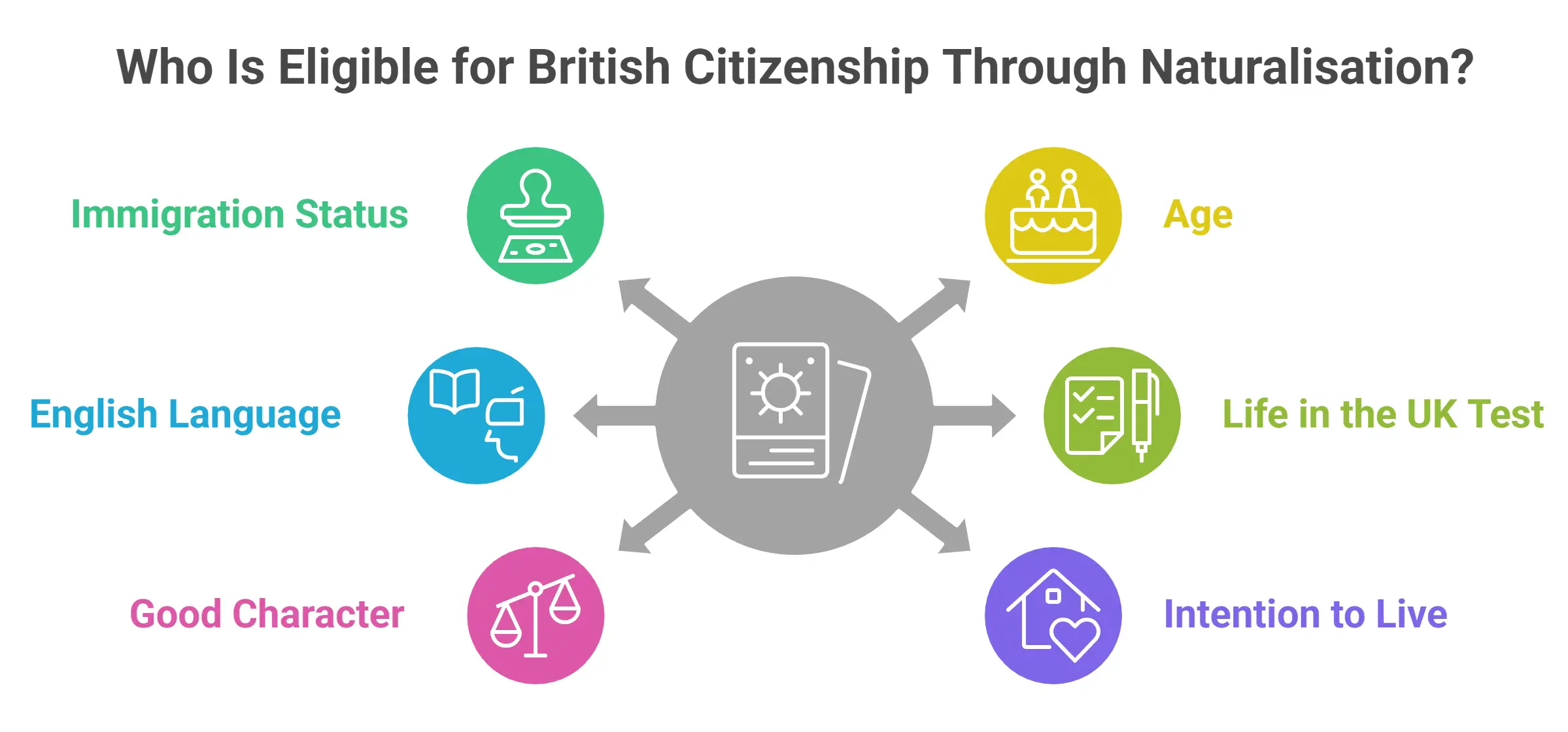
- Immigration status: Applicants must hold ILR or settled status before submitting a citizenship application.
- Age: Applicants must be 18 years or older when applying.
- English language: Proof of English language ability is required unless exempt.
- Life in the UK Test: Passing the Life in the UK Test is required before submitting the application.
- Good character requirement: Applicants must meet the Home Office good character requirement, including compliance with UK laws and immigration rules.
- Intention to continue living in the UK: Applicants must intend to continue living in the UK after becoming a British citizen.
*Want to check your eligibility for British Citizenship? Book a free consultation with Y-Axis for expert guidance and a complete roadmap.
Documents Required for British Naturalisation
The documents required for a British citizenship application include proof of identity, immigration status, UK residence, and English language ability.
- A valid passport or travel document confirming identity and nationality.
- Evidence of Indefinite Leave to Remain (ILR) or settled status.
- Proof of continuous UK residence throughout the qualifying period, such as tenancy agreements, utility bills, or employment records.
- A full record of all time spent outside the UK during the qualifying period, including exact travel dates.
- A valid Life in the UK Test pass certificate.
- English language qualification evidence, unless exempt.
- Details of two referees who can confirm the applicant's identity and character.
How to Apply for British Naturalisation?
Applying for British citizenship through naturalisation involves completing an online application, submitting the required documents, attending a biometrics appointment, and receiving a decision from the Home Office. Once your application is approved, you will attend a British citizenship ceremony to complete the naturalisation process.
Step 1: Check your eligibility
Confirm that you meet the naturalisation requirements, including residence, ILR or settled status, English language ability, Life in the UK Test, and good character requirements.
Step 2: Prepare the required documents
Gather supporting documents such as your passport, proof of residence, immigration status documents, and English language evidence if required.
Step 3: Complete the online application
Submit your British citizenship application through the official UK government application portal.
Step 4: Attend a biometrics appointment
Provide your fingerprints and photograph at a UK Visa and Citizenship Application Services (UKVCAS) appointment.
Step 5: Receive the Home Office decision
The Home Office reviews your application and provides the outcome after assessing your eligibility.
Step 6: Attend the citizenship ceremony
After approval, attend the ceremony to receive your certificate of naturalisation and complete the citizenship process.
British Naturalisation Processing Time
The Home Office usually makes a decision on a British citizenship application within 6 months of receiving the completed application. After submitting your naturalisation application, you may need to attend a biometrics appointment while the Home Office reviews your documents, eligibility, and background checks. Processing times can vary depending on the complexity of the application and whether further information is required.
British Naturalisation Application Fees
The total cost of applying for British citizenship by naturalisation is £1,839, covering both the application and citizenship ceremony fees.
|
Fee |
Amount |
|
Naturalisation application fee |
£1,709 |
|
Citizenship ceremony fee |
£130 |
|
Total Home Office cost |
£1,839 |
|
Life in the UK Test |
£50 |
|
English language test (if required) |
Varies by test provider |
What Happens After British Naturalisation Approval?
After your British citizenship application is approved, you will be invited to attend a citizenship ceremony. During the ceremony, you will take the required oath and pledge, receive your certificate of naturalisation, and complete the process of becoming a British citizen.
Steps after British Citizenship Approval:
- Receive your approval letter: The Home Office confirms that your naturalisation application has been successful.
- Attend the citizenship ceremony: You complete the ceremony by making the citizenship oath and pledge.
- Receive your certificate of naturalisation: Your certificate confirms your British citizenship.
- Apply for a British passport: After receiving your certificate, you can apply for your first British passport which typically takes a few weeks to process.
How Can Y-Axis Help You?
Y-Axis is a leading immigration consultancy in the UK with over 25 years of experience helping applicants navigates every stage of the British naturalisation process, from checking eligibility and understanding costs to preparing documents and submitting a complete application.
- Eligibility check: Confirm whether you meet the requirements for British naturalisation.
- Cost breakdown: Understand the total costs involved, from ILR to citizenship.
- Document preparation: Get expert help compiling the required naturalisation documents.
- Application support: Move through each step of the application process with confidence.
- Biometrics and appointments: Get clear guidance on biometric enrolment and post-approval steps.
- Life after citizenship: Understand what comes next once you become a British citizen.
*Want to plan your visa-to-citizenship journey? Speak with Y-Axis for a personalised timeline and cost breakdown.
FAQs
How long does it take to go from a UK visa to a British passport?
The full journey from holding a UK visa to receiving a British passport typically takes around 6 years, accounting for residence, the ILR wait, Home Office processing, the citizenship ceremony, and passport application time. Applicants married to a British citizen can complete this journey in around 3 to 3.5 years, following the faster spouse route.
Can I apply for British citizenship without waiting 12 months after ILR?
Yes, applicants married to a British citizen can apply for naturalisation as soon as they receive Indefinite Leave to Remain (ILR), without the additional 12-month wait required of standard applicants. This exemption makes the spouse route one of the fastest and most straightforward paths to British citizenship.
How long does the Home Office take to decide a naturalisation application?
The Home Office aims to decide most naturalisation applications within 6 months of receiving a completed application. Straightforward, well-documented applications are often processed within this window, while cases needing additional checks or referee verification can take longer. Submitting accurate, complete paperwork supports a smoother decision.
How much does it cost to apply for British citizenship?
The total cost for naturalisation is £1,839, made up of a £1,709 application fee and a £130 citizenship ceremony fee. Applicants also budget separately for the Life in the UK Test, which costs £50, and any English language testing fees required to meet the naturalisation criteria.
What happens at a British citizenship ceremony?
At a citizenship ceremony, applicants take the Oath of Allegiance and pledge, marking their formal commitment to the UK. Following the ceremony, applicants receive their certificate of naturalisation, confirming their British citizenship and enabling them to apply for a British passport and enjoy full citizenship rights.
How long does it take to get a British passport after naturalisation?
New citizens can apply for their first British passport as soon as they receive their certificate of naturalisation. Standard passport applications typically process within a few weeks, allowing new citizens to travel internationally using their British passport soon after completing the naturalisation process.
How many days can I spend outside the UK during the qualifying period?
Standard applicants can spend up to 450 days outside the UK during the 5-year qualifying period, with a limit of 90 days in the final 12 months before applying. Applicants married to a British citizen can spend up to 270 days outside the UK during their 3-year qualifying period.
Do I need to pass the Life in the UK Test for naturalisation?
Yes, passing the Life in the UK Test is a required step completed before submitting a naturalisation application. The test covers British history, traditions, and society, and a valid pass certificate should accompany the application to support smooth and timely processing by the Home Office.
What English language level do I need for British citizenship?
Applicants generally demonstrate English language ability through an approved qualification or test to meet naturalisation requirements, unless they qualify for an exemption based on age, nationality, or medical condition. Meeting this requirement in advance helps applicants move confidently through the application process.
What documents do I need for a British citizenship application?
A naturalisation application typically includes a valid passport, proof of UK residence, immigration status documents, and English language evidence where required, along with the Life in the UK Test certificate and a full record of time spent outside the UK during the qualifying period.
What is the good character requirement for British citizenship?
The good character requirement confirms an applicant has complied with UK laws, tax obligations, and immigration rules throughout their residence. Meeting this requirement is a standard part of every naturalisation assessment and reflects an applicant's readiness to take on the responsibilities of British citizenship.
Can I keep my original nationality after becoming a British citizen?
Yes, the UK permits dual citizenship, so most applicants can become British citizens while retaining their original nationality. Applicants should check whether their country of origin also permits dual nationality, since some countries require citizens to renounce or lose their original citizenship upon naturalising elsewhere.
What happens if my British citizenship application is refused?
If a naturalisation application is refused, there is no formal right of appeal, and the application fee is not refunded. Applicants can reapply once they have clearly addressed the specific reasons for refusal outlined by the Home Office, such as residence gaps or documentation issues, before submitting again.
Can I travel while my British citizenship application is being processed?
Yes, applicants can generally continue travelling while their naturalisation application is under review. Keeping trips within the permitted absence limits and maintaining accurate travel records helps the application continue meeting residence requirements throughout processing, supporting a smooth path to a Home Office decision.
Can EU citizens with settled status apply for British citizenship?
Yes, EU citizens who hold settled status under the EU Settlement Scheme can apply for naturalisation once they have held that status for 12 months and completed the relevant qualifying residence period. This route follows the same standard naturalisation process as other Indefinite Leave to Remain holders.
Can children become British citizens through naturalisation?
Children typically become British citizens through registration rather than naturalisation, which follows a separate, often more straightforward process based on their circumstances, such as a parent's citizenship or the child's own residence in the UK. Requirements vary, so checking individual eligibility is recommended.
How long does it take to become a British citizen on a Global Talent visa?
Global Talent visa holders can become eligible for British citizenship in around 4 to 6 years, since some Global Talent routes allow for accelerated settlement and a shorter path to Indefinite Leave to Remain (ILR) than standard work visa categories, speeding up the overall naturalisation timeline.
What usually causes delays in a naturalisation application?
Naturalisation applications are most often delayed by missing documents, unresponsive referees, or cases requiring enhanced security or background checks. Ensuring all required documents are complete and accurate before submission, and responding promptly to any Home Office requests, helps applicants avoid these common causes of delay.
What rights do I get after becoming a British citizen?
Once naturalised, British citizens can vote in all UK elections, stand for public office, hold a British passport, and live and travel freely without immigration restrictions. Citizenship also removes any future need to renew visas or apply for further leave to remain in the UK.
How can I check the status of my British citizenship application?
Applicants can check their naturalisation application status through the online tracking service linked in their application confirmation, or by contacting the Home Office directly if the standard 6-month processing window has passed. Keeping application reference numbers on hand helps make status checks quicker and easier.
Tags:
British Citizenship
British Naturalisation
UK Citizenship
UK Naturalisation
British Citizenship Application
British Citizenship Timeline
British Citizenship Processing Time
Indefinite Leave to Remain (ILR)
Citizenship Ceremony
British Passport
Share
Y-Axis Services

Get it on your mobile

Get News alerts

Contact Y-Axis
Latest Article
Popular Post
Trending Article
Posted On September 18 2026
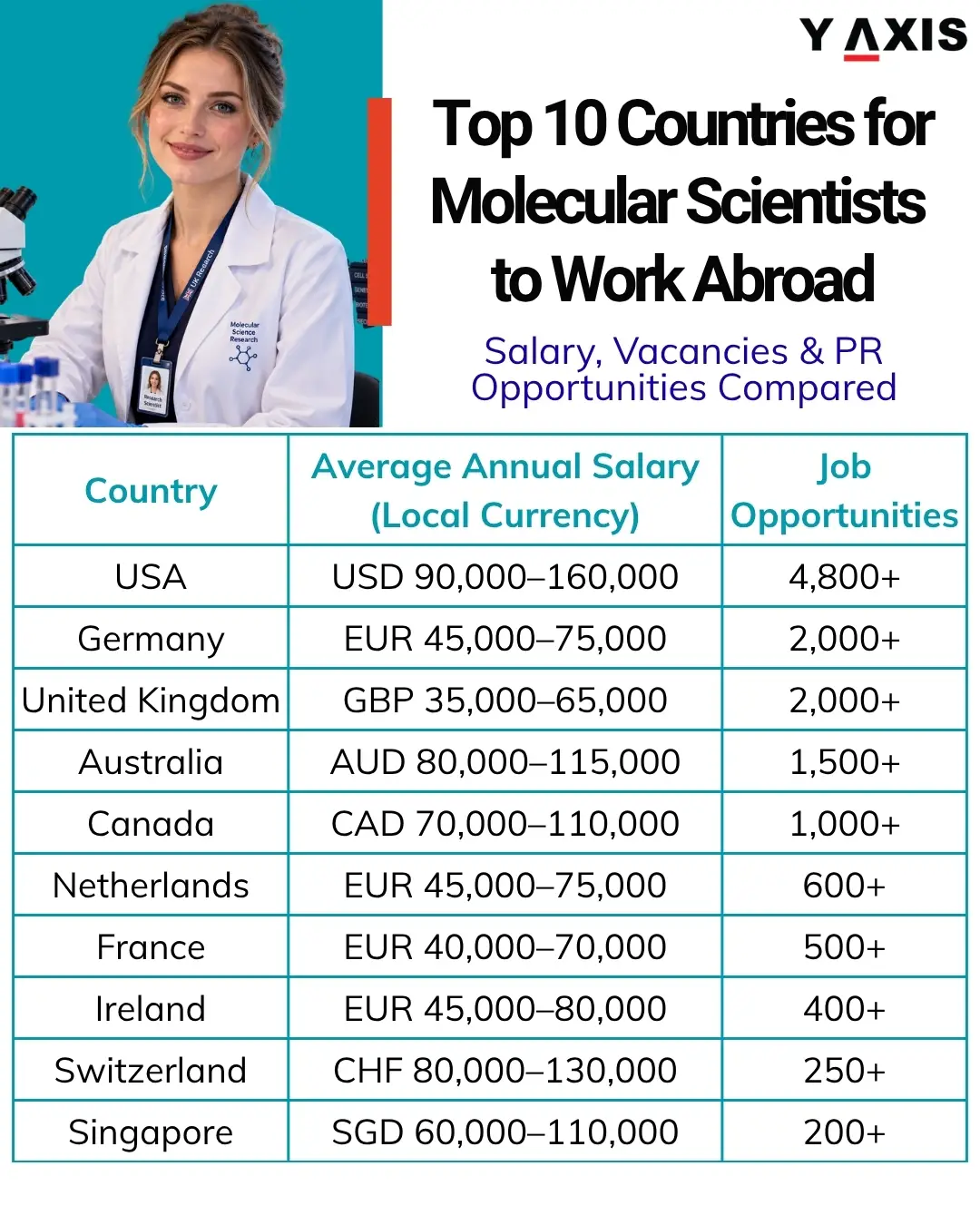
Top 10 Countries for Molecular Scientists to Work Abroad: Salary, Demand & PR Opportunities Compared