

Posted on October 07 2026
What is the Average Salary in Germany?

By , Editor & Director
Updated October 08 2026
The average salary in Germany is €4,851 gross per month for full-time employees, or €58,212 annually excluding special payments, according to Germany’s Federal Statistical Office (Destatis). Average annual gross earnings, including special payments, are €64,441. Salaries are higher in fields such as medicine, law, engineering, IT and finance, while pay varies by occupation, experience, qualifications, industry and location. Take-home salary depends on gross salary, tax class and health insurance.
The country is also facing critical labour shortages across more than 10 sectors. Cities such as Berlin, Munich, Frankfurt, Hamburg and Stuttgart are major job markets. Competitive salaries and growing demand for skilled workers make Germany an attractive destination for long-term career growth and settlement.
*Want to work in Germany? Let Y-Axis help you through the application process.
Most In-Demand Occupations in Germany
The most in-demand occupations in Germany are concentrated in healthcare, engineering, IT, construction, skilled trades, transport and education. Germany currently has 157 shortage occupation categories, with high demand for roles such as nurses, physicians, engineers, IT specialists and teachers. An aging workforce and large-scale retirements are expected to increase demand further, with Germany projected to need at least 7 million additional workers by 2035. These labour shortages are creating more job opportunities for skilled professionals across Germany.
|
Occupation |
Average Annual Salary |
Chances of Visa Sponsorship |
|
IT & Software |
€66,750 |
High |
|
Engineering |
€75,000 |
Very High |
|
Healthcare |
€53,000 |
High |
|
Nursing |
€58,000 |
Very High |
|
Accounting & Finance |
€59,250 |
Moderate to High |
|
Marketing & Sales |
€57,250 |
Moderate |
|
Human Resources |
€54,500 |
Moderate |
|
Logistics & Supply Chain |
€49,750 |
Moderate to High |
|
Teaching |
€60,250 |
High |
|
Construction & Skilled Trades |
€54,000 |
High |
Read More…
Most in-demand jobs in Germany for the next 10 years
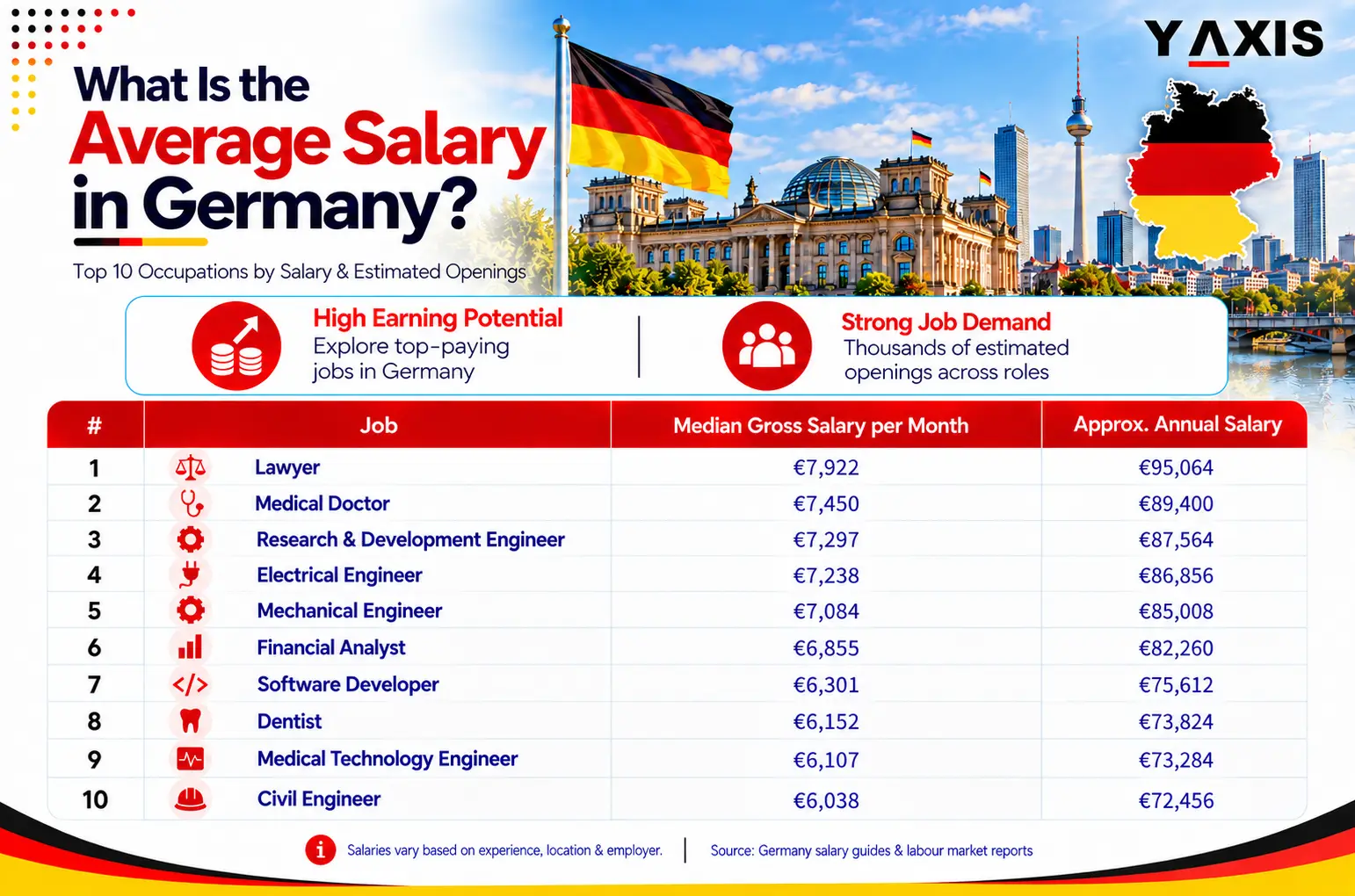
Top 10 Highest-Paying Jobs in Germany
Medicine, law, IT, engineering, finance and management offer some of the highest salaries in Germany. Doctors, lawyers, software developers, IT specialists and engineers are among the higher-paid occupations, with salaries varying by role, qualifications and experience. According to Germany’s Federal Employment Agency (BA), the median gross salary for full-time employees is €4,217 per month, while employees with academic qualifications have a median gross salary of €6,146 per month.
|
Job |
Median Gross Salary per Month |
Approx. Annual Salary |
|
Lawyer |
€7,922 |
€95,064 |
|
Medical Doctor |
€7,450 |
€89,400 |
|
Research & Development Engineer |
€7,297 |
€87,564 |
|
Electrical Engineer |
€7,238 |
€86,856 |
|
Mechanical Engineer |
€7,084 |
€85,008 |
|
Financial Analyst |
€6,855 |
€82,260 |
|
Software Developer |
€6,301 |
€75,612 |
|
Dentist |
€6,152 |
€73,824 |
|
Medical Technology Engineer |
€6,107 |
€73,284 |
|
Civil Engineer |
€6,038 |
€72,456 |
*Looking for jobs in Germany? Let Y-Axis guide you through application process.
Best Cities in Germany with the Most Job Opportunities
Berlin, Munich, Frankfurt, Hamburg, Stuttgart and Cologne are major employment hubs in Germany, with most job opportunities across technology, engineering, finance, healthcare, manufacturing and logistics. The median full-time salary in Germany is €4,506 gross per month (€54,066 annually, including special payments), while salaries vary by occupation and location.
- Berlin: Technology, software development, fintech, startups, digital marketing and business services
- Munich: Automotive, engineering, IT, finance, healthcare and manufacturing
- Frankfurt: Banking, finance, insurance, fintech, accounting and IT
- Hamburg: Logistics, shipping, aviation, engineering, IT and media
- Stuttgart: Automotive, mechanical engineering, electrical engineering, manufacturing and IT
- Cologne: Healthcare, telecommunications, media, insurance, IT and business services
Also Read…
3 Million Jobs in Germany over the Next Decade
Germany vs UK: Salary, Tax and Savings
The average gross salary in Germany is €4,851 per month, excluding special payments, while the median full-time annual salary in the UK is £39,039. Both countries have job opportunities in IT, engineering, healthcare, finance and skilled trades, but taxes, social contributions and housing costs affect take-home pay and savings. The figures below compare gross salary, take-home pay, living costs and potential savings in Germany and the UK.
|
Factor |
Germany |
UK |
|
Gross Monthly Salary |
€4,800 |
£4,000 |
|
Gross Annual Salary |
€57,600 |
£48,000 |
|
Estimated Monthly Tax & Contributions |
€1,750 (36%) |
£1,000 (25%) |
|
Estimated Monthly Take-Home Pay |
€3,050 (64%) |
£3,000 (75%) |
|
Estimated Monthly Living Costs |
€1,800 |
£2,000 |
|
Estimated Monthly Savings |
€1,250 |
£1,000 |
|
Estimated Annual Savings |
€15,000 |
£12,000 |
Note: Figures are estimates and may vary by income, location, and individual circumstances.
Cost of Living in Germany
The cost of living in Germany for a single person is typically around €1,300–€2,400 per month, covering essential expenses such as rent, utilities, groceries and transport. Costs are generally higher in Munich, Frankfurt, Berlin and Hamburg, where salaries are also higher, while cities such as Leipzig, Dresden and Essen are more affordable.
|
Expense |
Estimated Monthly Cost |
|
1-Bedroom Apartment |
€800–€1,500 |
|
Utilities & Internet |
€200–€350 |
|
Groceries |
€250–€400 |
|
Public Transport |
€58–€100 |
|
Mobile Phone |
€15–€30 |
|
Total Basic Living Costs |
€1,323–€2,380 |
Is €50,000 a Good Salary in Germany?
Yes, €50,000 gross per year is a good salary for a single person in Germany. It works out to around €4,167 gross per month and approximately €2,700 net per month after tax and social security contributions, depending on tax class and insurance. With typical living costs of €1,300–€2,400 per month, a single person can cover essential expenses and maintain a good balance between living costs, savings and personal spending.
Job Outlook in Germany
Germany has a positive job outlook for skilled workers, particularly in healthcare, engineering, IT, construction, transport and education. The country currently has 157 shortage occupation categories, with nurses, physicians, engineers, IT specialists, skilled tradespeople, professional drivers and teachers among the roles in demand.
Germany is also expected to need at least 7 million additional workers by 2035 as more workers retire and the working-age population declines. The growing demand for workers is creating strong long-term employment opportunities, especially in occupations facing labour shortages and in sectors with a need for qualified and experienced workers.
*Want to migrate to Germany? Get expert guidance from Y-Axis professionals.
FAQs
What is the average monthly salary in Germany?
The average gross monthly salary in Germany is €4,851 for full-time employees, excluding special payments, according to Germany’s Federal Statistical Office (Destatis). Actual salaries vary by occupation, qualifications, experience, industry and location.
What is the average annual salary in Germany?
The average gross annual salary in Germany is €58,212, calculated from the €4,851 average monthly salary over 12 months, excluding special payments. Average annual gross earnings including special payments are €64,441.
What is the average salary in Germany after tax?
There is no single after-tax salary because take-home pay depends on gross income, tax class, health insurance and social security contributions. For example, an employee earning €4,800 gross per month can receive around €3,050 net per month under a typical single-employee tax scenario.
How much is €50,000 a year after tax in Germany?
A €50,000 gross annual salary equals about €4,167 gross per month. A single employee can receive approximately €2,700 net per month after income tax and social security contributions, depending on tax class and insurance.
What is considered a good salary in Germany?
€50,000 gross per year is generally a good salary for a single person in Germany. It equals about €4,167 gross per month and approximately €2,700 net, which can cover typical living costs while allowing for savings and personal spending.
Which jobs have the highest salaries in Germany?
Lawyers, medical doctors, engineers, financial analysts, software developers and dentists are among the higher-paid occupations in Germany. Salary levels vary by specialisation, qualifications, experience and seniority.
Which jobs are most in demand in Germany?
Germany has 157 shortage occupation categories, with particularly strong demand for nurses, physicians, engineers, skilled tradespeople, professional drivers and teachers. Healthcare, construction, engineering, transport and education have some of the clearest labour shortages.
What are the best cities in Germany for jobs?
Berlin, Munich, Frankfurt, Hamburg, Stuttgart and Cologne are major employment centres, with jobs across technology, engineering, finance, healthcare, manufacturing, logistics and business services. Munich is particularly strong in automotive and engineering, Frankfurt in finance, and Hamburg in logistics and shipping.
How much can a single person save each month in Germany?
A single person earning €4,800 gross per month can have around €3,050 net income and approximately €1,800 in monthly living costs, leaving about €1,250 for savings. The actual amount depends mainly on rent, city, transport, food and personal spending.
Is Germany a good country to work and live in?
Germany is a strong option for skilled workers, with competitive salaries, social security benefits and job opportunities in healthcare, engineering, construction and skilled trades. The country continues to have labour shortages in many occupations, creating opportunities for qualified workers.
Tags:
Germany Salary
Average Salary in Germany
Germany Job Market
High-Paying Jobs in Germany
In-Demand Jobs in Germany
Best Cities for Jobs in Germany
Cost of Living in Germany
Germany Job Outlook
Germany vs UK Salary
Share
Y-Axis Services

Get it on your mobile

Get News alerts

Contact Y-Axis
Latest Article
Popular Post
Trending Article

Posted On November 18 2026
How Can I Get Permanent Residency in Italy?