

Posted on April 01 2026
What's New in Canada Express Entry System? New Categories, Rules & Updates for Applicants

By , Editor & Director
Updated April 23 2026
Canada Express Entry in 2026 has introduced major updates, including expanded category-based draws and changes in selection priorities. New categories now target sectors such as healthcare, STEM, trades, transport, and agriculture to address ongoing labour shortages in Canada. Many category-based draws now require at least 12 months of relevant work experience, while candidates with Canadian work experience and French language proficiency are being prioritised. These changes are directly influencing who receives invitations for permanent residence.
Recent Express Entry draws in 2026 show more targeted invitations, with CRS cut-off scores varying based on occupation demand and category requirements. To improve your chances, you need to qualify under the right category and maintain a competitive CRS score.
*Want to apply for Express Entry? Let Y-Axis help you through application process.
What Has Changed in Canada Express Entry in 2026?
Canada Express Entry in 2026 has introduced important updates to category-based draws and selection criteria. The system now focuses more on inviting candidates based on in-demand skills and occupations rather than only CRS scores.
New categories have been added, and work experience requirements have been updated for targeted draws. There is also a stronger focus on candidates with Canadian work experience and French language proficiency. These changes reflect current labour market needs and hiring priorities across Canada.
|
Key Updates |
What Changed in 2026 |
|
Category-Based Draws |
Invitations are issued under specific categories such as healthcare, STEM, trades, transport, education, and French-language proficiency, in addition to general draws |
|
New Categories Added |
New categories include researchers, senior managers, transport occupations, and military personnel under targeted draws |
|
Work Experience Requirement |
Most category-based draws require at least 12 months of recent full-time (or equivalent) skilled work experience, usually within the last 3 years |
|
Healthcare Occupations |
Targeted draws include roles such as physicians, registered nurses, dentists, pharmacists, physiotherapists, and medical laboratory technologists |
|
Canadian Work Experience |
Candidates with Canadian work experience are prioritised, especially under Canadian Experience Class (CEC)-aligned draws |
|
French Language Requirement |
Candidates generally need at least CLB 7 in French to qualify for French-language category draws |
|
Draw Frequency |
Category-based draws are conducted regularly alongside general draws, with a higher share of invitations issued under targeted categories |
|
CRS Cut-Off Scores |
CRS scores are typically lower in category-based draws and higher in general (all-program) draws |
|
Selection Method |
Invitations are issued based on occupation demand, with priority given to roles facing labour shortages |
List of New Categories Added to Canada Express Entry System
Canada Express Entry has introduced new categories in 2026, with more draws now conducted through category-based selection. These draws focus on candidates with work experience in specific in-demand jobs. Applicants with work experience in these categories may have a better chance of receiving an invitation, even with a lower CRS score compared to general draws.
|
Category |
Types of Roles Included |
|
Researchers |
Research scientists, university professors, postdoctoral researchers, and R&D specialists in science and technology |
|
Senior Managers |
Corporate executives, financial managers, operations managers, and senior administrative roles |
|
Transport Occupations |
Truck drivers, heavy equipment operators, delivery drivers, and logistics coordinators |
|
Military Personnel |
Skilled trades and technical roles aligned with Canadian Armed Forces requirements |
|
Healthcare |
Physicians, registered nurses, dentists, pharmacists, physiotherapists, and medical laboratory technologists |
Eligibility Requirements to apply for Canada Express Entry
To apply for Canada Express Entry, you must meet basic eligibility requirements based on your work experience, education, and language ability. Category-based selection also plays an important role, as your occupation and skills can influence your chances of receiving an invitation.
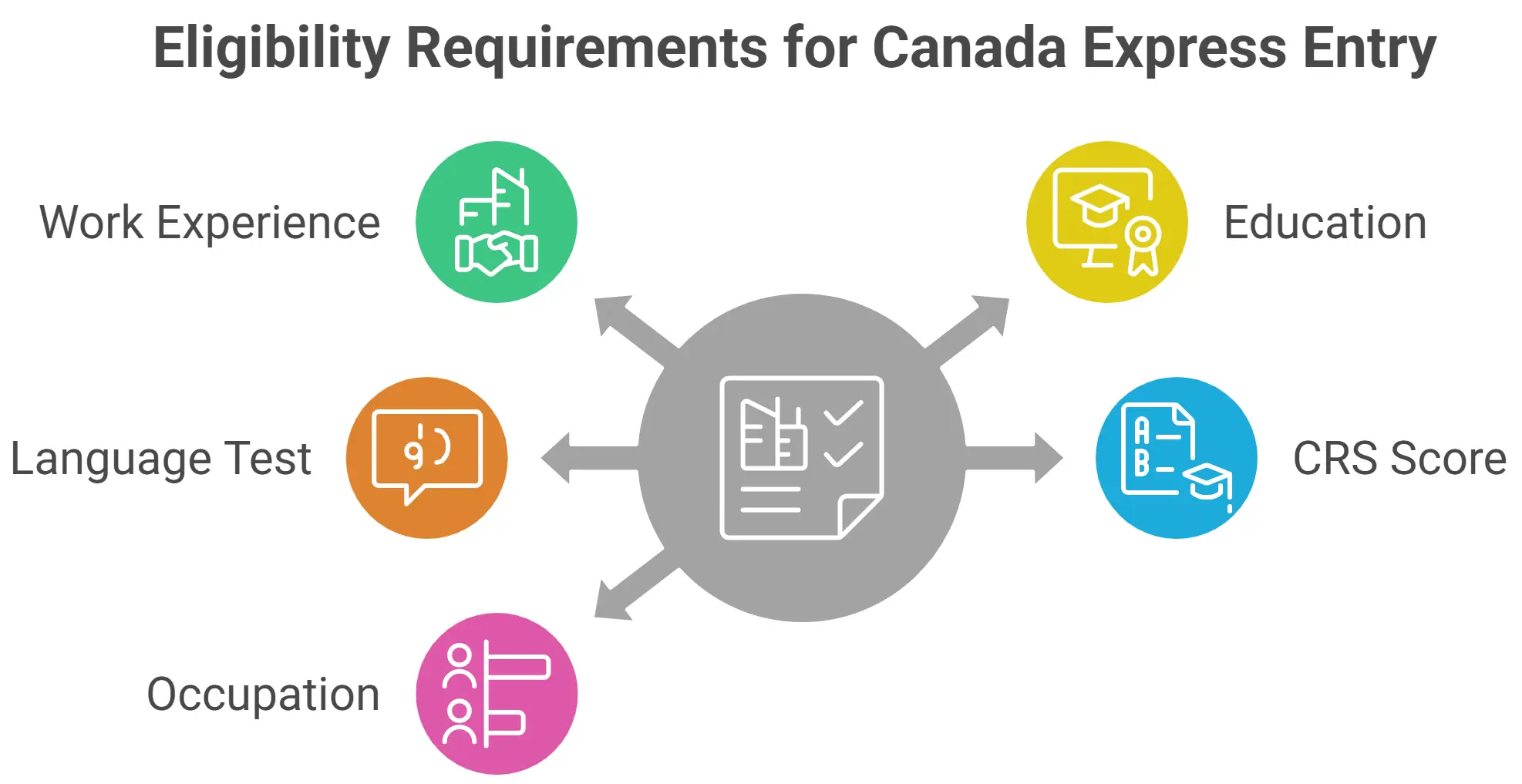
Key Canada Express Entry requirements in 2026 include:
- Work Experience: At least 1 year of skilled work experience (NOC TEER 0, 1, 2, or 3). For category-based draws, this usually needs to be in in-demand sectors such as healthcare, STEM, trades, transport, or agriculture, with at least 12 months of relevant experience
- Education: A recognised diploma or degree. Foreign education requires an Educational Credential Assessment (ECA)
- Language Test: Valid IELTS or equivalent test (CELPIP or PTE Core) with minimum CLB score requirements
- CRS Score: Your profile is ranked using the Comprehensive Ranking System based on age, education, work experience, and language ability
- Occupation & Priority Factors: Your job must align with eligible occupations, and candidates with Canadian work experience or strong French language skills may have higher chances of selection
Step-by-Step Application Process for Canada Express Entry from UK
To apply for Canada Express Entry, you need to follow a structured process from profile creation to receiving permanent residence.
Step 1: Check eligibility by meeting requirements for work experience, education, and language
Step 2: Create an Express Entry profile with your qualifications, work experience, and language scores
Step 3: Get a CRS score based on factors such as age, education, and work experience
Step 4: Enter the pool and become eligible for general or category-based draws
Step 5: Receive an ITA if your profile meets the required CRS score or category criteria
Step 6: Submit your PR application with all required documents within the deadline
Step 7: Get a decision and receive confirmation of permanent residence if approved
*Want to apply for Express Entry? Let Y-Axis help you through application process.
Canada Express Entry Application Processing Time and Fees
Canada Express Entry applications are usually processed within about 6 months after submitting a complete application. However, the total timeline can vary depending on your CRS score, draw selection, and document verification. Applicants also need to pay several fees during the process, including application fees, biometrics, language tests, and credential assessments.
Canada Express Entry Processing Time:
|
Stage |
Estimated Time |
|
Profile submission and pool entry |
Immediate after submitting a complete profile |
|
Time to receive ITA |
Varies based on CRS score and draw type |
|
PR application processing (after ITA) |
Around 6 months for most applications |
Canada Express Entry Processing Fees:
|
Fee Type |
Estimated Processing Cost (CAD) |
|
Application Fee |
850 per adult applicant |
|
Right of Permanent Residence Fee (RPRF) |
515 per applicant |
|
Biometrics Fee |
85 per person |
|
Language Test (IELTS/PTE) |
250–350 depending on location |
|
Educational Credential Assessment (ECA) |
200–300 depending on organisation |
|
Medical Examination |
100–300 depending on country |
|
Police Clearance Certificate |
Varies by country |
|
Total Estimated Cost |
1,800–2,500+ per applicant |
How to improve your CRS Score for Canada Express Entry?
CRS score plays a key role in receiving an invitation through Canada Express Entry. Improving your score or qualifying under the right category can significantly increase your chances of selection.
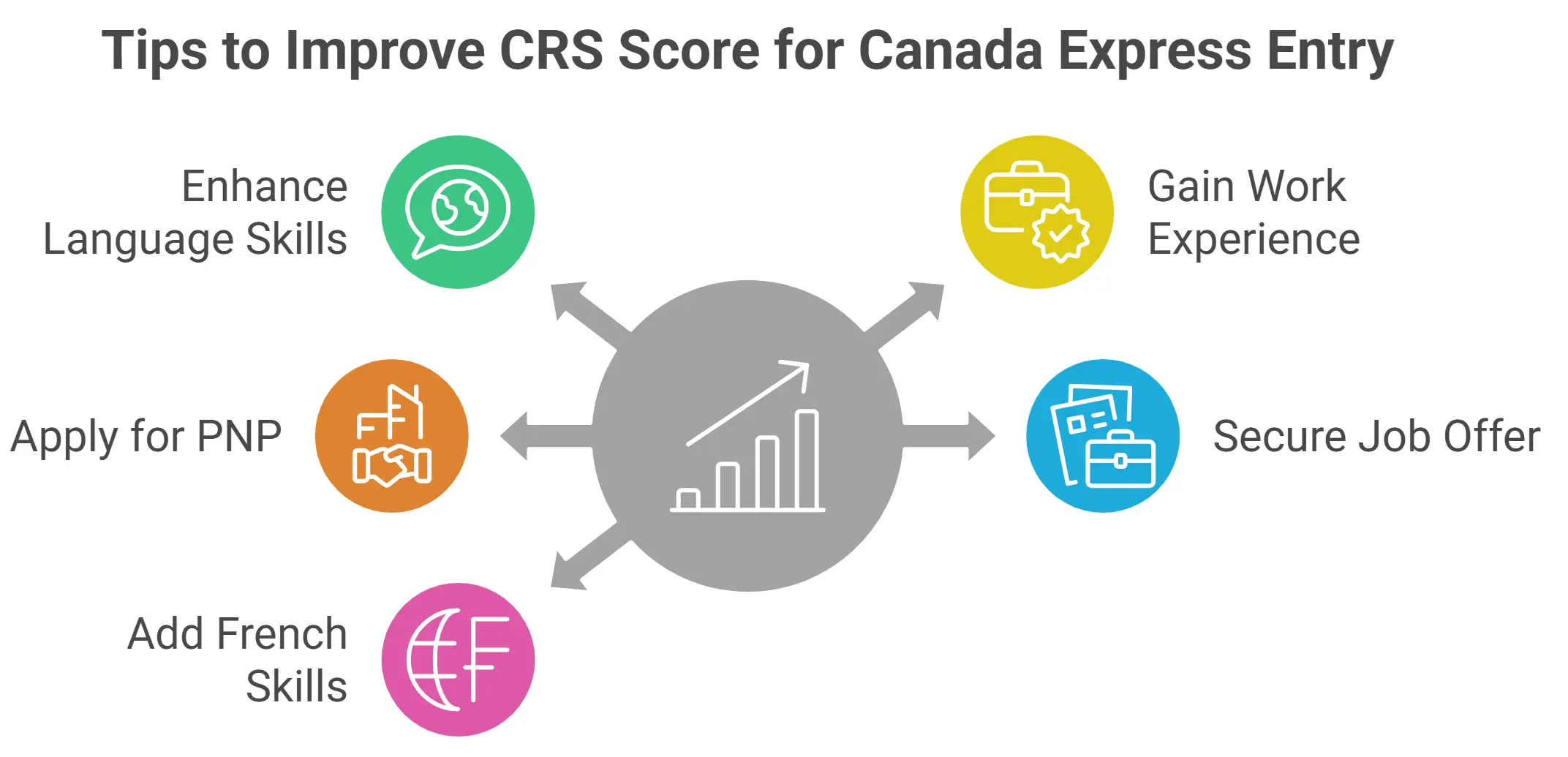
Ways to Improve Your CRS Score for Canada Express Entry:
- Improve your language score by retaking IELTS or other approved tests to achieve higher CLB levels
- Gain more work experience in a skilled occupation to increase your points
- Apply for a Provincial Nominee Program (PNP) to gain an additional 600 CRS points
- Secure a valid job offer from a Canadian employer to strengthen your profile
- Add French language skills to qualify for category-based draws and increase your score
Important Factors to Consider for Canada Express Entry in 2026
Canada Express Entry in 2026 focuses more on category-based selection, targeting candidates with skills in in-demand occupations. Applicants need to meet eligibility requirements, have relevant work experience, and maintain a competitive CRS score or qualify under targeted categories to improve their chances of receiving an invitation.
Key Points for Canada Express Entry Applicants:
- Category-Based Selection: Draws focus on in-demand sectors such as healthcare, STEM, trades, transport, agriculture, and French-language proficiency
- Eligibility Requirements: Your work experience, education, and language scores must meet the minimum criteria for Express Entry
- CRS Score: A higher CRS score improves your chances in general draws, while category-based draws may select candidates with lower scores
- Work Experience: At least 12 months of relevant skilled work experience is important, especially for targeted categories
- Language Skills: Strong English or French language scores can increase your CRS points and eligibility
- Draw Trends: Monitoring draw patterns, CRS cut-offs, and category-based invitations helps you plan your application
*Want to apply for Express Entry? Let Y-Axis help you through application process.
FAQs
What are the latest Canada Express Entry updates in 2026?
Canada Express Entry updates in 2026 focus on category-based draws and targeted invitations. The system now prioritises candidates with experience in in-demand sectors like healthcare, STEM, trades, transport, and agriculture. Selection is no longer based only on CRS scores. Candidates with Canadian work experience and French language skills are given higher priority. These changes help address labour shortages and improve applicants’ chances of receiving invitations.
What are category-based draws in Canada Express Entry?
Category-based draws in Canada Express Entry are targeted invitation rounds based on specific occupations, skills, or language ability. Instead of only inviting high CRS score candidates, Canada selects applicants from in-demand sectors like healthcare, STEM, trades, and transport. This allows candidates with relevant work experience to receive invitations even with lower CRS scores. Category-based selection improves opportunities for skilled workers aligned with labour market needs.
What new categories are added to Canada Express Entry?
New Canada Express Entry categories include researchers, senior managers, transport occupations, and selected military-related roles. These additions aim to address workforce shortages and attract skilled professionals. Along with existing categories like healthcare and STEM, these new groups expand opportunities for applicants with specialised experience. Candidates working in these fields may receive invitations through targeted draws, improving their chances of securing permanent residence.
How do Express Entry updates affect CRS scores?
Canada Express Entry updates in 2026 have reduced the sole importance of CRS scores in selection. While CRS still matters, category-based draws allow candidates with lower scores to receive invitations if they qualify under in-demand occupations. General draws require higher CRS scores, but targeted draws focus more on skills and work experience. Applicants should improve their CRS score while also aligning with category-based eligibility.
What is the minimum CRS score required in 2026?
There is no fixed minimum CRS score for Canada Express Entry in 2026, as it varies by draw type. General draws usually have higher CRS cut-offs, while category-based draws may accept lower scores. Candidates in sectors like healthcare or trades often receive invitations with lower CRS scores. The required score depends on demand and draw criteria. Maintaining a competitive CRS score still improves overall chances.
What are the eligibility requirements for Canada Express Entry?
Canada Express Entry eligibility requirements include at least one year of skilled work experience, a recognised education credential, and valid language test scores such as IELTS or CELPIP. Applicants must qualify under programs like Federal Skilled Worker or Canadian Experience Class. In 2026, category-based selection also plays a role, as candidates need relevant experience in targeted sectors to improve their chances.
How does Canadian work experience help in Express Entry?
Canadian work experience improves your chances in Canada Express Entry by increasing your CRS score and eligibility under programs like Canadian Experience Class. In 2026 updates, candidates with Canadian work experience are prioritised in many draws. It also strengthens eligibility for category-based selection in in-demand sectors. Having local experience makes your profile more competitive and improves your chances of receiving an invitation.
Is French language important for Express Entry in 2026?
French language proficiency is important in Canada Express Entry updates in 2026. Candidates with strong French skills can qualify for French-language category-based draws, increasing their chances of receiving invitations. A minimum CLB 7 in French is generally required. French also adds extra CRS points. Canada promotes bilingual immigration, so learning French can significantly improve your Express Entry profile and open more opportunities.
How long does Canada Express Entry processing take?
Canada Express Entry processing time is usually around 6 months after submitting a complete permanent residence application. However, the overall timeline depends on how quickly you receive an Invitation to Apply (ITA). Factors like CRS score, draw frequency, and document verification can affect processing time. Preparing documents in advance and maintaining a strong profile can help reduce delays in the process.
What is the step-by-step process for Express Entry?
The Canada Express Entry process starts with checking eligibility and creating an online profile. Applicants receive a CRS score based on age, education, work experience, and language skills. Once in the pool, candidates may receive an Invitation to Apply through general or category-based draws. After receiving an ITA, applicants submit their permanent residence application and required documents for final approval.
Can I apply for Express Entry without a job offer?
Yes, you can apply for Canada Express Entry without a job offer. A job offer is not mandatory, as candidates are mainly selected based on CRS score and category-based eligibility. In 2026, many applicants receive invitations through targeted draws in in-demand sectors without employer sponsorship. However, having a valid job offer can increase your CRS score and improve your chances of receiving an invitation.
What are the benefits of category-based selection?
Category-based selection in Canada Express Entry allows candidates with specific skills or occupations to receive invitations even with lower CRS scores. It focuses on labour market needs, making it easier for professionals in healthcare, trades, and STEM fields to qualify. This system increases opportunities for skilled workers and improves fairness. It also helps Canada fill workforce gaps more efficiently through targeted immigration.
What documents are required for Express Entry?
Key documents required for Canada Express Entry include language test results such as IELTS or CELPIP, Educational Credential Assessment (ECA), proof of work experience, passport, and police clearance certificates. After receiving an ITA, applicants must also provide medical examination reports. Proper documentation is essential to avoid delays or rejection. Preparing documents in advance helps speed up the application process.
How can I improve my CRS score?
You can improve your CRS score by increasing your language test scores, gaining more skilled work experience, or completing higher education. Applying through a Provincial Nominee Program (PNP) can add 600 points. Learning French also boosts your score and eligibility for category-based draws. Including spouse factors like education and language skills can further improve your profile and increase your chances.
What is the role of PNP in Express Entry?
Provincial Nominee Programs (PNPs) play a key role in Canada Express Entry by allowing provinces to select candidates based on local labour needs. A provincial nomination adds 600 CRS points, almost guaranteeing an invitation. Many PNP streams target in-demand occupations such as healthcare and trades. Applying for a PNP is one of the most effective ways to improve your chances of permanent residence.
Are Express Entry draws conducted regularly?
Yes, Canada Express Entry draws are conducted regularly, including both general and category-based draws. In 2026, there is a stronger focus on targeted draws for specific occupations. The frequency and type of draws depend on immigration goals and labour market needs. Monitoring draw trends and CRS cut-offs helps applicants plan better and improve their chances of selection.
What are in-demand jobs for Express Entry in 2026?
In-demand jobs under Canada Express Entry in 2026 include healthcare professionals, software engineers, skilled trades workers, transport operators, and agricultural workers. These roles are prioritised in category-based draws due to labour shortages. Candidates with experience in these occupations have better chances of receiving invitations. Aligning your work experience with these sectors can significantly improve your selection chances.
Can lower CRS score candidates still get ITA?
Yes, candidates with lower CRS scores can still receive an Invitation to Apply (ITA) through category-based draws. In 2026, Canada Express Entry focuses more on occupation demand rather than only CRS ranking. If you qualify under targeted sectors like healthcare or trades, you may receive an invitation with a lower score. However, improving your CRS still increases overall chances.
What are the total costs for Express Entry?
The total cost for Canada Express Entry usually ranges from CAD 1,800 to CAD 2,500 or more per applicant. This includes application fees, biometrics, language tests, Educational Credential Assessment (ECA), medical exams, and police clearance. Costs may vary depending on location and personal situation. Planning your budget in advance is important to avoid delays in your application process.
Is Canada Express Entry still the best PR pathway?
Yes, Canada Express Entry remains one of the best pathways to permanent residence due to its fast processing time, transparent system, and multiple opportunities through category-based draws. In 2026, updates have made it more flexible and aligned with labour market needs. Skilled workers with the right qualifications and experience have strong chances of success in the Express Entry system.
Tags:
Canada Express Entry
Canada PR
Canada Immigration 2026
Express Entry Updates
Canada PR From UK
Skilled Immigration Canada
CRS Score
Canada Visa Updates
Express Entry Draws
Canada Immigration Rules
Share
Y-Axis Services

Get it on your mobile

Get News alerts

Contact Y-Axis
Latest Article
Popular Post
Trending Article

Posted On October 07 2026
What is the Average Salary in Germany?