


Posted on December 20 2025
Fast-Track Hiring Options in Europe for Skilled Professionals

By , Editor
Updated December 20 2025
Europe has more than 10 fast-track hiring options for skilled professionals to help fill over 5 million current job vacancies according to recent statistics across high-demand sectors such as IT, engineering, healthcare, construction, renewable energy, and advanced manufacturing. Leading countries including Germany, France, Netherlands, Sweden, Austria, and Portugal are expanding accelerated hiring pathways to manage ongoing labour shortages.
The European Union is planning €1.8 trillion investment for infrastructure, clean energy transition, digitalisation, housing, and industrial innovation. Along with other top European countries are also committing billions of euros to national projects in green energy, transport, healthcare systems, and digital transformation. These large-scale investments are significantly increasing demand for skilled professionals making fast-track hiring options essential to Europe’s long-term economic growth strategy.
*Want to work in Europe? Let Y-Axis help you through application process.
Top 10 European Countries with Fast-Track Hiring Options for Skilled Professionals
Europe has introduced fast-track hiring options to help employers fill critical skill gaps and recruit skilled professionals faster. Countries such as Germany, France, Netherlands, Sweden, and Ireland, along with several other European nations, offer well-defined fast-track pathways, including employer-sponsored work permits, tech visas, job seeker visas, and accelerated skilled worker programmes.
List of the top 10 European countries with fast-track hiring options:
1. Germany
Germany has four main fast-track hiring options to address over 1.8 million job vacancies across IT, engineering, healthcare, logistics, manufacturing, and skilled trades. The primary fast-track route is the Accelerated Skilled Worker Procedure (ASVP) which speeds up employer-led approvals and also offers the Opportunity Card along with other skilled worker pathways supporting faster transitions to employment due ongoing labour shortages.
2. Austria
Austria supports fast-track hiring through the Red-White-Red Card, which targets skilled professionals in shortage occupations and high-demand sectors. Processing is prioritised for eligible roles. Austria also offers a Job Seeker Visa for highly qualified professionals, allowing applicants to enter the country without a job offer and secure employment before applying for a work permit.
3. Sweden
Sweden is using fast-track hiring options for skilled professionals to address 109,900 current job vacancies across sectors such as IT, engineering, manufacturing, green energy, and research. The country has four fast-track routes, including the Sweden Work Permit, an Intra-Company Transfer (ICT) Work Permit for multinational employees, and a Job Seeker Visa that allows skilled professionals to enter Sweden without a job offer and transition to a work permit after securing employment.
4. Portugal
Portugal has expanded fast-track hiring to support demand in technology, renewable energy, construction, and innovation sectors. Employers use priority work permits and the Tech Visa to hire skilled professionals faster. The country also offers a Job Seeker Visa allowing skilled professionals to enter without a job offer, secure employment locally, and then transition to a work permit.
5. Netherlands
The Netherlands uses fast-track hiring to manage shortages in IT, engineering, finance, logistics, and research. The Highly Skilled Migrant Programme allows recognised employers to hire international professionals through streamlined procedures and faster approvals. The country also offers the Orientation Year Visa, allowing skilled graduates to stay without a job offer and transition to a work permit after securing employment.
6. Ireland
Ireland applies fast-track hiring to address shortages in technology, healthcare, pharmaceuticals, finance, and professional services. The Critical Skills Employment Permit offers faster processing and removes labour market testing, allowing skilled professionals to move into employment quickly and progress toward long-term residence.
7. Denmark
Denmark uses fast-track hiring to meet demand in engineering, IT, life sciences, energy, and technical roles. The Fast-Track Scheme allows certified employers to hire skilled professionals through priority and flexible permit options, helping reduce approval times as investment in green and advanced industries continue.
8. France
France has strengthened fast-track hiring to support recruitment in technology, healthcare, engineering, research, and industrial sectors. The Talent Passport provides simplified procedures and multi-year permits, helping skilled professionals enter the workforce faster as labour shortages persist across key industries.
9. Finland
Finland uses fast-track hiring to address shortages in IT, gaming, clean technology, engineering, and research. The Fast-Track Residence Permit Service allows employer-sponsored applications to be processed more quickly within 2 weeks, helping companies’ secure skilled professionals as demand continues to grow.
10. Spain
Spain has introduced fast-track hiring options to support growth in technology, digital services, renewable energy, and innovation-led roles. The Highly Qualified Professional Permit allows faster processing for employer-sponsored applications, helping reduce hiring delays in priority sectors.
Eligibility Requirements for Fast-Track Hiring in Europe for Skilled Professionals
To qualify for fast-track hiring options in Europe, skilled professionals must meet specific education, experience, and employment criteria set by each country. These requirements are designed to ensure applicants can fill shortage roles and transition into employment quickly.
Key eligibility requirements for skilled professionals include:
- Recognised educational qualification or professional certification
- Relevant work experience matching the job role or shortage occupation
- Job offer from a European employer or eligibility under a job-seeker or points-based route
- Salary meeting country-specific minimum thresholds
- Professional licensing or registration where required
- Language requirements, depending on the country and occupation
Documents Required for Fast-Track Hiring in Europe for Skilled Professionals
To apply for fast-track hiring options in Europe, skilled professionals must submit a set of standard documents that confirm identity, qualifications, and employment eligibility. Submitting complete and accurate documents helps avoid delays and speeds up approval.
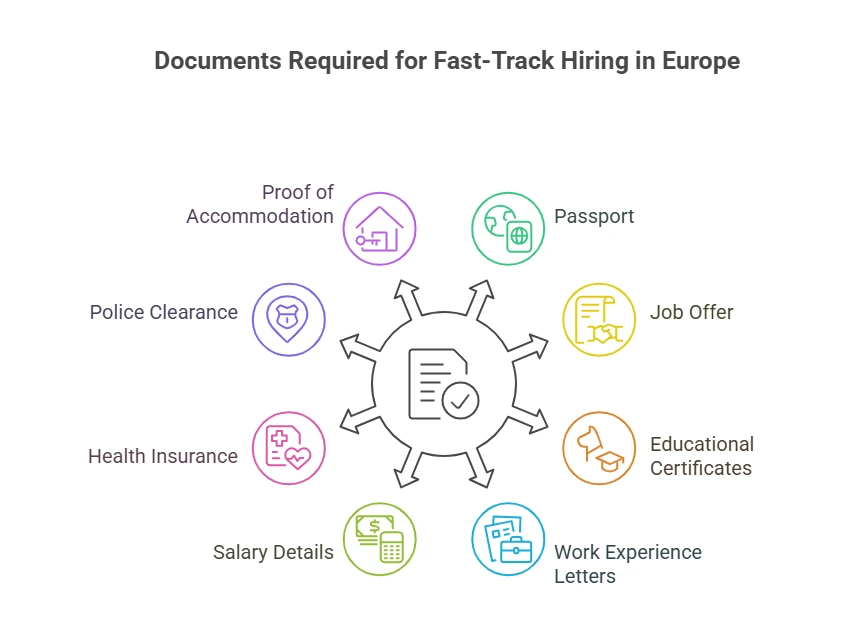
Key Required Documents for skilled professionals Include:
- Valid passport
- Job offer or employment contract
- Educational certificates and professional qualifications
- Work experience letters or reference documents
- Salary details meeting national thresholds
- Health insurance coverage (if applicable)
- Police clearance or background check (where required)
- Proof of accommodation (for some countries)
Step-by-Step Process for Fast-Track Hiring in Europe for Skilled Professionals
Step 1: Choose the European country and fast-track hiring option that matches your skills, experience, and sector demand.
Step 2: Secure a job offer from a European employer
Step 3: Check your eligibility based on qualifications, work experience, and salary requirements.
Step 4: The employer initiates the application process.
Step 5: Gather all required documents
Step 6: Submit the work permit application and complete biometrics if required.
Step 7: Once approved, receive the work visa or permit and relocate to start employment in Europe.
*Want to apply for fast-track work permit in Europe? Get expert guidance from Y-Axis
Processing Time for Fast-Track Work Visa in Europe
Fast-track hiring options in Europe are designed to reduce standard work visa timelines and prioritise employer-led applications. While processing times vary by country and visa type, fast-track routes are generally completed much faster than regular work permits.
Average processing timelines include:
- Employer-sponsored fast-track routes: 2–8 weeks in many countries
- Priority or fast track employer schemes: as fast as 1–4 weeks
- Job Seeker Visa pathways: 1–3 months, depending on the country
- ICT permits: often faster due to pre-approved employer status
Processing Cost for Fast-Track Work Visas in Europe
Processing costs for fast-track work visas in Europe vary by country and visa type, but they are generally affordable compared to long-term employment benefits. On average, government visa and work permit fees range from €100 to €500, depending on the country and route. Some fast-track or priority processing options may involve additional charges, while costs for biometrics, residence permits, document translation, and health insurance can add extra expenses.
High-Demand Sectors for Fast-Track Hiring in Europe
Fast-track hiring options in Europe are focused on sectors facing acute labour shortages and long-term workforce gaps. These industries are prioritised under accelerated work visa and permit routes to help employers recruit skilled professionals faster. Demand is being driven by digital transformation, infrastructure investment, and the transition to clean energy.
Key high-demand sectors for skilled professionals include:
- IT and Technology: software developers, data scientists, cybersecurity specialists
- Engineering and Manufacturing: mechanical, electrical, civil, and industrial engineers
- Healthcare and Life Sciences: doctors, nurses, healthcare professionals, researchers
- Construction and Skilled Trades: technicians, electricians, plumbers, project managers
- Renewable Energy: green energy engineers, sustainability specialists
- Finance and Professional Services: accountants, financial analysts, business consultants
- Research and Innovation: R&D specialists, scientists, academic researchers
- Logistics and Supply Chain: logistics managers, supply chain specialists, transport professionals
- Education and Academia: university lecturers, researchers, STEM and vocational educators
- Hospitality and Tourism: hotel managers, chefs, and experienced hospitality professionals
Can I apply for fast-track Hiring in Europe without a Job Offer?
Yes. Some European countries allow skilled professionals to apply without a job offer, depending on the visa type. Germany, Austria, Sweden, and Portugal offer job seeker or points-based visas. For example, the Germany Opportunity Card lets professionals search for work locally. Once employed, applicants can switch to a work permit or fast-track route, while employer-sponsored options remain the quickest way to start working.
Can Fast-Track Hiring Options in Europe Lead to Permanent Residence?
Yes. Fast-track hiring options in Europe can lead to permanent residence in most countries. Skilled professionals working in countries such as Germany, Netherlands, Sweden, France, Ireland, Austria, Portugal, Finland, Denmark, and Spain can usually apply for permanent residence after 2 to 5 years of continuous legal employment.
Most fast-track work permits are extendable and allow a transition to long-term residence once eligibility is met. Maintaining stable employment, meeting income thresholds, paying taxes, and complying with visa conditions are key requirements for settlement across Europe.
Tips to Improve your Chances for Fast-Track Hiring in Europe
To improve your chances of approval for fast-track hiring in Europe, you must meet eligibility requirements and submit your work permit application. Following the steps below improve your approval success for fast-track work visa.
- Target shortage occupations that match your skills and experience
- Choose the right country and fast-track route for your profile
- Secure a job offer from an eligible employer
- Ensure the salary meets national requirements
- Submit complete and accurate documents, including certified translations where required
*Looking to migrate to Europe? Start your journey with Y-Axis for expert guidance and end-to-end support.
Apply Now
FAQs
What are fast-track hiring options in Europe for skilled professionals?
Fast-track hiring options in Europe are accelerated, employer-led work permit pathways that allow skilled professionals to start working faster than standard visa routes. These programs prioritise shortage occupations, reduce documentation, and offer priority processing. Fast-track hiring focuses on quicker job approval and work authorisation, helping employers fill critical roles across key European industries.
Which European countries offer fast-track hiring options for skilled professionals?
Several European countries operate national fast-track hiring systems for skilled professionals, including Germany, Austria, Sweden, Portugal, the Netherlands, Ireland, France, and Denmark. Each country runs its own priority work permit or employer-certified scheme to address labour shortages and speed up hiring in high-demand sectors.
Which sectors are eligible for fast-track hiring in Europe?
Fast-track hiring in Europe mainly applies to sectors facing long-term skills shortages. Common eligible sectors include IT and software development, engineering, healthcare, construction, manufacturing, renewable energy, and research. Skilled professionals working in shortage occupations are prioritised for faster hiring and work permit processing under national fast-track programs.
What are the eligibility requirements for fast-track work permits in Europe?
Eligibility for fast-track work permits in Europe usually includes a valid job offer from an approved employer, relevant qualifications or work experience, and meeting salary thresholds. Some professions may require credential recognition. Fast-track programs prioritise skilled professionals in shortage occupations and often apply simplified or accelerated approval procedures.
How long does fast-track hiring in Europe take?
Fast-track hiring options in Europe typically take a few weeks to a few months, depending on the country, employer status, and document readiness. Employer-certified and priority processing schemes are usually much faster than standard work visa routes. Complete and accurate documentation helps ensure faster approvals under fast-track systems.
Can fast-track hiring in Europe lead to permanent residence?
Yes, fast-track hiring options in Europe can lead to permanent residence. Skilled professionals who maintain continuous employment and meet residence requirements may qualify for long-term residence permits. Over time, this can also lead to citizenship, depending on national rules related to stay duration, income stability, and integration.
Is a job offer mandatory for fast-track hiring in Europe?
A job offer is not mandatory for all fast-track hiring options in Europe, although most employer-sponsored routes do require one. Some countries allow skilled professionals to enter without a job offer through structured job-search or points-based pathways. Top countries like Germany offers the Opportunity Card and Austria offers a Job Seeker Visa to allow skilled professionals to enter, find employment, and then switch to a work permit.
Are fast-track hiring options suitable for skilled professionals?
Yes. Fast-track hiring options in Europe are designed for skilled professionals who meet job, qualification, and salary requirements. These programs prioritise employer demand and shortage occupations. Skilled professionals with relevant experience, recognised qualifications, and a valid job offer can qualify for fast-track work permits through employer-sponsored pathways.
Can family members join under fast-track hiring options in Europe?
Yes, most fast-track work permit programs in Europe allow family reunification. Skilled professionals can usually bring spouses and children, and in many countries spouses can work without restrictions. This makes fast-track hiring a practical option for professionals planning long-term relocation and settlement in Europe.
What is the difference between fast-track hiring and standard work permits in Europe?
Fast-track hiring offers priority processing, reduced documentation, and faster approvals for skilled professionals in shortage occupations. Standard work permits follow regular timelines and may involve additional checks. Fast-track hiring is employer-led and focuses on speed, while standard permits are slower and more procedural.
Tags:
Europe work visas
fast-track hiring Europe
fast-track work permits
skilled professionals Europe
work in Europe
European job market
international hiring Europe
Share
Y-Axis Services

Get it on your mobile

Get News alerts

Contact Y-Axis
Latest Article
Popular Post
Trending Article
Posted On March 13 2026
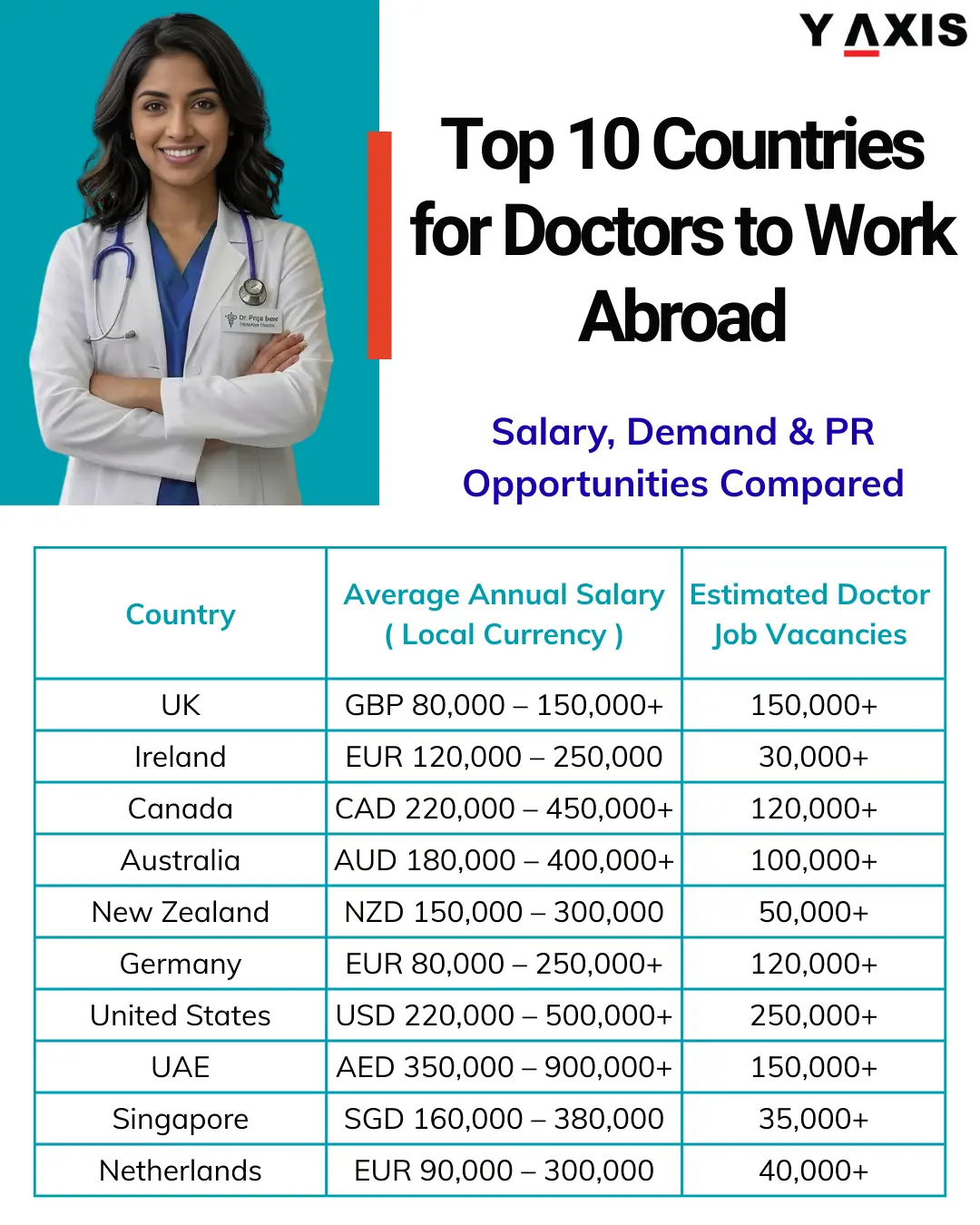
Top 10 Countries for Doctors to Work Abroad: Salary, Demand & PR Opportunities Compared