

Study in Sweden

Don't know what to do?
Get Free Counseling
Last Updated: August 7, 2026
Why Study in Sweden?
Sweden is becoming more and more popular among UK students looking to study abroad. Sweden provides a distinctive academic and cultural experience because of its forward-thinking society, top-notch universities, and emphasis on sustainability and innovation. More than 39,800 foreign students enrolled in Swedish universities in 2025, and the number is still rising.
Sweden promises a fulfilling experience both inside and outside of the classroom, whether you're drawn to Uppsala's historic charm or Stockholm's cosmopolitan vibe.
Sweden is renowned for its student-cantered educational system, innovative research, and inclusive society. It is one of the top 5 nations in the world for sustainability and innovation.
- In 2024, there were more than 39,800 international students enrolled.
- The Global Innovation Index ranked #3 worldwide.
- Home to 8 QS Top 500 universities
- Pioneer in green technology and sustainability
- Among the top 10 safest countries in the world
Top Reasons to Study in Sweden
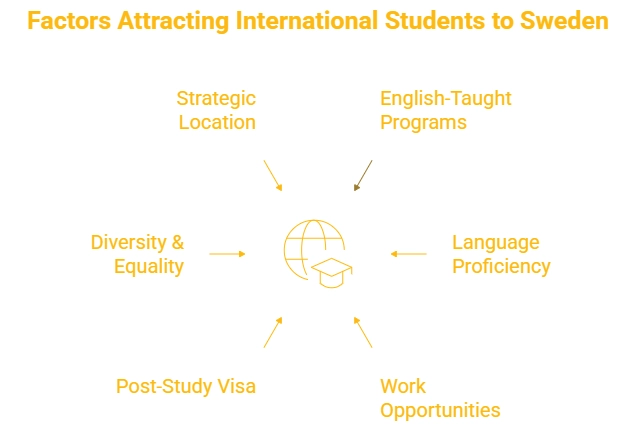
- English-Taught Programs: Over 1,000 degree programs available in English
- No Language Barrier: Sweden's English proficiency is ranked second in the world.
- Work While You Study: Part-time employment during study periods is not subject to an hourly rate cap.
- Post-Study Work Visa: You can stay for up to a year in order to start a business or find employment.
- Diversity & Equality: One of the world's most gender-equal nations
- Ideal Location: Gateway to Europe with excellent travel connectivity
Eligibility for Sweden Student Visa
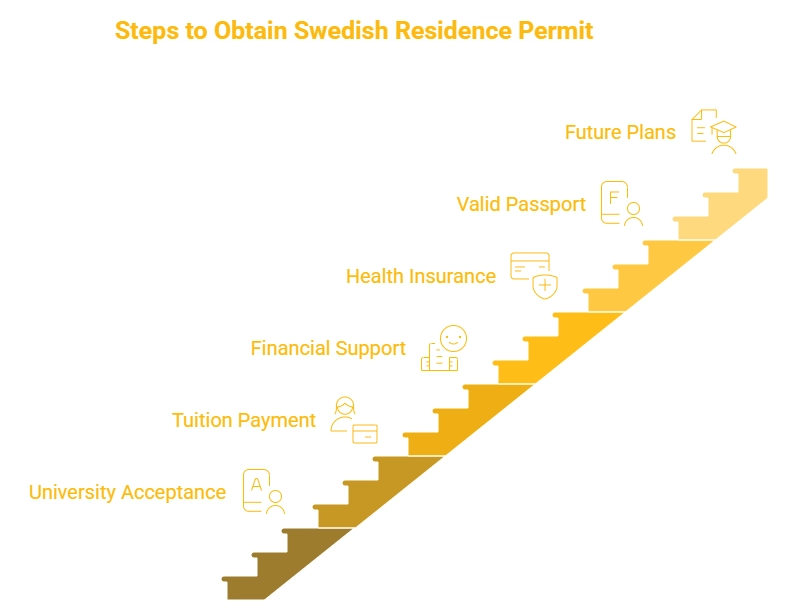
If a UK student's course lasts longer than 90 days, they must apply for a residence permit.
You are eligible if:
- You have been accepted into a Swedish university's full-time program.
- The first installment of your tuition has been paid.
- You can provide proof of your a financial support (minimum SEK 10,314 per month).
- You have comprehensive health insurance (if staying <12 months)
- You hold a valid passport.
- You plan to apply for a work permit or depart Sweden after completing your studies.
Sweden Visa Processing Time
| Visa Type | Processing Time |
|---|---|
| Residence Permit (Studies) | 2–5 months |
| Short-Term Study Visa | 15 calendar days |
| Peak Season Delay | Up to 6 months (Jan & Aug intakes) |
Apply at least 3 to 4 months before your course starts to avoid delays.
Sweden Student Visa Requirements
Here’s what UK students need to apply:
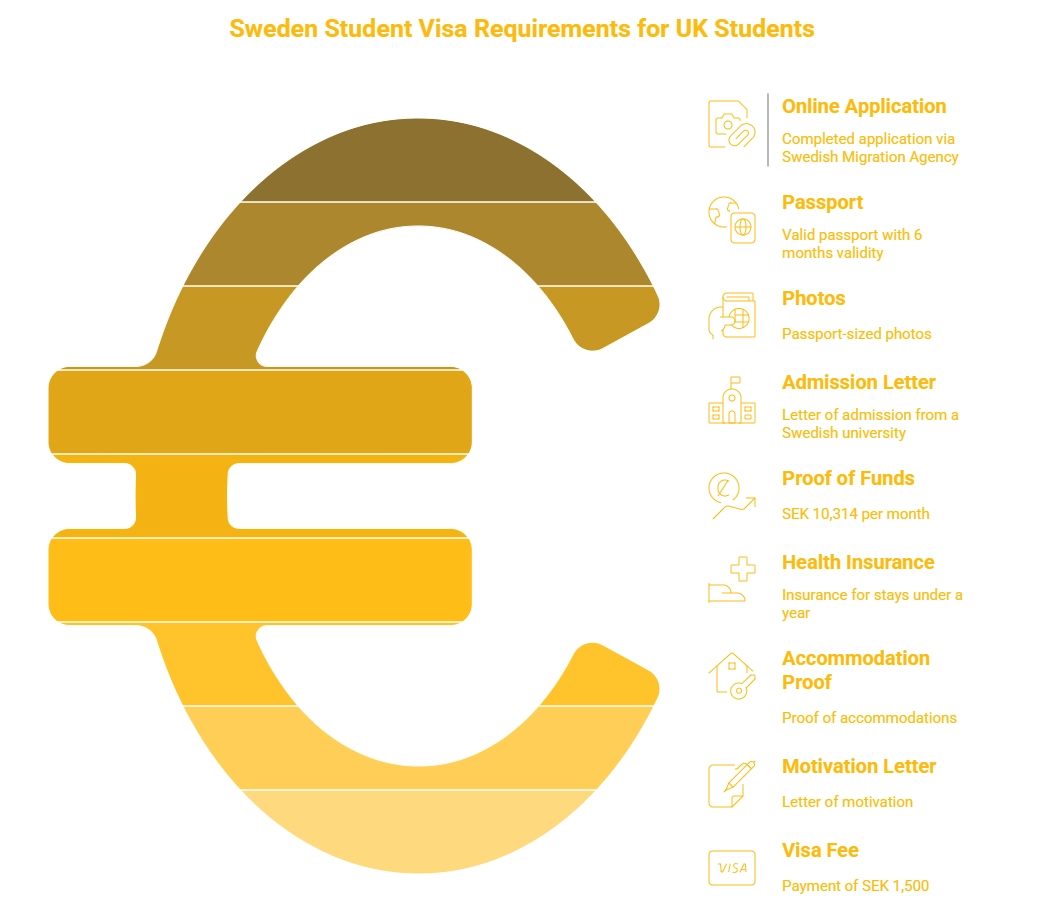
- Completed online application via Swedish Migration Agency
- Valid passport (at least 6 months after stay)
- Passport-sized photos
- A letter of admission from a Swedish university
- Proof of funds: SEK 10,314 per month (about £770)
- Health insurance (for stays under a year)
- Proof of accommodations
- Letter of motivation
- Payment of visa fee: SEK 1,500 (about £110)
Top Universities in Sweden
| University | QS Ranking 2026 | Location |
|---|---|---|
| Karolinska Institute | #50 | Stockholm |
| Lund University | #72 | Lund |
| KTH Royal Institute of Technology | #78 | Stockholm |
| Uppsala University | #93 | Uppsala |
| Stockholm University | #147 | Stockholm |
| Chalmers University of Technology | #165 | Gothenburg |
| University of Gothenburg | #202 | Gothenburg |
| Linköping University | #310 | Linköping |
Apply Now
Top Courses to Study in Sweden
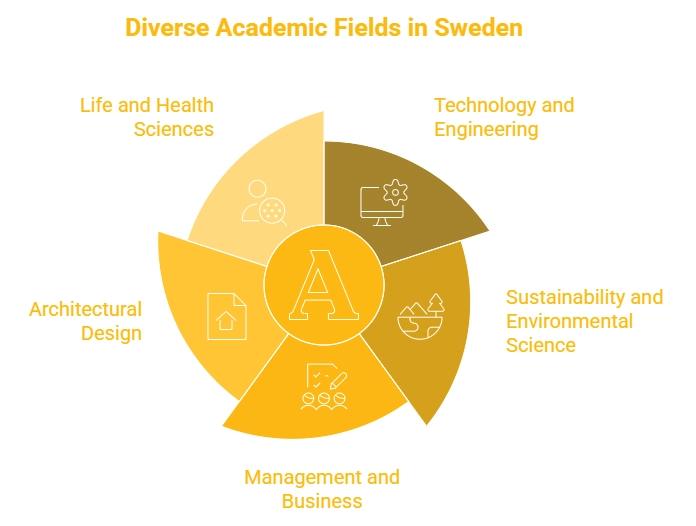
Numerous programs in various disciplines are available in Sweden. Popular domains consist of:
Technology and Engineering
- Robotics, AI, and Renewable Energy
- Top schools: Chalmers, Lund, and KTH
Sustainability and Environmental Science
- Green technology, ecology, and climate change
- Top universities: SLU and Uppsala
Management and Business
- Entrepreneurship and International Business
- Top universities: Lund, Stockholm School of Economics
Architectural Design
- Urban Planning and Industrial Design
- Top universities: KTH, Umeå Institute of Design
Life and Health Sciences
- Biomedical Sciences, Pharmacy, and Medicine
- Top universities: Karolinska Institute
Cost of Studying in Sweden
Tuition fees (2025-2026)
| Degree Level | Annual Cost (SEK) | Notes |
|---|---|---|
| Bachelor’s | SEK 80,000-140,000 | 3-year degrees |
| Master’s | SEK 100,000-200,000 | 1-2 years |
| MBA | SEK 150,000-295,000 | Top-tier programs |
| PhD | Free + salary | Fully funded positions |
Living Costs in Sweden
Monthly expenses vary by city. Here’s an average breakdown:
| Expense Category | Monthly Cost (SEK) |
|---|---|
| Accommodation | 4,000-8,000 |
| Food & Groceries | 2,000-3,000 |
| Transportation | 600-900 |
| Utilities & Internet | 1,000-1,500 |
| Personal & Leisure | 1,000-2,000 |
- Stockholm/Gothenburg: SEK 10,000-12,000/month
- Umeå/Karlstad: SEK 8,000-9,500/month
Scholarships in Sweden for International Students
Sweden offers several scholarships for UK and other international students:
Swedish Institute Scholarships for Global Professionals (SISGP)
- Fully funded: tuition, living costs, travel
- Monthly stipend: SEK 11,000
University Scholarships
| Scholarship Name | University | Benefit |
|---|---|---|
| Lund Global Scholarship | Lund University | Up to 100% tuition |
| IPOET Scholarship | Chalmers University | 75% tuition waiver |
| Axel Adler Scholarship | University of Gothenburg | Full tuition |
| KTH Scholarships | KTH Royal Institute | Full tuition |
| Uppsala Global Scholarship | Uppsala University | Partial to full tuition |
Steps to apply for Sweden Student Visa
Step 1: Submit an application and obtain an official letter of admission from a Swedish university.
Step 2: As required by the university, pay the first installment of your tuition.
Step 3: Gather all the required documents, such as your motivation letter, health insurance, proof of financial support, and passport.
Step 4: Apply online for a residence permit through the Swedish Migration Agency's website.
Step 5: Pay the 1,500 SEK visa application fee.
Step 6: Schedule and attend a biometrics appointment to provide a photo and fingerprints at the closest Swedish embassy or consulate.
Step 7: Wait for your application to be processed, which usually takes two to five months.
Step 8: Get your residence permit card after it has been approved, and then get ready to visit Sweden.
Post-Study Work Visa in Sweden
After graduation, Sweden provides a 12-month residency permit for job searching or business start-up.
Important Features
- Valid for 12 months
- Apply before student permit expires
- Must show SEK 10,314 in monthly funds.
- If staying for less than a year, health insurance is required.
Switch to a Work Permit
If you land a job within the year:
- Apply for an EU Blue Card or a Swedish work permit.
- Employer must initiate the application
- The minimum salary of SEK 13,000 per month must be met in accordance with the collective agreement.
Why Choose Y-Axis?
- Professional Advice for UK Applicants: Tailored assistance for UK students submitting applications to universities in Europe.
- End-to-End Application Support: Everything under one roof, from choosing a university to applying for a visa.
- Scholarship Help: We assist you in locating and submitting applications for the top scholarships for which you qualify.
- Preparation and Review of Documents: Proper documentation is necessary to prevent application delays or rejections.
- Trusted by Thousands: More than 1 million customers have used Y-Axis to successfully complete their international education.
Our Accreditations |
|||
 |
 |
 |
 |
Testimonials
Frequently Asked Questions