

Study in Norway

Don't know what to do?
Get Free Counseling
Last Updated: September 11, 2026
Why Study in Norway?
With its stunning waterways, excellent standard of living, and top-notch educational system, Norway is drawing more and more attention from students in the UK. In 2025, there will be more than 24,000 international students attending Norwegian universities, demonstrating the nation's distinctive fusion of cultural diversity, sustainability, and academic brilliance.
Studying in Norway can be a life-changing experience, regardless of your preference for the innovation hubs of Oslo and Trondheim or the Arctic scenery of Tromsø.
Norway is a popular choice for UK students because it provides an alluring combination of affordability, academic rigor, and lifestyle benefits.
- 24,154 foreign students attending Norwegian universities in 2025
- Natural sciences and technology are chosen by 36% of international students.
- 53% say that the quality of education is the main factor in their decision to choose Norway.
- 47% value Norway's tranquillity and safety.
- 26% are motivated by post-study work opportunities
Top Reasons to Study in Norway
- Tuition-Free Education: Under certain agreements, public universities provide free education to students from the EU and EEA, including UK citizens.
- English-Taught Programs: More than 350 English-taught programs are offered, particularly at the master's level.
- High Quality of Life: Norway is one of the ten happiest nations in the world.
- Sustainability Focus: Oslo is leading the way in carbon-neutral projects and electric public transportation.

Norway is ranked third in the world for inclusivity and second for LGBTQ+ equality, making it a safe and inclusive society.
Eligibility for Norway Student Visa
If a UK student's course lasts longer than 90 days, they must apply for a student residence permit.
You qualify if:
- You have been accepted to a full-time, on-campus program at a Norwegian university that has earned accreditation.
- You can prove that you have at least NOK 137,907 (about £10,500) a year.
- You have valid health insurance
- You meet language requirements (English or Norwegian, depending on the course)
- You are at least 18 years old.
Norway Visa Processing Time
| Visa Type | Processing Time |
|---|---|
| Short-Term (≤90 days) | 15-30 calendar days |
| Long-Term (Student Visa) | 6-8 weeks |
To prevent delays, apply at least two months before the start of your course.
Norway Student Visa Requirements
Students in the UK must apply as follows:
- Finished the online application through UDI
- A passport that is valid for at least six months
- Passport-sized photos
- Admission letter from a Norwegian university
- Evidence of income (NOK 137,907 annually)
- Coverage of health insurance
- Evidence of accommodations
- A medical certificate
- Criminal record certificate
- Payment receipt for Visa fee (NOK 5,400)
Top Universities in Norway
| University | QS Ranking 2026 | Location |
|---|---|---|
| University of Oslo | #119 | Oslo |
| Norwegian University of Science & Tech (NTNU) | #267 | Trondheim |
| University of Bergen | #287 | Bergen |
| University of Tromsø – Arctic University | #648 | Tromsø |
| Norwegian University of Life Sciences | #791 | Ås |
| University of Stavanger | #851 | Stavanger |
These institutions offer a wide range of programs in English and are known for cutting-edge research and innovation
Top Courses to Study in Norway
In the areas of creativity, sustainability, and STEM, Norway is a leader. Among the well-known programs are:
- Petroleum engineering: High in demand and pays well.
- Digital Media & Technology: Available at BI Business School and NTNU, Oslo
- Performing Arts: Robust cultural establishments and worldwide visibility
- Environmental Sciences: Norway leads the world in sustainability
- Life sciences and biotechnology: Cutting-edge research facilities
- Business & Management: MBA and MSc programs at BI and NHH

Cost of Studying in Norway
| Degree Level | Public Universities (EU/EEA) | Private Universities |
|---|---|---|
| Bachelor's | Free or NOK 80,000–150,000/year | NOK 80,000–250,000/year |
| Master's | Free or NOK 90,000–200,000/year | NOK 100,000–300,000/year |
| MBA | NOK 120,000–350,000/year | BI, NHH, etc. |
UK students may be charged tuition depending on bilateral agreements
Living Costs in Norway
Estimated monthly expenses for students:
| Expense Category | Monthly Cost (NOK) |
|---|---|
| Accommodation | 4,500–9,000 |
| Food & Groceries | 2,500–4,500 |
| Transportation | 500–800 |
| Utilities & Internet | 1,000–2,500 |
| Personal & Leisure | 1,000–2,000 |
Total: NOK 10,000–18,000/month (~£750–£1,350) depending on city
Scholarships in Norway for International Students
While Norway offers limited government scholarships, several universities and organizations provide funding:
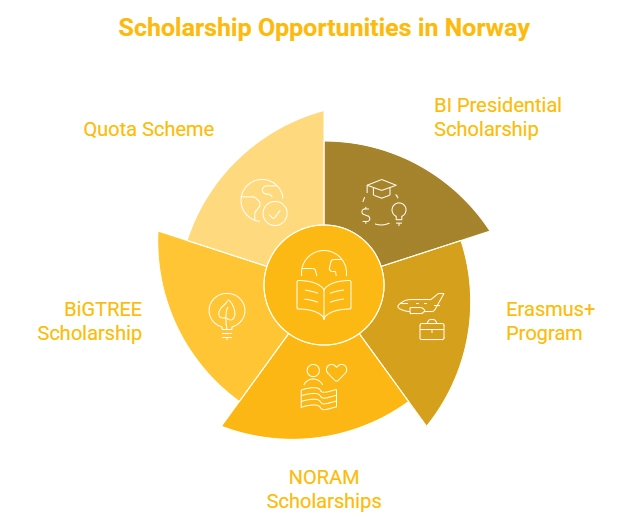
Top Scholarships
- BI Presidential Scholarship: Full tuition plus a stipend of NOK 70,000 annually
- Erasmus+ Program: Living expenses, travel, and tuition for exchange students
- NORAM Scholarships: Up to NOK 100,000 for students in the US and their partner nations
- BiGTREE Scholarship: For research on sustainability and climate change
- Quota Scheme: Limited availability for students from developing nations
Steps to apply for Norway Student Visa
Step 1: Apply and receive an offer from a recognized Norwegian university.
Step 2: Gather your health insurance, passport, financial documentation, admission letter, and accommodation details.
Step 3: Pay the fee and submit your application through the UDI portal.
Step 4: Make an appointment for biometrics at the Norwegian consulate or embassy.
Step 5: Attend your appointment and submit all required paperwork.
Step 6: It usually takes six to eight weeks to receive a visa decision.
Step 7: After being given permission, depart and register with the local police within seven days of your arrival.
Post-Study Work Visa in Norway
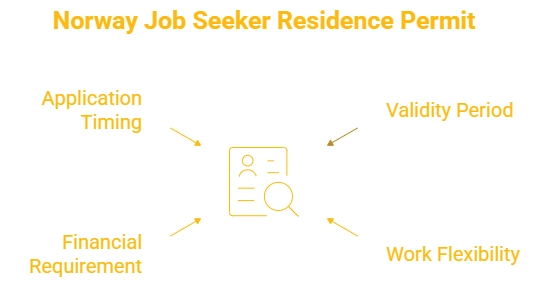
For recent graduates, Norway provides a Job Seeker Residence Permit:
Key characteristics
- Valid for an entire year.
- Allows full-time or part-time work while job searching
- Proof of funds required: NOK 246,246 annually (£19,000)
- Must apply before the student permit expires
Why Choose Y-Axis?
- Professional Advice for UK Applicants: Tailored assistance for UK students submitting applications to universities in Europe.
- End-to-End Application Support: Everything under one roof, from choosing a university to applying for a visa.
- Scholarship Help: We assist you in locating and submitting applications for the top scholarships for which you qualify.
- Preparation and Review of Documents: Proper documentation is necessary to prevent application delays or rejections.
- Trusted by Thousands: More than 1 million customers have used Y-Axis to successfully complete their international education.
Frequently Asked Questions