
Posted on December 29 2025
What are the most in-demand jobs in Germany for the next 10 years?

By , Editor
Updated December 29 2025
The most in-demand jobs in Germany for the next 10 years will be concentrated in IT, engineering, healthcare, renewable energy, construction and skilled trades, logistics, and advanced manufacturing. High-demand roles include software developers, data and AI specialists, cybersecurity experts, engineers, doctors and nurses, renewable energy professionals, construction managers, supply chain specialists, and skilled technicians.
Germany currently has 1.8 million job vacancies, and these numbers are expected to rise 7 million by 2035 due to an ageing population, low birth rates, and rapid digital transformation. With over €1 trillion being invested across infrastructure, clean energy transition, digitalisation, housing, and industrial modernisation are increasing demand for skilled professionals and creating millions of new job opportunities.
With strong labour protections, competitive salaries, and a healthy work–life balance, Germany continues to rank among the top destinations for skilled professionals seeking long-term global career opportunities.
*Want to work in Germany? Let Y-Axis guide you through application process.
Most In-Demand Job Opportunities in Germany for the Next 10 Years
The most in-demand job opportunities in Germany for the next 10 years are driven by long-term skill shortages, an ageing workforce, and major investment in digitalisation and clean energy. Employers continue to hire actively across IT, engineering, healthcare, construction, and advanced manufacturing. These roles offer strong job security, competitive salaries, and long-term career growth.
List of In-Demand Job Opportunities in Germany for the Next 10 Years:
|
Sector |
In-demand Job Roles |
|
Information Technology (IT) |
Software Developers, Data Scientists, Cybersecurity Experts, Cloud Computing Specialists |
|
Engineering & Manufacturing |
Mechanical Engineers, Electrical Engineers, Civil Engineers, Automotive Engineers, Wind Turbine Engineers |
|
Healthcare & Nursing |
Registered Nurses, Doctors, Healthcare Technicians, Medical Researchers |
|
Marketing & Sales |
Digital Marketing Specialists, Sales Managers, Market Analysts, Brand Managers |
|
Human Resources (HR) |
Recruitment Specialists, HR Managers, Learning & Development Coordinators |
|
Education & Teaching |
Teachers, English Language Instructors, University Lecturers |
|
Finance & Accounting |
Accountants, Financial Analysts, Auditors, Payroll Specialists |
|
Hospitality & Tourism |
Hotel Managers, Chefs, Guest Service Supervisors, Event Coordinators |
|
Renewable Energy & Sustainability |
Solar Energy Technicians, Energy Consultants, Environmental Engineers |
|
Construction & Skilled Trades |
Construction Managers, Site Supervisors, Electricians, Plumbers, HVAC Technicians, Welders |
High-Paying Jobs in Germany for Skilled Professionals
Germany offers several high-paying careers that will remain in strong demand over the next decade due to persistent skill shortages and large-scale investment. Digital transformation, infrastructure development, and the energy transition continue to drive sustained hiring, while healthcare and industrial growth support competitive salary levels. These careers offer long-term stability, career progression, and strong earning potential.
List of highest paid jobs in the Germany for skilled professionals:
|
Sector |
Average Annual Salary (€) |
Job Outlook |
|
Information Technology |
70,000 – 110,000 |
Very High |
|
Engineering & Manufacturing |
65,000 – 100,000 |
High |
|
Healthcare & Nursing |
60,000 – 120,000 |
Very High |
|
Renewable Energy & Sustainability |
65,000 – 105,000 |
High |
|
Construction & Skilled Trades |
55,000 – 90,000 |
High |
|
Finance & Accounting |
60,000 – 95,000 |
Medium to High |
|
Logistics & Supply Chain |
55,000 – 90,000 |
High |
|
Sales & Marketing |
55,000 – 95,000 |
Medium to High |
|
Human Resources & Talent Management |
50,000 – 85,000 |
Medium |
|
Education & Teaching |
50,000 – 80,000 |
Medium |
|
Hospitality & Tourism |
45,000 – 75,000 |
Medium |
In-demand Skills in Germany for the Next 10 Years
Germany’s labour market is evolving rapidly due to digitalisation, infrastructure expansion, and demographic change. Employers are increasingly prioritising future-ready skills that support productivity, innovation, and long-term growth.
Key required skills for jobs in Germany for skilled professionals:
- Digital & Technology: Software development, AI and machine learning, cloud computing, cybersecurity, data analytics
- Engineering & Industrial Skills: Automation, robotics, CAD/CAE, electrical and mechanical engineering
- Healthcare : Nursing, elderly care, medical technology, healthcare administration
- Renewable Energy & Sustainability: Solar and wind systems, energy management, environmental engineering
- Construction & Skilled Trades: Electrical work, plumbing, welding, HVAC systems, site supervision
- Logistics & Supply Chain: Procurement, warehouse management, transport planning
- Finance & Business: Financial analysis, accounting, compliance, risk management
- Language & Soft Skills: German language proficiency, communication, adaptability, teamwork
How to Get a Job in Germany for Skilled Professionals?
Germany offers strong employment opportunities for skilled professionals across IT, engineering, healthcare, construction, and skilled trades. Long-term skill shortages mean employers actively recruit qualified talent to fill critical roles.
Step-by-step application process for jobs in Germany:
Step 1: Identify in-demand roles based on current skill shortages
Step 2: Get academic and professional qualifications formally recognised
Step 3: Prepare a Germany-style CV and tailored cover letter
Step 4: Apply through trusted job portals, recruitment agencies, and employer websites
Step 5: Attend interviews and secure a formal job offer
Step 6: Apply for the appropriate German work visa
*Want to apply for jobs in Germany? Get step by step assistance from Y-Axis with complete visa support.
Benefits of Working in Germany for Skilled Professionals
Germany provides a stable, well-regulated work environment that supports long-term career growth and quality of life. Strong labour protections, transparent employment laws, and generous social benefits make Germany an attractive destination for skilled professionals.
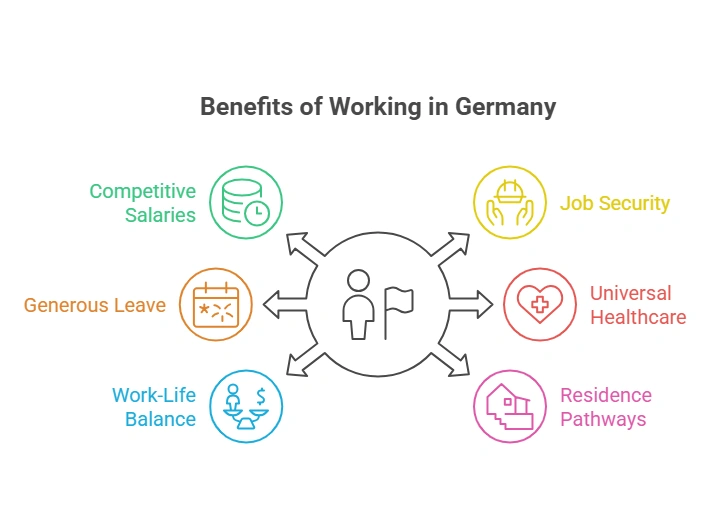
Key benefits for skilled professionals include
- Competitive salaries with regulated working hours
- Strong labour laws ensuring job security
- Generous paid leave, parental benefits, and public holidays
- Universal healthcare and comprehensive social security coverage
- Excellent work–life balance across most industries
- Clear long-term residence and settlement pathways
Top Cities in Germany with Job Opportunities
Germany’s major cities serve as economic and innovation hubs, offering diverse job opportunities across high-demand sectors. Strong infrastructure, international employers, and industry clusters continue to attract skilled professionals.
List of top cities to work in Germany with job opportunities:
- Berlin: IT, startups, digital platforms, creative industries
- Munich: Engineering, automotive, IT, research and development
- Frankfurt: Finance, banking, fintech, corporate and professional services
- Hamburg: Logistics, aerospace, port operations, manufacturing
- Stuttgart: Automotive engineering, advanced manufacturing, industrial technology
- Cologne: Media, technology, healthcare, business services
Job Outlook in Germany for the Next 10 Years
Germany’s job outlook remains strong and positive over the next decade, driven by demographic shifts, an ageing workforce, and sustained investment in digitalisation, clean energy, infrastructure, and housing. Skill shortages across IT, engineering, healthcare, construction, and manufacturing are expected to widen, creating consistent demand for qualified professionals.
As workforce gaps continue to grow, employers will increasingly rely on international talent to maintain productivity and economic growth. Overall, Germany offers stable employment prospects, competitive salaries, and long-term career opportunities for skilled professionals planning to work in Europe.
Apply Now
FAQs
What are the most in-demand jobs in Germany for the next 10 years?
The most in-demand jobs in Germany for the next 10 years include roles in IT, engineering, healthcare, renewable energy, construction, logistics, and advanced manufacturing. High-demand positions include software developers, AI and data specialists, cybersecurity experts, engineers, doctors, nurses, renewable energy technicians, and skilled trades. These roles are driven by long-term skill shortages, digital transformation, and demographic changes.
Which sectors will create the most jobs in Germany in the future?
The sectors expected to create the most jobs in Germany include information technology, engineering and manufacturing, healthcare, renewable energy, construction, and logistics. Digitalisation, automation, clean energy investments, and infrastructure development are key drivers. Healthcare and elderly care roles continue to expand due to an ageing population, while construction and logistics support long-term economic growth and employment demand.
Are IT and tech jobs in high demand in Germany?
Yes, IT and tech jobs are among the most in-demand jobs in Germany for the next decade. Employers are actively hiring software developers, data scientists, AI specialists, cloud engineers, and cybersecurity professionals. Digital transformation across industries and increasing reliance on technology are driving sustained demand. These roles offer competitive salaries, strong job security, and long-term career growth opportunities.
What healthcare jobs are most needed in Germany?
Healthcare jobs in high demand in Germany include registered nurses, doctors, elderly care professionals, healthcare technicians, and medical researchers. An ageing population and rising healthcare needs continue to create long-term shortages. Hospitals, care homes, and medical institutions actively recruit qualified professionals. These roles offer stable employment, competitive pay, and strong long-term career prospects within the healthcare sector.
Which engineering roles are in demand in Germany?
Germany has strong demand for mechanical engineers, electrical engineers, civil engineers, automotive engineers, and industrial automation specialists. These roles support manufacturing, infrastructure development, automotive innovation, and renewable energy projects. Ongoing investment in modernising industry and infrastructure keeps engineering jobs among the most stable and well-paid career options in the German job market.
Are renewable energy jobs growing in Germany?
Renewable energy jobs are growing steadily in Germany due to the country’s clean energy transition. In-demand roles include solar technicians, wind turbine engineers, energy consultants, and environmental engineers. Large-scale investment in renewable energy infrastructure is creating long-term employment opportunities. These careers support sustainability goals while offering strong job security and future-focused skill development.
What are the highest-paying in-demand jobs in Germany?
Some of the highest-paying in-demand jobs in Germany include IT specialists, AI and data professionals, senior engineers, doctors, renewable energy experts, and finance professionals. Salaries in these roles can exceed €100,000 annually depending on experience and sector. High pay is driven by skill shortages, specialised expertise, and strong demand across key industries.
What skills are required to get an in-demand job in Germany?
Employers in Germany look for technical skills such as software development, engineering expertise, healthcare qualifications, automation, and renewable energy knowledge. Digital skills, data analytics, and cybersecurity are highly valued. German language skills improve employability, especially in healthcare and public-facing roles. Strong communication, adaptability, and problem-solving skills also support long-term career success.
Is Germany facing skill shortages in the next decade?
Yes, Germany is expected to face significant skill shortages over the next decade due to an ageing workforce and low birth rates. Millions of job vacancies are projected across IT, engineering, healthcare, construction, and manufacturing. These shortages are increasing demand for skilled professionals and creating strong opportunities for stable employment and long-term career growth.
Is Germany a good country for long-term career growth?
Germany is considered an excellent destination for long-term career growth due to its strong economy, stable job market, and employee-friendly labour laws. Skilled professionals benefit from competitive salaries, regulated working hours, generous social benefits, and a healthy work–life balance. Continued investment in technology and infrastructure supports long-term employment stability.
Tags:
Germany jobs
in-demand jobs
future careers
Germany job market
skilled professionals
high-paying jobs
work in Germany
Share
Y-Axis Services

Get it on your mobile

Get News alerts

Contact Y-Axis
Latest Article
Popular Post
Trending Article
Posted On February 25 2026
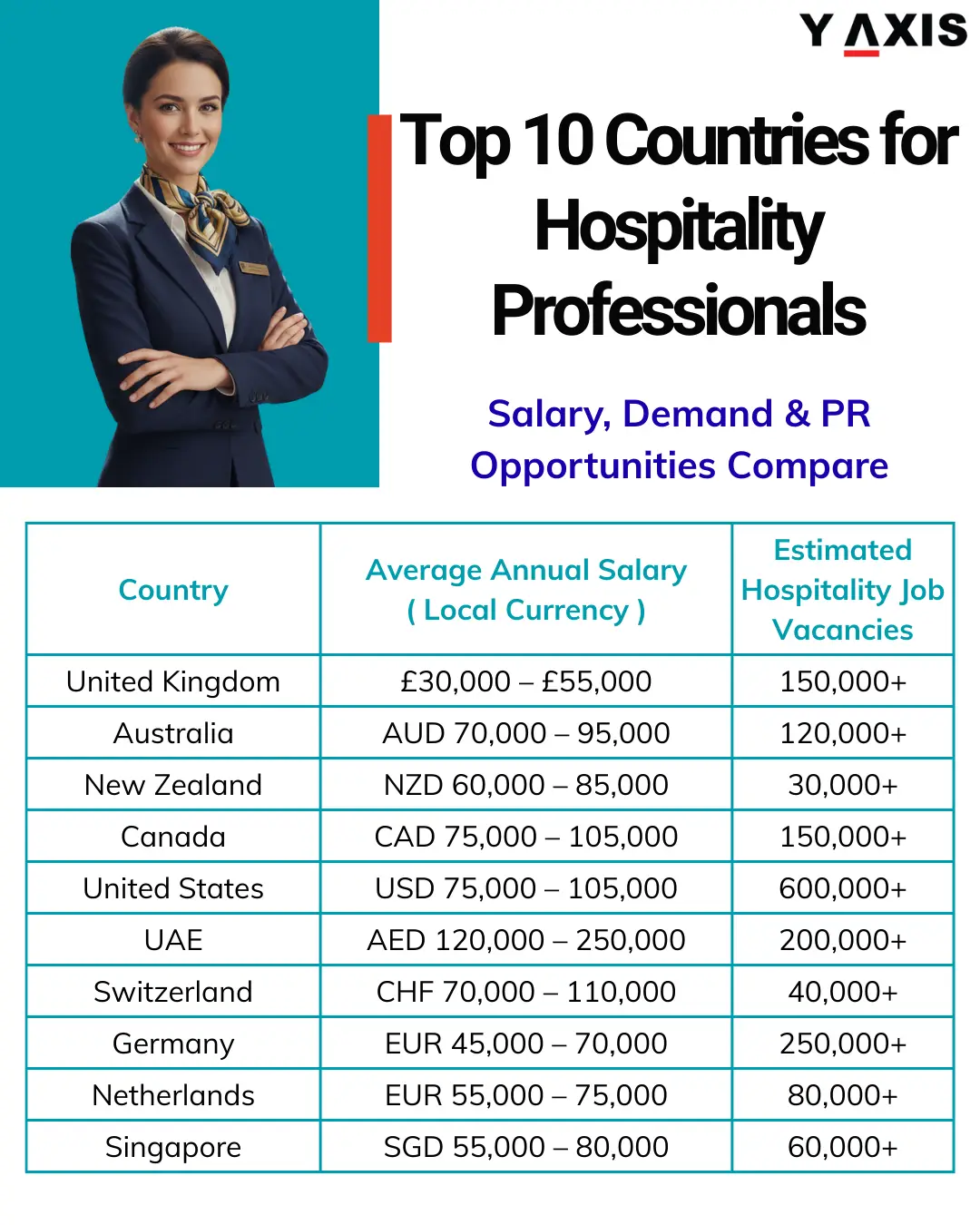
Top 10 Countries for Hospitality Professionals: Salary, Demand & PR Opportunities Compared