
Posted on December 16 2025
Fast-Track Hiring Options in Germany for Skilled Professionals

By , Editor
Updated December 16 2025
Germany has four main fast-track hiring options for skilled professionals to help fill more than 1.8 million job vacancies across in-demand sectors including IT, engineering, healthcare, logistics, manufacturing, and skilled trades. These vacancies are expected to rise to 7 million by 2035, and the government plans to introduce additional fast-track hiring options to address ongoing labour shortages.
With over €1 trillion being invested in infrastructure, energy transition, digitalisation, housing, and industrial modernisation, demand for skilled workers is increasing steadily. To support this growth, Germany continues to rely on fast-track hiring and streamlined work visa pathways to attract international talent and support long-term economic growth.
*Want to work in Germany through fast track hiring? Get step-by-step guidance from Y-Axis.
Fast-Track Hiring Pathways for Skilled Professionals in Germany
Germany has 4 main fast-track immigration pathways designed to help skilled professionals secure employment and begin working sooner. These routes simplify documentation, shorten visa processing times, and enable employers to fill critical shortages more quickly. They are particularly relevant for individuals with recognised qualifications, professional experience, and job offers in high-demand fields.
The main fast-track hiring pathways in Germany include:
- Accelerated Skilled Worker Procedure (ASVP): Allows employers to work directly with immigration authorities in Germany to speed up qualification recognition and visa processes, often reducing approval time to just a few weeks.
- EU Blue Card: A fast-track option for highly qualified professionals with a recognised university degree and a job offer that meets the required salary threshold, especially in shortage occupations.
- Germany Skilled Worker Visa: Available for individuals with recognised vocational qualifications or professional experience in occupations facing shortages. This is one of the most common routes used by skilled workers worldwide.
- Opportunity Card (Chancenkarte): A points-based system that allows qualified job seekers to enter Germany and search for employment for up to one year based on criteria such as qualifications, experience, and language skills.
Benefits of Fast-Track Hiring for Skilled Professionals in Germany
Fast-track hiring offers many advantages for skilled professionals who want to move to Germany and begin work with fewer delays. These pathways are designed to shorten waiting times, reduce paperwork, and make the relocation process more efficient for both employers and skilled workers.
Key benefits for skilled workers through fast track hiring include:
- Faster visa approval
- Simplified qualification recognition
- Priority access for shortage occupations
- Clear pathway to permanent residency
Who Is Eligible for Fast-Track Hiring in Germany for Skilled professionals?
Eligibility for fast-track hiring in Germany depends on the visa pathway, role, and qualifications. Applicants must meet the requirements under the Skilled Immigration Act and hold a position aligned with their professional background.
To qualify for fast-track hiring options you need:
- Recognised Qualification: Academic or vocational qualifications recognised in Germany (via ZAB or IHK FOSA).
- Valid Job Offer: A signed employment contract for a skilled or shortage occupation.
- Relevant Work Experience: Experience related to the role, especially in IT, engineering, healthcare, or trades.
- Salary Requirements: Meeting the minimum salary threshold (lower thresholds apply in shortage occupations under the EU Blue Card).
- Language Skills (if required): German language levels such as B1/B2 may be necessary for regulated roles like healthcare.
- Required Supporting Documents: Passport, employment contract, recognition notice, CV, and visa forms.
Document Checklist for Fast-Track Work Visa in Germany
Applicants must provide the correct documentation to support their visa and recognition process. Document requirements may vary depending on embassy, visa type, and profession, but the standard checklist includes:
- Valid passport
- Signed job offer or employment contract
- Evidence of qualification recognition (ZAB/IHK FOSA result)
- Degree, diploma, or vocational certificates
- Academic transcripts (if applicable)
- Updated CV showing relevant experience
- Employment reference letters or experience certificates
- Proof of salary (mandatory for the EU Blue Card and some skilled visas)
- German language certificate (if needed for regulated professions)
- Proof of health insurance
- Biometric passport photos
Step-by-Step Fast-Track Procedure for Skilled Workers in Germany
The fast-track hiring process in Germany is designed to shorten approval timelines and help skilled professionals start work sooner. While requirements may vary based on the visa pathway, most applicants follow the steps below.
Step 1: Get Your Qualifications Recognised
Step 2: Secure a Job Offer
Step 3: Employer Initiates the Accelerated Skilled Worker Procedure (ASVP)
Step 4: Federal Employment Agency Approval
Step 5: Receive the Pre-Approval Letter
Step 6: Apply for the Work Visa
Step 7: Travel to Germany and Receive Your Residence Permit
*Want to apply for fast track work visa in Germany? Get expert guidance from Y-Axis.
Processing time for fast-track German Work Visa for Skilled Professionals
Fast-track hiring pathways significantly reduce waiting times compared to standard visa processes. Processing may still vary depending on the embassy, completeness of documents, and visa category, but accelerated options are designed to be noticeably faster.
Estimated Fast-Track Processing Timelines:
|
Pathway |
Approximate Processing Time |
|
Accelerated Skilled Worker Procedure (ASVP) |
4–10 weeks |
|
EU Blue Card |
6–12 weeks |
|
Skilled Worker Visa |
8–16 weeks |
|
Opportunity Card (Chancenkarte) |
8–18 weeks |
Processing Cost for Fast-Track Germany Work Visas
Costs for fast-track hiring vary depending on the visa route, recognition process, and personal requirements. Some fees, especially the ASVP fee, may be covered by the employer.
Processing Cost for fast track Germany Work Visas:
|
Category |
Processing Cost (Approx.) |
|
Visa Application Fee |
€75–€100 |
|
ASVP Fee (paid by employer) |
€411 |
|
Qualification Recognition (ZAB / IHK FOSA) |
€200–€600 |
|
Translation & Certified Copies |
€50–€300 |
|
Mandatory Health Insurance |
Varies by provider |
Top Sectors Hiring Skilled Workers in Germany
Germany continues to recruit skilled professionals across multiple industries facing long-term shortages. The need is driven by an ageing workforce, digital transformation, and major infrastructure expansion projects.
High-demand sectors include:
- Information Technology (IT)
- Engineering (Civil, Mechanical, Electrical & Automotive)
- Healthcare and Nursing
- Skilled Trades and Construction
- Logistics and Transportation
- Manufacturing and Automotive
- Renewable and Green Energy
Top Companies Hiring Skilled Workers in Germany
Many leading employers in Germany actively recruit global talent and offer visa sponsorship support through fast-track hiring pathways such as the EU Blue Card, Skilled Worker Visa, and ASVP.
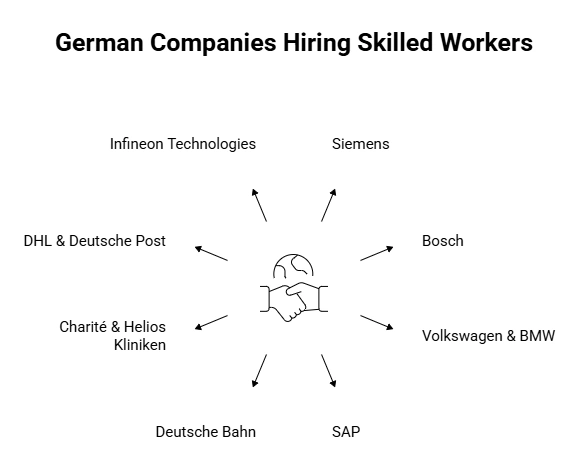
Top Companies currently hiring skilled workers through fast track hiring include:
- Siemens: Automation, industrial engineering, and digital systems
- Bosch: Automotive technology, electronics, and robotics
- Volkswagen Group & BMW: Automotive engineering, EV manufacturing, and mobility innovation
- SAP: Cloud computing, cybersecurity, and enterprise software
- Deutsche Bahn: Rail engineering, construction, and infrastructure
- Charité & Helios Kliniken: Nursing, medical staff, and healthcare specialists
- DHL & Deutsche Post: Logistics, supply chain and transportation
- Infineon Technologies: Semiconductor and microelectronics roles
Pathways to Permanent Residence After Fast-Track Hiring in Germany
Fast-track hiring options support quicker entry into Germany and also offer clear routes to long-term residence. Skilled professionals entering through the EU Blue Card, Skilled Worker Visa, or other fast-track routes may become eligible for permanent residence once specific conditions are met.
- EU Blue Card Holders: Eligible for permanent residence after 21 months with B1 German level, or after 33 months with basic German skills (A1–A2).
- Skilled Worker Visa Holders: Can apply for permanent residence after 4 years of qualified employment in Germany.
- Researchers & Highly Skilled Professionals: May qualify sooner depending on qualifications, salary level, and professional role.
- Family Members: Spouses and dependents can also apply for permanent residency after meeting the required stay and language criteria.
Tips to improve your chances for a Successful Fast-Track Hiring in Germany
Early document preparation and meeting visa requirements can significantly improve approval outcomes. Applicants should ensure all documents are prepared in advance and meet the requirements of the specific visa pathway.
- Start qualification recognition early, as ZAB or IHK FOSA processing can take time.
- Ensure your job role aligns with your qualifications and work experience.
- Prepare certified translations and authenticated documents in advance.
- Maintain clear coordination with your employer for the ASVP process.
- Keep both digital and printed copies of all documents ready.
*Planning your move to Germany through fast-track hiring? Get personalised support from Y-Axis.
Apply Now
FAQs
What is the fast-track hiring process in Germany for skilled professionals?
The fast-track hiring process in Germany allows skilled workers to speed up qualification recognition and visa approval. Employers initiate the process, making it faster to secure the Germany Skilled Worker Visa or EU Blue Card. This pathway reduces waiting times and supports sectors facing shortages. It’s ideal for skilled professionals who want quicker approval and a smoother hiring experience when planning to work in Germany.
Who is eligible for fast-track hiring in Germany?
Eligibility applies to applicants with recognised qualifications, relevant work experience, and a confirmed job offer. Skilled professionals in IT, engineering, healthcare, and trades have the best chances. Candidates applying under the Germany Skilled Worker Visa or EU Blue Card can qualify if their documents meet requirements. UK applicants and global candidates can benefit, especially if their occupation is in demand and their employer supports fast-track approval.
Do I need a job offer to apply for fast-track hiring in Germany?
Yes, a job offer is required because the employer must initiate the fast-track hiring process with German authorities. This step helps accelerate recognition and visa approval under the Germany Skilled Worker Visa or EU Blue Card. Without an employer, fast-track processing isn’t available. However, those without a job offer can consider the Germany Job Seeker Visa to search for roles after arrival.
How long does the fast-track hiring process take in Germany?
The fast-track hiring process in Germany typically takes around 3–4 months. Employer-led pre-approval usually takes 4–10 weeks, while the visa decision, including the Germany Skilled Worker Visa or EU Blue Card, may take another 2–5 weeks. Timelines vary based on documents, embassy workload, and recognition requirements. Compared to traditional processing, the fast-track route makes hiring significantly faster for skilled candidates.
Do I need German language skills for fast-track hiring?
German language skills are not always required, especially for IT, software, and engineering roles where English is accepted. However, regulated professions like nursing, physiotherapy, and teaching typically require B1–C1 German. Skilled professionals applying under the Germany Skilled Worker Visa or EU Blue Card may benefit without language skills, especially from the UK. Learning German still improves employability, integration, and long-term residency opportunities.
What sectors qualify for fast-track hiring in Germany?
Fast-track hiring in Germany is available in sectors facing labour shortages, including IT, software development, cybersecurity, engineering, healthcare, logistics, skilled trades, and renewable energy. These professions align with the Germany Skilled Worker Visa and EU Blue Card employment categories. Skilled professionals in these fields benefit from faster processing and strong demand. Germany continues to prioritise roles essential to digital transformation, construction, and healthcare growth.
Can skilled professionals from the UK apply for fast-track hiring in Germany after Brexit?
Yes, skilled professionals from the UK can apply for fast-track hiring in Germany after Brexit. UK nationals now need a work visa, such as the Germany Skilled Worker Visa or EU Blue Card. Employers can request fast-track approval to speed up processing and recognition. Many UK qualifications match required standards, making the process smoother. This route supports quicker relocation and employment for eligible candidates.
What is the minimum salary required for the fast-track hiring pathway in Germany?
The minimum salary depends on occupation and visa type. The EU Blue Card has a set annual salary threshold, while the Germany Skilled Worker Visa requires industry-standard pay. Shortage occupations like IT, engineering, and healthcare may qualify at lower salary levels. Ensuring your salary meets visa rules is essential for a smooth fast-track hiring process. UK and global applicants should confirm thresholds before applying.
Can I change employers after arriving in Germany with fast-track hiring?
Yes, skilled workers can change employers after arriving, depending on their visa type. EU Blue Card holders may switch roles after a short required period. With the Germany Skilled Worker Visa, a change may need approval before starting a new job. Fast-track hiring doesn’t permanently bind workers to one employer. However, the new position must still meet visa criteria to maintain legal employment.
Does fast-track hiring lead to permanent residency in Germany?
Yes, fast-track hiring supports long-term settlement options. Skilled workers entering through the Germany Skilled Worker Visa or EU Blue Card can apply for permanent residency after meeting work duration and language requirements. EU Blue Card holders may qualify earlier, especially with German language skills. This pathway helps skilled professionals, including those from the UK, build long-term careers and eventually settle permanently in Germany.
Tags:
Germany Work Visa
Skilled Workers Germany
Fast-Track Hiring
Work in Germany from UK
German Skilled Worker Visa
EU Blue Card
Germany Immigration
Share
Y-Axis Services

Get it on your mobile

Get News alerts

Contact Y-Axis
Latest Article
Popular Post
Trending Article
Posted On February 25 2026
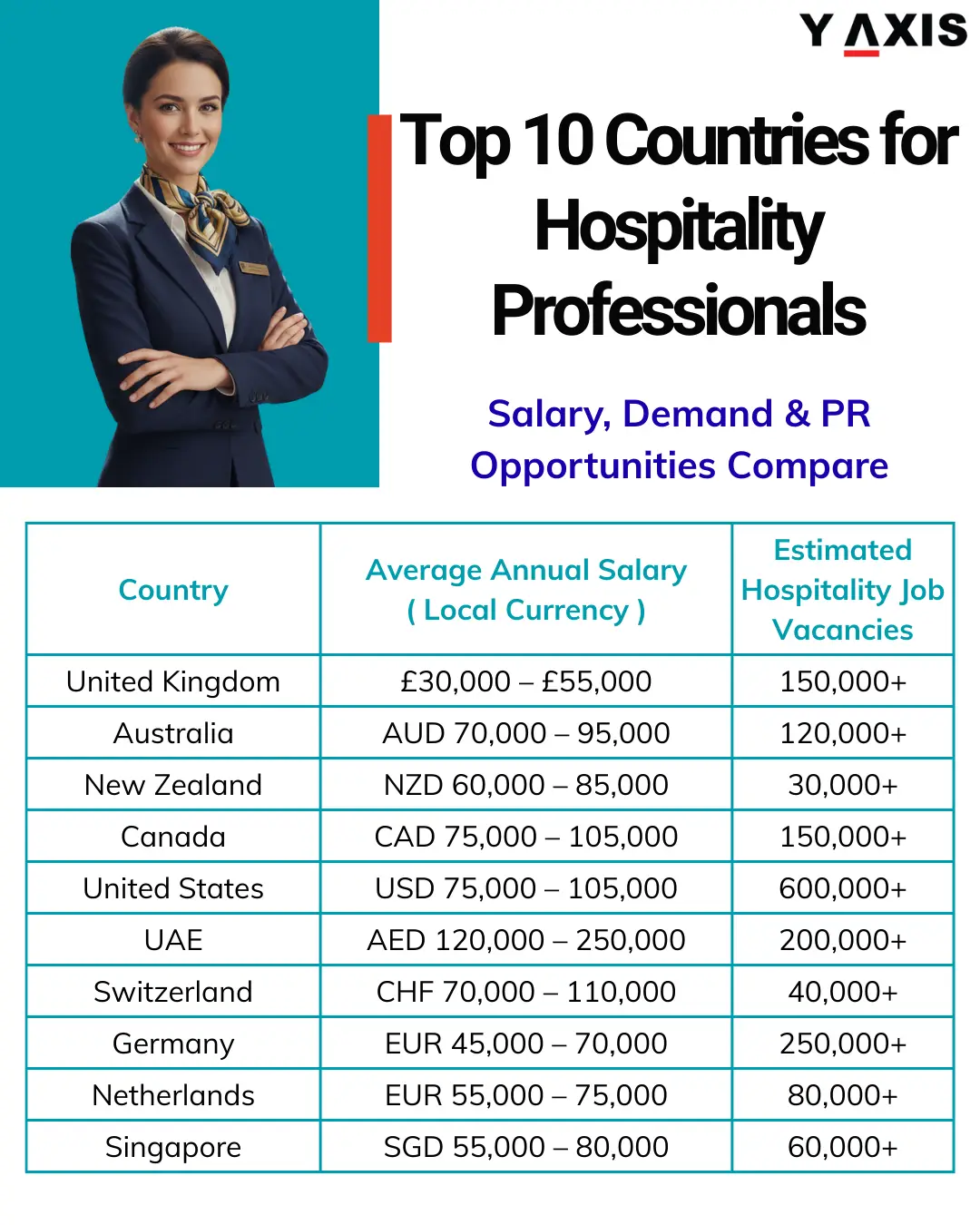
Top 10 Countries for Hospitality Professionals: Salary, Demand & PR Opportunities Compared