


Posted on February 06 2026
2 Million Jobs in Canada Over the Next Decade – Fresher’s, Experienced & Professionals Can Apply!

By , Editor & Director
Updated February 11 2026
Canada is expected to create over 2 million new and replacement jobs over the next decade, driven by retirements and an ageing workforce. Employers are increasingly hiring freshers and experienced professionals from abroad to fill labour shortages. The government plans over $1 trillion in investment across infrastructure, clean energy, healthcare, digital systems, housing, and advanced manufacturing, creating strong demand in IT, engineering, healthcare, construction, skilled trades, logistics, finance, and renewable energy.
To address critical labour shortages, Canada has introduced fast-track hiring pathways such as the Global Talent Stream, work permits, Express Entry, and Provincial Nominee Programs. With strong job demand, immigrant-friendly policies, and clear permanent residence pathways, Canada remains a top destination for skilled professionals seeking overseas career growth.
*Want to work in Canada? Avail Y-Axis Resume Marketing Services to find the right job faster.
Job Outlook in Canada over the Next 10 years
Canada’s job outlook for the next decade is strong and stable, with over 2 million new and replacement jobs expected, driven mainly by large-scale retirements and an ageing workforce. Labour shortages are highest in IT, healthcare, engineering, construction, skilled trades, logistics, and finance, prompting employers to actively hire foreign professionals. To address these gaps, Canada supports employer-led recruitment through fast-track work permits and clear pathways to permanent residence, making it a reliable option for long-term employment and career growth.
Key job market trends for the next decade include:
- More than 2 million new and replacement jobs across major sectors
- Rising demand for healthcare, IT, and digital roles
- Major growth in regional employment driven by infrastructure and housing projects
- Persistent labour shortages across IT, healthcare, engineering, construction, skilled trades, logistics, and finance
- Increased reliance on foreign workers to fill workforce gaps
- Expansion of category-based PR pathways aligned with labour market needs
Why Canada is top destination for Jobs Abroad?
- Stable job market with long-term hiring demand
- More than 2 million job openings over the next decade
- High demand for skilled workers across key sectors
- Competitive salaries and immigrant-friendly policies
- Fast-track work permits allowing recruitment within weeks
- Clear pathways to permanent residence and long-term settlement
- High quality of life with public healthcare and social benefits
- Job opportunities for freshers, mid-level, and experienced professionals
Who Can Apply for Jobs in Canada?
Canada allows foreign nationals to apply for jobs at all experience levels due to ongoing labour shortages. Employers across high-demand sectors actively hire international candidates through employer-sponsored jobs, work permits, and PR-linked pathways. You can apply for jobs in Canada as a fresher or graduate, an experienced professional, or a skilled senior professional, depending on your background.
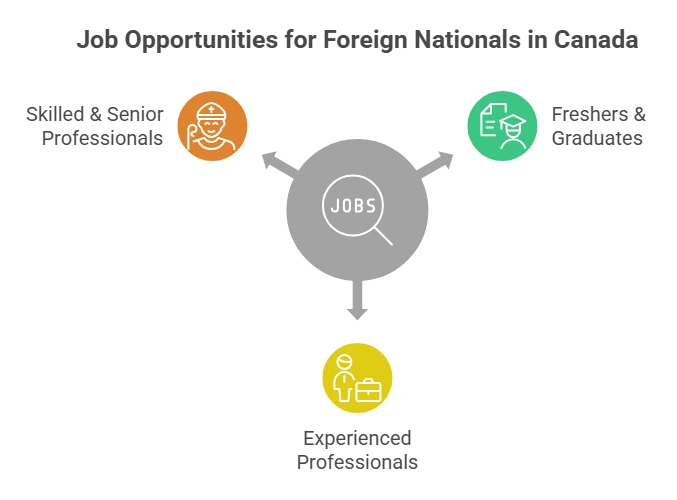
Some of eligible categories who can apply for jobs in Canada include
Freshers & Graduates
Freshers and recent graduates can apply for entry-level jobs in Canada in IT, healthcare support, business services, engineering, hospitality, and customer service roles. International students who studied in Canada may be eligible for the Post-Graduation Work Permit (PGWP), which allows them to gain Canadian work experience and later qualify for permanent residence.
Experienced Professionals
Professionals with 2–8 years of experience can apply for employer-sponsored jobs in Canada in IT, engineering, healthcare, finance, logistics, education, and construction. Many roles support work permits that can transition to PR if eligibility criteria are met.
Skilled and Senior Professionals
Senior professionals with specialised or leadership experience can apply for high-paying jobs in Canada that often include work permit sponsorship and faster PR pathways. These roles are common in technology, healthcare, engineering, and skilled trades.
Most In-Demand Jobs in Canada for the Next 10 Years
Canada is expected to face continued labour shortages over the next decade due to retirements, an ageing population, and sustained economic demand. Most job openings will come from replacement hiring, while investment across key industries will support new roles.
The occupations listed below reflect the most in-demand jobs in Canada, offering stable employment prospects, competitive salaries, and alignment with work permit and permanent residence pathways.
Some of the most in-demand jobs in Canada over the next decade:
|
Occupation |
Estimated Job Vacancies |
Average Annual Salary (CAD) |
|
Healthcare & Nursing |
520,000+ |
CAD 75,000 |
|
Information Technology |
380,000+ |
CAD 90,000 |
|
Engineering |
320,000+ |
CAD 85,000 |
|
Construction & Skilled Trades |
260,000+ |
CAD 70,000 |
|
Education & Teaching |
170,000+ |
CAD 74,000 |
|
Banking, Finance & Accounting |
160,000+ |
CAD 78,000 |
|
Hospitality & Tourism |
150,000+ |
CAD 55,000 |
|
Retail & Customer Service |
170,000+ |
CAD 50,000 |
Also Read…
Visa Sponsorship Jobs in Canada for Skilled Professionals
High-Demand Sectors with the Most Job Opportunities in Canada
Job growth in Canada over the next decade will be concentrated in specific sectors that support essential services, digital transformation, and national infrastructure. These sectors are experiencing consistent hiring demand due to skill shortages, regional development, and long-term workforce planning.
The table below outlines the sectors generating the highest number of job opportunities in Canada and the roles most commonly recruited by employers.
|
Industry |
In-Demand Job Roles |
Job Outlook |
|
Healthcare |
Registered nurses, nurse practitioners, healthcare aides, physiotherapists, medical laboratory technologists, radiographers |
Very High |
|
IT & Technology |
Software developers, data analysts, AI/ML engineers, cybersecurity specialists, cloud engineers, IT support analysts |
Very High |
|
Engineering |
Civil, mechanical, electrical, industrial, project, quality engineers |
High |
|
Skilled Trades & Construction |
Electricians, plumbers, welders, carpenters, HVAC technicians, construction supervisors |
Very High |
|
Education |
School teachers, early childhood educators, teaching assistants, college instructors |
Moderate to High |
|
Finance & Accounting |
Accountants, auditors, financial analysts, tax consultants, compliance officers |
Moderate |
|
Logistics & Transportation |
Truck drivers, supply chain coordinators, logistics managers, warehouse supervisors |
High |
|
Hospitality & Tourism |
Hotel managers, chefs, restaurant supervisors, food & beverage managers |
Moderate |
|
Retail & Customer Service |
Retail managers, customer service representatives, sales associates |
Moderate |
How to Apply for Jobs in Canada as a Foreigner?
Foreign nationals can apply for jobs in Canada directly from abroad. Canadian employers actively hire international candidates to fill labour shortages, especially in healthcare, IT, engineering, construction, skilled trades, logistics, and manufacturing.
Step by step application process for jobs in Canada as a foreigner:
Step 1: Identify in-demand jobs and eligible roles
Step 2: Prepare a Canada-style resume and cover letter
Step 3: Apply through job portals and employer websites
Step 4: Attend interviews and secure a job offer
Step 5: Apply for a Canada work permit
Step 6: Plan your permanent residence (PR) pathway
*Looking for Jobs in Canada? Sign up with Y-Axis Resume Marketing Services to find the right job faster.
Work Visa Options in Canada for Foreign Workers
Canada offers several work visa options for foreign workers to address labour shortages across key sectors such as healthcare, IT, engineering, construction, skilled trades, logistics, and manufacturing. Most foreign nationals work in Canada through employer-sponsored permits, while some qualify for open work permits
Canada Temporary Work Permit (Employer- Sponsored)
The Employer-Specific Work Permit is the most common temporary work visa for foreign workers with a valid job offer in Canada. It allows you to work for a specific employer, role, and location, and is issued through the Temporary Foreign Worker Program (TFWP), which requires LMIA approval. This permit is widely used to hire experienced professionals, skilled workers, and some entry-level workers in sectors such as healthcare, construction, skilled trades, manufacturing, and logistics.
Global Talent Stream (GTS)
The Global Talent Stream (GTS) is a fast-track work permit program for highly skilled professionals in IT, engineering, and specialised roles. Work permits are often processed within two weeks, making it one of the fastest options. It is mainly used for hiring experienced tech professionals and offers strong pathways to permanent residence.
Canada Post-Graduation Work Permit (PGWP)
The Post-Graduation Work Permit (PGWP) allows international graduates from Canadian institutions to work for any employer. It is an open work permit valid for up to three years. This program is ideal for fresh graduates, helping them gain Canadian work experience and qualify for permanent residence.
Step-by-Step Application Process for a Work Permit in Canada for Foreign Workers
Step 1: Check your eligibility
Step 2: Get a valid job offer from a Canadian employer.
Step 3: Obtain LMIA approval (if required)
Step 4: Gather required documents
Step 5: Apply for a work permit
Step 6: Provide biometrics and wait for approval
Step 7: After approval, travel to Canada and begin working for your employer.
*Want to apply for Canadian Work Permit? Get expert guidance from Y-Axis.
Top Companies Hiring Foreign Nationals for Jobs in Canada
Canada has many large employers that hire foreign nationals to address labour shortages across key industries. These companies recruit international talent in sectors such as technology, healthcare, engineering, manufacturing, logistics, and finance, and often support employer-sponsored work permits. Working for these employers can also improve your chances of qualifying for permanent residence through Express Entry or Provincial Nominee Programs.
|
Company |
Sectors |
Chances of Visa Sponsorship |
|
Shopify |
Technology, Software Development, E-commerce |
High |
|
Amazon Canada |
E-commerce, Logistics, Technology, Supply Chain |
High |
|
Royal Bank of Canada (RBC) |
Banking, Finance, Technology, Business Services |
Moderate to High |
|
TD Bank |
Banking, Financial Services, Technology |
Moderate |
|
Magna International |
Manufacturing, Automotive, Engineering, Skilled Trades |
High |
|
Bombardier |
Aerospace, Engineering, Manufacturing |
High |
|
Canadian National Railway (CN) |
Transportation, Logistics, Engineering |
High |
|
Suncor Energy |
Oil & Gas, Engineering, Skilled Trades |
Moderate to High |
|
Deloitte Canada |
Consulting, Technology, Finance, Business Services |
Moderate |
|
Walmart Canada |
Retail, Logistics, Supply Chain, Operations |
Moderate |
Also Read…
Fast-Hiring Options in Canada for Skilled Professionals
Cost of Living in Canada for Foreign Professionals
The cost of living in Canada varies depending on the city, province, and lifestyle. Major cities such as Toronto and Vancouver have higher living costs, while cities like Calgary, Winnipeg, and Halifax are more affordable for foreign workers and new residents. On average, a single person may need around CAD 2,000 to CAD 2,500 per month, including rent, food, utilities, and transportation. Living outside city centres or sharing accommodation can significantly reduce monthly costs.
Estimated Average Monthly Living Expenses in Canada:
|
Category |
Average Monthly Cost (CAD) |
|
Rent (1-bedroom apartment, city centre) |
CAD 1,200 – 1,800 |
|
Rent (1-bedroom apartment, outside city centre) |
CAD 900 – 1,400 |
|
Groceries & food |
CAD 300 – 450 |
|
Utilities (electricity, heating, water) |
CAD 120 – 180 |
|
Internet & mobile phone |
CAD 80 – 120 |
|
Public transportation |
CAD 100 – 160 |
|
Health insurance / medical expenses |
Mostly covered under public healthcare |
|
Miscellaneous & personal expenses |
CAD 150 – 250 |
Best Canadian Provinces with the Most Job Opportunities
Job opportunities in Canada are concentrated in major provinces and cities with strong economies, growing populations, and ongoing infrastructure development. These regions have the highest demand for foreign workers, especially in healthcare, IT, engineering, skilled trades, manufacturing, and logistics.
|
Province |
Key Industries |
Job Opportunities |
|
Ontario |
IT, finance, healthcare, manufacturing, logistics |
Very High |
|
British Columbia |
Technology, healthcare, construction, engineering |
Very High |
|
Alberta |
Engineering, oil & gas, construction, skilled trades |
High |
|
Quebec |
Manufacturing, IT, engineering, aerospace |
High |
|
Saskatchewan |
Agriculture, skilled trades, mining, healthcare |
High |
|
Manitoba |
Manufacturing, logistics, healthcare, skilled trades |
Moderate to High |
|
Nova Scotia |
Healthcare, logistics, IT, public services |
Moderate to High |
|
New Brunswick |
Healthcare, IT, manufacturing, logistics |
Moderate |
Can I Work in Canada without a Job Offer?
Yes, it is possible to work in Canada without a job offer through certain immigration and open work permit programs. These pathways allow foreign nationals to work for any employer or gain permanent residence based on their skills, education, and experience.
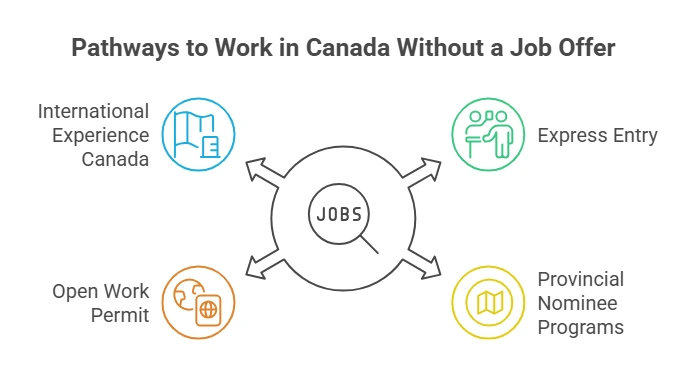
Some of the pathways to work in Canada without job offer:
- Express Entry (Federal Skilled Worker Program): Allows skilled workers to apply for permanent residence without a job offer, based on age, education, language skills, and work experience. Once approved, you can work for any employer in Canada.
- Provincial Nominee Programs (PNPs): Some provinces, such as Ontario, Saskatchewan, and Nova Scotia, offer PR pathways without a job offer for workers in high-demand occupations.
- Open Work Permit: Allows eligible applicants, including international graduates and spouses of skilled workers, to work for any employer in Canada.
- International Experience Canada (IEC): Allows eligible young adults (ages 18–35) to obtain an open work permit and work in Canada for up to two years.
When is the Best Time to Apply for Jobs in Canada?
The best time to apply for jobs in Canada is between January and March and September and November, when employers actively hire after new budgets and workforce planning. Hiring is also strong from April to June, especially in construction, engineering, and infrastructure sectors. Recruitment is usually slower in July–August and December due to holidays. Applying during peak hiring periods improves your chances of getting job offers and work permit sponsorship.
Tips to Improve Your Chances of Getting a Job in Canada
- Target high-demand occupations
- Prepare a Canada-style resume and highlight relevant skills and work experience matching job requirements.
- Apply to employers offering visa sponsorship
- Apply to multiple jobs consistently
- Improve your skills and certifications
- Smaller provinces often have higher demand and better immigration pathways.
Apply Now
FAQ's
How many jobs will be available in Canada over the next decade?
Canada is expected to create over 2 million new and replacement jobs over the next decade due to retirements and labour shortages. Most jobs in Canada will be in healthcare, IT, engineering, construction, skilled trades, and logistics. Employers are actively hiring foreign workers through Canada work permits and visa sponsorship jobs. These opportunities make Canada a top destination for freshers, experienced professionals, and skilled workers seeking long-term employment and permanent residence pathways.
Why is Canada hiring foreign workers in large numbers?
Canada is hiring foreign workers to address labour shortages caused by an ageing population and rising retirements. Many Canadian employers cannot find enough local talent, especially in healthcare, IT, engineering, and skilled trades. Immigration programs and Canada work permits allow employers to recruit international professionals. This makes it easier for foreign workers to find jobs in Canada and apply for permanent residence through Express Entry and Provincial Nominee Programs.
Can freshers apply for jobs in Canada?
Yes, freshers can apply for jobs in Canada, especially in entry-level roles such as customer service, hospitality, IT support, and logistics. Canadian employers hire foreign graduates through work permits and visa sponsorship jobs in sectors facing labour shortages. Freshers who gain Canadian work experience can later qualify for permanent residence. Canada offers strong career opportunities for graduates looking to work abroad and build long-term careers.
Can experienced professionals apply for jobs in Canada?
Experienced professionals have strong opportunities to work in Canada, especially in IT, healthcare, engineering, finance, and skilled trades. Canadian employers actively hire experienced foreign workers through employer-sponsored work permits. Candidates with relevant work experience, qualifications, and skills have higher chances of securing visa sponsorship jobs. Many experienced professionals also qualify for permanent residence through Express Entry and Provincial Nominee Programs.
Which jobs are most in demand in Canada?
The most in-demand jobs in Canada include healthcare workers, software developers, engineers, electricians, construction workers, and truck drivers. These occupations face ongoing labour shortages across Canadian provinces. Employers offer visa sponsorship jobs and Canada work permits to fill these roles. These jobs provide stable employment, competitive salaries, and permanent residence opportunities for foreign workers seeking to work and settle in Canada.
What sectors have the highest job demand in Canada?
Healthcare, IT and technology, engineering, skilled trades, construction, logistics, and manufacturing have the highest job demand in Canada. These sectors face labour shortages due to economic growth and workforce retirements. Canadian employers actively recruit foreign workers through work permits and visa sponsorship programs. These sectors offer strong career growth, job security, and permanent residence pathways for skilled professionals.
How can foreign workers apply for jobs in Canada?
Foreign workers can apply for jobs in Canada by preparing a Canada-style resume and applying through job portals and employer websites. Once selected, they receive a job offer and apply for a Canada work permit. Many employers offer visa sponsorship jobs in high-demand sectors. Foreign workers can later apply for permanent residence through Express Entry or Provincial Nominee Programs after gaining work experience.
What is a Canada work permit?
A Canada work permit allows foreign nationals to work legally in Canada for a specific employer or any employer, depending on the permit type. Most foreign workers apply through employer-sponsored work permits. Canada work permits are commonly issued under programs like the Temporary Foreign Worker Program and Global Talent Stream. Work permits allow foreign workers to gain experience and apply for permanent residence.
What is the Global Talent Stream in Canada?
The Global Talent Stream is a fast-track Canada work permit program for highly skilled foreign workers in IT and engineering roles. It helps Canadian employers hire international professionals quickly to fill labour shortages. Work permits under this program are processed faster than regular permits. The Global Talent Stream also provides strong pathways to permanent residence and long-term employment in Canada.
What is Express Entry and how does it help foreign workers?
Express Entry is Canada’s main immigration system for skilled foreign workers. It allows candidates to apply for permanent residence based on education, work experience, language skills, and age. Applicants do not always need a job offer. Express Entry helps foreign workers move to Canada permanently and work for any employer. It is one of the fastest pathways to permanent residence.
What is the average salary in Canada?
The average salary in Canada ranges between CAD 60,000 and CAD 100,000 per year, depending on the job role, experience, and location. IT professionals, engineers, and healthcare workers earn higher salaries. Skilled trades and logistics workers also earn competitive wages. Salaries in Canada are sufficient to cover living costs and provide savings opportunities, especially for skilled foreign workers.
Which provinces have the most job opportunities in Canada?
Ontario, British Columbia, Alberta, and Quebec have the most job opportunities in Canada. Major cities such as Toronto, Vancouver, and Calgary offer strong employment demand. These provinces have growing economies and actively hire foreign workers through Canada work permits. Provincial immigration programs also help foreign workers apply for permanent residence and settle long-term.
Can I work in Canada without a job offer?
Yes, you can work in Canada without a job offer through programs such as Express Entry, Provincial Nominee Programs, and Open Work Permits. These programs allow foreign workers to apply for permanent residence or work for any employer. However, having a job offer improves your chances of getting a Canada work permit and employment faster.
What are visa sponsorship jobs in Canada?
Visa sponsorship jobs in Canada are roles where employers hire foreign workers and support their work permit application. These jobs are common in healthcare, IT, engineering, and skilled trades. Employers offer sponsorship when they cannot find local workers. Visa sponsorship jobs help foreign workers move to Canada legally and build long-term careers.
How long does it take to get a Canada work permit?
Canada work permit processing times vary depending on the program and applicant location. Global Talent Stream permits are processed faster, often within weeks, while other permits may take a few months. Processing times also depend on document verification and eligibility. Applying for in-demand jobs improves approval chances.
Is Canada good for foreign workers?
Canada is one of the best countries for foreign workers due to strong job demand, high salaries, and clear immigration pathways. Canadian employers actively hire international professionals to fill labour shortages. Foreign workers benefit from stable employment, healthcare, and permanent residence opportunities.
What is the age limit to work in Canada?
There is no strict age limit to work in Canada, but most skilled worker programs prefer candidates between 18 and 45 years. Applicants outside this range can still qualify based on skills, experience, and qualifications.
What qualifications are required to work in Canada?
Qualifications depend on the job, but most roles require education, work experience, and relevant skills. Some occupations may require certifications or licensing. English language proficiency improves employment chances.
What is the easiest way to get a job in Canada?
The easiest way is to apply for in-demand jobs and secure employer sponsorship. Candidates with relevant experience and skills have higher chances of getting job offers.
Is Canada a good country for career growth?
Yes, Canada offers excellent career growth, competitive salaries, and permanent residence pathways. Skilled workers benefit from stable employment and long-term opportunities.
Tags:
Canada jobs
Work in Canada
Canada job market
Skilled jobs in Canada
Canada employment
Jobs abroad
Share
Y-Axis Services

Get it on your mobile

Get News alerts

Contact Y-Axis
Latest Article
Popular Post
Trending Article

Posted On October 07 2026
What is the Average Salary in Germany?