Denmark is quickly becoming a popular place for international students. Each year, more than 30,000 students from around the world choose to study there, including more from the UK. Danish universities are known worldwide, use new ways of teaching, and offer a great quality of life, making Denmark a good choice for students looking at options outside their home countries.
Here’s why Denmark is special:
Denmark focuses on being sustainable, welcoming, and helping students get ready for their careers. It’s a good place to not only study but also succeed. If you want to study as an undergraduate or postgraduate, Denmark can give you what you need to build your future.
Danish education emphasizes problem-solving, teamwork, and critical thinking. These skills are highly valued in today's job market.
Following Brexit, UK citizens now need a student visa for extended studies in Denmark, as they no longer have EU freedom of movement.
To be eligible, make sure that you satisfy these requirements:
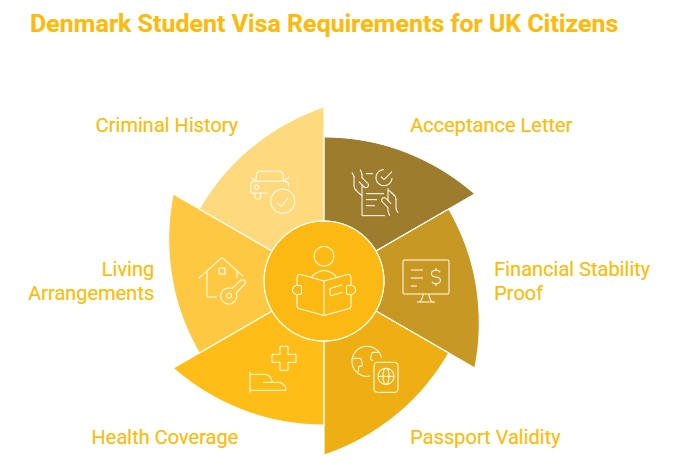
To apply for a Danish student visa, make sure you have the following documents:
Visa processing times change, so here's what students from the UK should know:
Denmark is home to several prestigious institutions that attract students from around the world. Here are the top picks for UK students:
| University | Global Ranking | Notable Programmes |
| University of Copenhagen | #107 (QS 2024) | Life Sciences, Humanities, Social Sciences |
| Aarhus University | #147 (QS 2024) | Engineering, Business, Arts |
| Technical University of Denmark (DTU) | #103 (QS 2024) | Engineering, Technology, Environmental Science |
| Copenhagen Business School | Top 100 (Business Schools) | International Business, Finance, Marketing |
| Aalborg University | Rising in global rankings | IT, Design, Engineering |
The universities provide many bachelor's and master's programs in English. They also have good ties with industry and research opportunities.
Denmark has over 700 programs taught in English, covering many subjects. The country is strong in fields like innovation, sustainability, and design, so it's a good place for students who want to study future-oriented topics.
Here are some popular courses that are sought after by international students:
Business & Economics
Engineering & Technology
Design, Architecture & Creativity
Environmental Science & Sustainability
Life Sciences & Medicine
Social Sciences & Communication
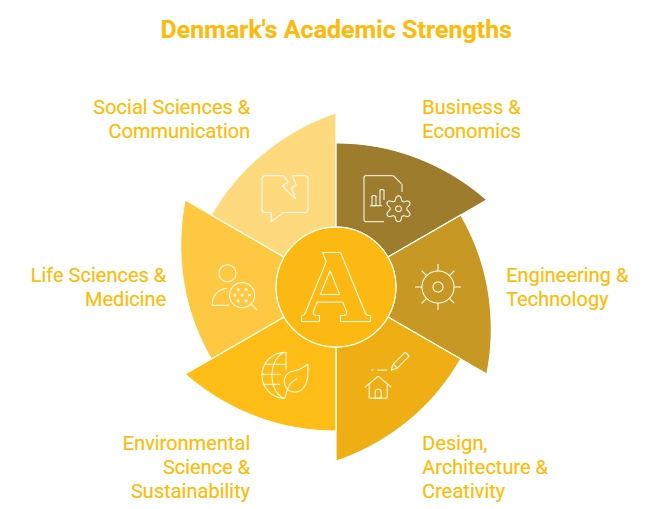
These programs are available at top schools like the University of Copenhagen, Aarhus University, Technical University of Denmark (DTU), and the Royal Danish Academy. Many courses mix classroom learning with research and work with businesses, which gets students ready for impactful jobs in Europe and other places.
In Denmark, tuition costs differ with the school and program. For UK students, typical yearly costs are:
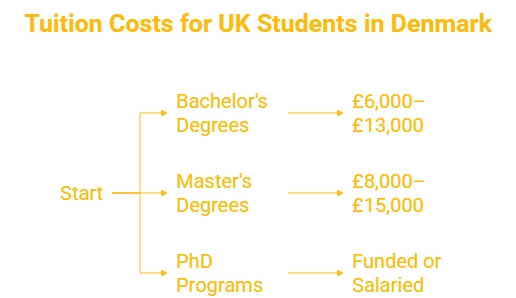
Certain STEM programs may have higher costs. The return on investment is often good, because of the education quality and job opportunities.
Denmark is known for its high standard of living, which comes with relatively high living costs. Here’s what UK students can expect monthly:
| Expense | Average Monthly Cost |
| Accommodation | £400–£700 |
| Food | £200–£300 |
| Transport | £40–£60 |
| Miscellaneous | £100–£150 |
| Total | £750–£1,200 |
University lodging or shared apartments are common ways for students to find budget-friendly housing. Public transport works well, and many student discounts exist.
Even though Denmark does not provide free education to students from outside the EU, a number of scholarships can help cover expenses:
These scholarships may pay for some or all of the tuition and may also include money for living costs.
Step 1: Apply and receive an offer from a Danish University.
Step 2: Make your initial tuition, if required
Step 3: Then, collect all required documents.
Step 4: Your University will initiate the ST1 visa application form.
Step 5: schedule a biometrics appointment at a Danish consulate or visa center.
Step 6: Pay the visa fee and save the receipt.
Step 7: After that, track your application and wait for the approval.
Step 8: When approved, book your trip to Denmark and prepare for arrival.
In Denmark, international graduates have good chances for post-study work.
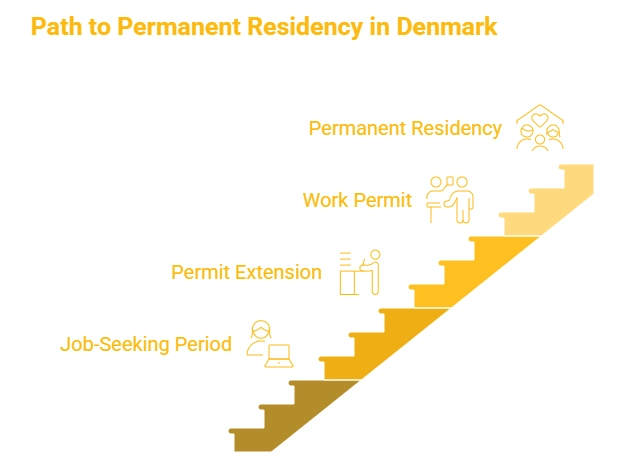
As Denmark has a strong economy and needs skilled workers, it is a good place to grow your career over time.
In Denmark, Professional Bachelor’s degrees are practice-oriented programs focused on applied skills, mandatory internships, and direct employability.
University Bachelor’s degrees are academically oriented, emphasizing theory, research, and preparation for Master’s studies. Professional programs usually lead straight to the job market, while university programs are ideal for students planning further education.
International students from non-EU/EEA countries typically pay EUR 6,000 to EUR 16,000 per year to study in Denmark.
EU/EEA and Swiss students can study tuition-free at public universities. Fees vary depending on the institution and program.
UK students must:
Secure admission to a recognized Danish institution
Receive an official acceptance letter
Apply for a Danish study residence permit online
Pay the application fee
Submit biometric data
Wait for approval before traveling
Processing usually takes 1–3 months.
Yes, Denmark continues to offer a limited but high-quality selection of English-taught Bachelor’s programs, mainly in:
Engineering
Business and management
IT and technology
Applied sciences
However, the number of programs has decreased, making early application essential.
A Bachelor’s degree in Denmark typically takes:
3 years for university Bachelor’s programs
3.5 to 4 years for Professional Bachelor’s programs (including internships)
Common English-taught Bachelor’s programs in Denmark include:
Software Engineering
Global Business Engineering
International Business
Mechanical Engineering
Information Technology
Sustainable Energy Engineering
Availability depends on the university and intake year.
UK students must provide:
A recognized secondary school qualification
Proof of English proficiency (IELTS/TOEFL or equivalent)
Official academic transcripts
Valid passport
Proof of financial means
Health insurance coverage
Admission letter from a Danish institution
Meeting these requirements is mandatory for both admission and residence permit approval.
