Indefinite Leave to Remain (ILR) is the stage where temporary residents can transition to permanent settlement in the UK. Reaching this status requires meeting strict eligibility conditions such as continuous residence, passing mandatory tests, and providing the right documents. This guide outlines the routes available, the step-by-step application process, and the key requirements you need to be aware of before applying.
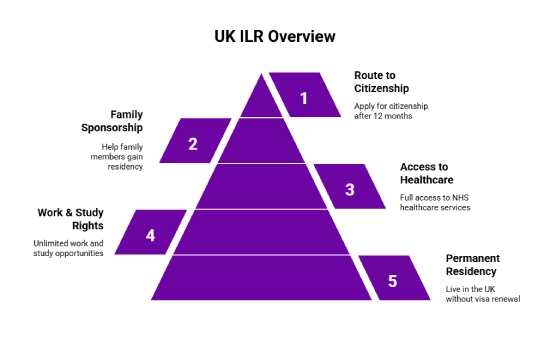
Indefinite Leave to Remain (ILR), also called “settlement,” is the status that allows you to live, work, and stay in the UK without any time restrictions. Once granted, you are considered “settled” and no longer need to apply for further visas or extensions.
Holding ILR also provides greater security and stability, as it removes immigration limitations and allows access to many of the rights and services enjoyed by permanent residents. In addition, ILR is often the key step towards applying for British citizenship if you meet the required conditions.
*Want guidance to apply for the UK ILR? Sign up with Y-Axis for comprehensive support with the process.
Securing Indefinite Leave to Remain (ILR) brings significant advantages for individuals and families who wish to settle in the UK permanently. Once granted, ILR offers long-term stability and the freedom to plan your future without immigration restrictions. The key benefits include:
To qualify for Indefinite Leave to Remain (ILR), applicants must meet general requirements along with route-specific conditions.
The main eligibility routes are summarised below:
| Eligibility Route | Qualifying Period | Key Requirements |
| Standard 5-Year Route | 5 years on eligible visas (Skilled Worker, Spouse/Partner, or other qualifying work visas) | - Continuous lawful residence for 5 years - Meet all visa conditions - Pass the Life in the UK Test and meet English language requirements - For work visas, satisfy salary and sponsorship rules |
| 10-Year Long Residence | 10 years lawful and continuous residence in the UK | - Must have valid leave throughout - Absences within permitted limits - No overstaying or gaps in residence - English and Life in the UK Test requirements apply |
| Family Routes | Usually 5 years (varies by category) | - Spouse, civil partner, or unmarried partner of a British citizen or settled person - Dependent children or parents under immigration rules - Private or family life grounds in certain cases |
| Exceptions & Special Routes | Typically 5 years (varies) | - Refugees or those with humanitarian protection - Discretionary or exceptional leave granted on compassionate grounds - Private life or long residence claims in exceptional circumstances |
| Good Character Requirement | Applies to all routes | - No serious criminal convictions - No breaches of immigration laws - Conduct must be considered conducive to the public good |
When applying for Indefinite Leave to Remain (ILR), you must satisfy the following core requirements:
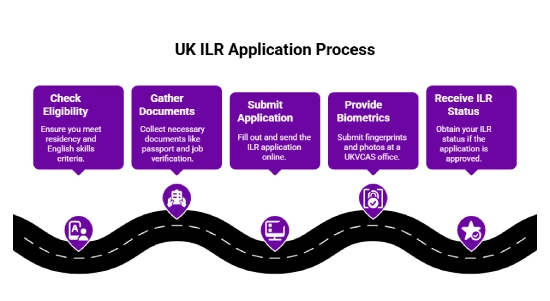
Applying for ILR involves a series of steps that must be followed carefully. The process typically includes:
Step 1: Check your eligibility and route
Confirm which ILR route you qualify for (e.g., 5-year route, 10-year long residence, family route) and ensure you meet all criteria.
Step 2: Prepare your documents
Gather required documents such as passports, biometric residence permits, proof of residence, financial evidence (if applicable), and test certificates.
Step 3: Apply online
Complete the ILR application form through the official UK Government portal.
Step 4: Book your biometric appointment
Schedule an appointment at a UKVCAS centre to provide fingerprints, photographs, and other biometric details.
Step 5: Submit supporting documents
Upload or present your supporting evidence, either online or at your biometric appointment.
Step 6: Await a decision
The Home Office will review your application and issue a decision, typically within the standard processing time.
Indefinite Leave to Remain (ILR) in the UK typically costs around £3,000 per applicant, with additional charges for biometric enrolment and, later, British citizenship if you choose to apply.
Below is a breakdown of the main fees:
| Fee Type | Amount |
| ILR Application Fee (standard) | £3,029 per applicant (from 9 April 2025) |
| Biometric Enrolment Fee | £19.20 per applicant (for fingerprints and photo) |
| Citizenship Application Fee | £1,605 + £130 ceremony fee (total £1,735 for adults) |
The time it takes to process an Indefinite Leave to Remain (ILR) application depends on the service you choose. Standard applications usually take several months, while faster processing options may be available for an additional fee. Complex cases or applications requiring further checks can take longer.
| Service Type | Processing Time |
| Standard Service | Up to 6 months |
| Priority Service | Around 5 working days (if available) |
| Super-Priority Service | By the end of the next working day (if available) |
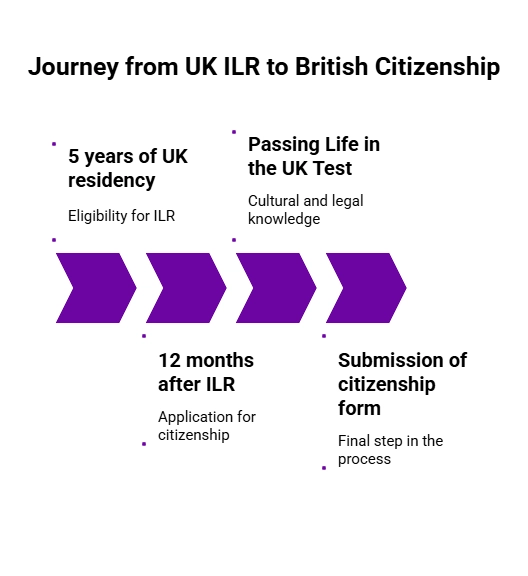
After obtaining Indefinite Leave to Remain (ILR), most applicants become eligible to apply for British citizenship through naturalisation after holding ILR for at least 12 months. An exception applies to spouses of British citizens, who may be able to apply immediately after securing ILR.
To naturalise as a British citizen, you must also meet additional requirements, including:
In May 2025, the UK government published a major White Paper titled “Restoring Control Over the Immigration System”, laying out proposed reforms to the settlement and immigration framework.
Below are the most significant proposals and updates currently under consideration:
Y-Axis is a leading immigration consultancy firm that helps people with visa applications and immigration procedures, with the goal of securing permanent residency and citizenship. With years of experience, Y-Axis offers services intended to make your ILR application go smoothly.
Y-Axis can assist you with Indefinite Leave to Remain in the following ways:
Explore what Global Citizens have to say about Y-Axis in shaping their future
UK Job Search
Rajini Raj Gopal is very happy to share
Read More...
UK Skilled Worker Visa
Anjali Sahani's expertise and dedication
Read More...
UK Dependent Visa
Sweta's invaluable assistance made the U
Read More...
To apply for UK ILR, you must provide the following documents.
No, you are advised not to leave the UK, while your ILR application is being processed. It is generally not a good idea to leave the UK when your application for Indefinite Leave to Remain (ILR) is being reviewed. Leaving the country at this time could create issues with the continuous residence requirement, possibly leading to delays or problems with your application. Long periods away from the UK can interrupt your residency, potentially making you ineligible for ILR. If travel is unavoidable, it is best to seek advice from an immigration professional to make sure you are following all regulations and protecting your ILR eligibility.
Yes, you can apply for British citizenship after receiving the UK ILR. After holding Indefinite Leave to Remain (ILR) for 12 months, you become eligible to apply for British citizenship. The requirements include meeting residency standards, such as living in the UK for 5 years before getting ILR, and possessing good character. Applicants must also pass the Life in the UK Test and prove they have enough English language skills. Meeting all these conditions allows you to apply for naturalization as a British citizen.
Yes, your family can join you on your UK ILR application. Your spouse, children, and dependent parents can apply for Indefinite Leave to remain (ILR) with you if they are eligible. They need to submit their own paperwork and pass the required checks. When your ILR is approved, each eligible family member will receive their ILR status, giving them the right to live and work in the UK. You will need to prove you can financially support your family members as part of the ILR application.
Your Indefinite Leave to Remain (ILR) can be revoked if you stay outside the UK for over two years or commit grave offenses. If your ILR lapses, you may need to depart the UK or seek a new visa. Following the guidelines, like adhering to absence limits and obeying UK laws, is important for maintaining your ILR. Consistent residence in the UK is key to keeping this status.
The time you must spend in the UK depends on the visa route you hold. Most applicants on work visas such as Skilled Worker or on a spouse/partner visa become eligible after five years of continuous residence. Certain routes, such as Global Talent or Innovator Founder, allow you to apply after just three years. If you have lived lawfully in the UK on any visa for ten continuous years, you can also qualify under the long residence route. To meet the continuous residence requirement, you should not be absent from the UK for more than 180 days in any 12-month period.
Yes, ILR can be lost if you leave the UK for too long. If you spend more than two continuous years outside the country, your ILR status may lapse. In addition, the Home Office can revoke ILR in cases of serious criminal convictions, fraudulent applications, or conduct considered harmful to the public good. While ILR is indefinite in name, maintaining ties to the UK and respecting immigration rules is essential to keeping the status.
Most applicants between the ages of 18 and 64 must pass the Life in the UK Test before applying for ILR. The test assesses your knowledge of British history, culture, laws, and everyday life, with a pass mark of 75%. Some applicants are exempt, such as those over 65 or individuals with certain medical conditions. If you have already met the English language requirement during your visa process, you do not usually need to prove it again when applying for ILR.
The documents you need will depend on your visa route, but the core requirements usually include:
Note: Any additional documents specific to your visa type, such as endorsement letters for Global Talent or Innovator visas
As of 2025, the application fee for ILR is £3,029 per person. In addition, you must pay a biometric enrolment fee of around £19.20 for fingerprints and photographs. If you choose faster processing, priority service costs approximately £500, while super priority service is around £1,000 on top of the standard fee. Unlike limited visas, you do not need to pay the Immigration Health Surcharge when applying for ILR.
For most applicants, the standard ILR process takes up to six months from the date you provide your biometric information. If you select a priority or super priority service, a decision may be issued within five working days or even the next working day. Processing can take longer if the Home Office requests further documents or needs to carry out additional checks. While waiting for a decision, you are usually allowed to stay in the UK legally as long as you applied before your visa expired.
Indefinite Leave to Remain (ILR), also known as settlement, gives a non-British national the legal right to live, work, and study in the UK without any time limit. Once granted, you no longer need to renew a visa and can access healthcare, education, and other benefits. ILR is also the key step toward British citizenship, provided you meet the additional criteria. However, ILR is not the same as citizenship, and in some circumstances it can be lost.
Yes, ILR can be lost if you leave the UK for too long. If you spend more than two continuous years outside the country, your ILR status may lapse. In addition, the Home Office can revoke ILR in cases of serious criminal convictions, fraudulent applications, or conduct considered harmful to the public good. While ILR is indefinite in name, maintaining ties to the UK and respecting immigration rules is essential to keeping the status.
The most effective preparation for the Life in the UK test comes from official resources. The test questions are based on the handbook Life in the United Kingdom: A Guide for New Residents, which is the only official study material. Many applicants also use the official practice questions, mock tests, and apps created by the UK government’s approved publishers. Regular practice under timed conditions, using official sample questions, is highly recommended. Combining the handbook with official digital tools ensures you cover all required topics and become familiar with the format of the test.
Official ILR requirements can be found through:
There are many immigration lawyers in the UK with expertise in ILR applications. When choosing one, it is important to ensure the lawyer or solicitor is accredited under the Law Society’s immigration and asylum scheme or regulated by the Office of the Immigration Services Commissioner (OISC). These accreditations guarantee that the lawyer is qualified and authorized to provide immigration advice. Reputable firms often highlight their success rates and client testimonials. When selecting a lawyer, applicants should prioritize experience in ILR cases, transparent pricing, and personalized guidance tailored to the specific immigration route being pursued.
Yes, several immigration consultancies such as Y-Axis specializes in ILR applications. Our organization provides comprehensive services such as eligibility checks, document reviews, drafting application forms, and follow-ups with the Home Office. Choosing a company that is legally regulated and accredited is crucial to ensure reliable advice. We also provide additional support, such as mock interviews, checklists, and ongoing consultation, to improve the applicant’s chances of success and reduce the risk of application delays or refusals.
The best preparation starts early. Applicants should keep thorough records of their residence, employment, and travel history throughout their qualifying period. Maintaining copies of tenancy agreements, utility bills, payslips, and travel records will ensure continuity of residence can be proven. Preparing for and passing the Life in the UK test and the English language requirement in advance is also essential. Reviewing all eligibility criteria carefully, tracking absences from the UK, and ensuring financial requirements are met are equally important. Seeking professional advice to review the completed application and supporting documents can significantly reduce the chances of refusal.
Reliable ILR checklists are usually available from:
